Bloomberg Podcasts
@bloombergpodcasts·503K subscribers·32.4K videos
Donald Trump, Mark Carney Meet in Oval Office: Full Remarks
Posted
May 6, 2025
Views
6,111
Likes
70
Comments
47
Engagement
May 6, 2025
6,111
70
47
1.91%
Every word spoken in this episode is indexed. Type any phrase to jump straight to the moment it was said.
Type any word or phrase that may have been spoken. Click a result to seek the player to that exact moment.
Try a name, a topic, or a quoted line
See what was published immediately before and after this episode.
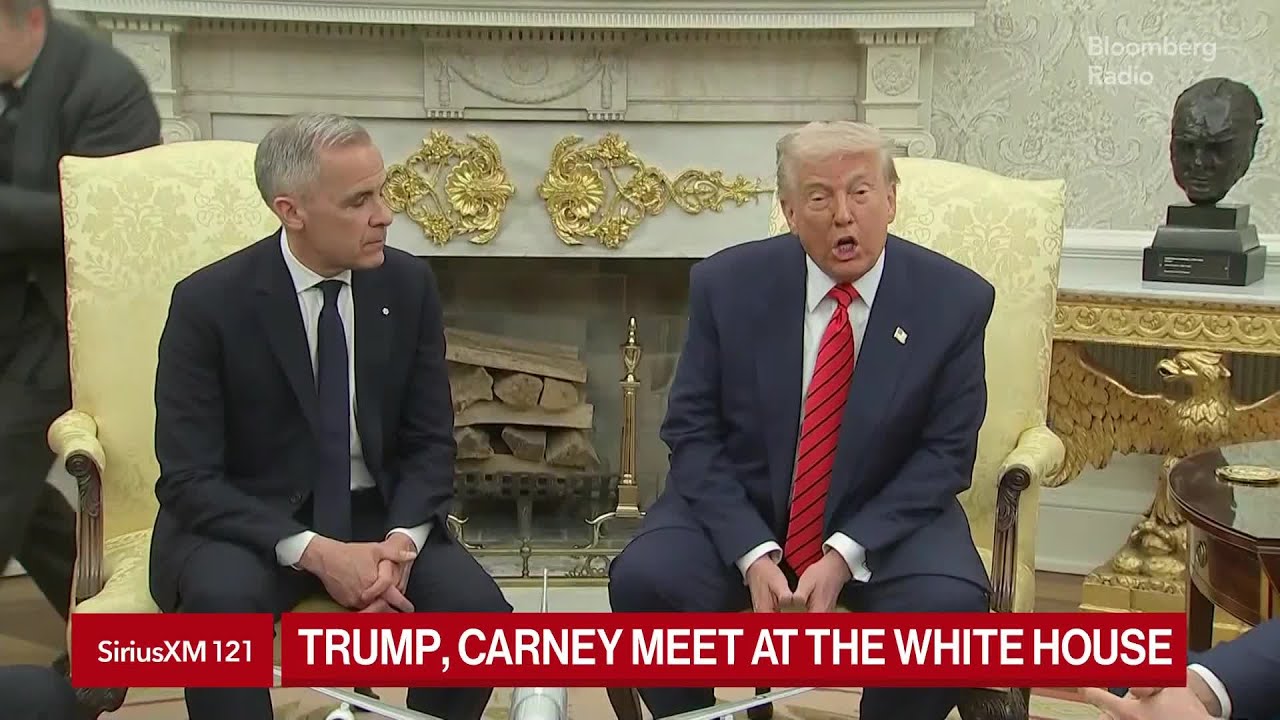 33:07Now Playing
US President Donald Trump said he would prescribe tariff levels and trade concessions for partners looking to avoid higher duties, appearing to move away from the idea that he would engage in back-and-forth negotiations.
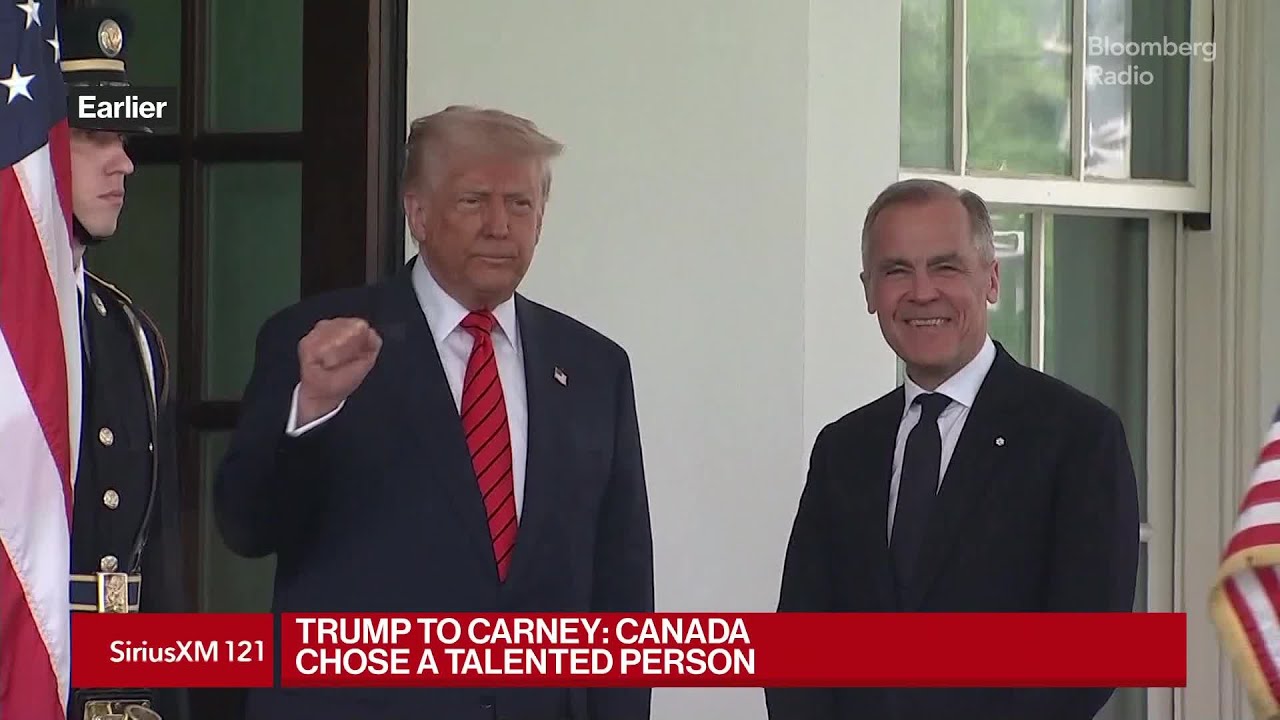
“We’re going to put very fair numbers down, and we’re going to say, here’s — what this country, what we want. And congratulations, we have a deal. And they’ll either say ‘great,’ and they’ll start shopping, or they’ll say, ‘not good,’” Trump said Tuesday at the White House as he met with Canadian Prime Minister Mark Carney.
“It’s going to be a very fair number, it’ll be a low number. We’re not looking to hurt countries,” he added.
Tuesday’s meeting comes just a week after the Canadian prime minister’s Liberal Party won an election in which Carney vowed to strengthen his country’s economic independence and protect its sovereignty from the US president, who has openly mused about making Canada the 51st state.
With Carney, Trump indicated that he would strike a friendlier relationship than the one he had with former Prime Minister Justin Trudeau, who the US president said he “didn’t like.”
The US president, however, cast doubt on whether Carney will be able to strike a deal. When asked whether there was anything the Canadian leader could say to convince him to lift the tariffs on his country, Trump said “no.”
“There’s no reason for us to be subsidizing Canada,” Trump said. “Canada’s a place that will have to be able to take care of itself economically.”
As Trump was speaking, the Canadian dollar briefly rose to its highest level since October at C$1.3751 per US dollar, before paring those gains.
Trump’s comments come as US trading partners rush to negotiate with the administration to avoid higher levies. The US president said Sunday the first deals could come as soon as this week. But the president’s latest comments indicate he could continue to change his approach, which could further roil financial markets that have struggled with uncertainty surrounding his trade policy.
Trump said he was tired of questions about when deals would be struck.
“We don’t have to sign deals. We could sign 25 deals right now if we wanted,” he said. “We will sign some deals. But much bigger than that is we’re going to put down the price that people are going to have to pay to shop in the United States.”
Trump said he had already gotten some nations to agree to concessions, saying India had agreed to roll back tariffs on American goods.
Carney offered praise for Trump, calling him a “transformational president focused on the economy with a relentless focus on the American worker” and expressing eagerness to work with the US on “defense and security, securing the Arctic and developing the Arctic.”
But Carney also pushed back on Trump’s calls for his country to be absorbed by the US, saying “it’s not for sale, it won’t be for sale, ever.”
Trump insisted there are merits to Canada joining the US, but said Carney’s stance would not negatively affect their talks.
“I still believe that but, you know, it takes two to tango,” Trump said. “It would really be a wonderful marriage.”
Trump has applied tariffs of 10% and 25% to Canada, while excluding certain goods covered under the North American trade pact he negotiated in his first term. Canada, in turn, has applied some countermeasures, including some tariffs on US consumer products.
Trump also levied 25% tariffs globally to sectors where Canada is a major source of US imports, including automobiles and aluminum. And he’s threatened duties on other sectors such as lumber and most recently film production. The impact on the auto industry, which has supply chains that crisscross the US, Canada and Mexico threaten to be particularly stark.
The president softened the auto tariffs by only applying them to the non-US portions of cars, lowering the effective rate for vehicles manufactured in Canada as part of the heavily integrated continental auto sector. Trump has also pledged to apply tariffs to auto parts that comply with the USMCA trade pact, though hasn’t specified when.
--------
Watch Bloomberg Radio LIVE on YouTube
Weekdays 7am-6pm ET
Follow us on X
Subscribe to our Podcasts:
Bloomberg Daybreak
Bloomberg Surveillance
Bloomberg Intelligence
Balance of Power
Bloomberg Businessweek
Listen on Apple CarPlay and Android Auto with the Bloomberg Business app:
Apple CarPlay
Android Auto
Visit our YouTube channels:
Bloomberg Podcasts
Bloomberg Television
Bloomberg Originals
Sentinel Indexing in Progress
Metadata and chapters are available. Claim extraction for this episode is pending.
All video content is delivered via YouTube embedded players in accordance with the YouTube Terms of Service. Sentinel provides research tools that promote discovery and accountability across political media.