Bloomberg Podcasts
@bloombergpodcasts·503K subscribers·32.4K videos
China Hawks Target Students, Tech in Trade War
Posted
May 29, 2025
Views
16,309
Likes
149
Comments
87
Engagement
1.45%
May 29, 2025
16,309
149
87
1.45%
Every word spoken in this episode is indexed. Type any phrase to jump straight to the moment it was said.
Type any word or phrase that may have been spoken. Click a result to seek the player to that exact moment.
Try a name, a topic, or a quoted line
See what was published immediately before and after this episode.
 12:06Now Playing
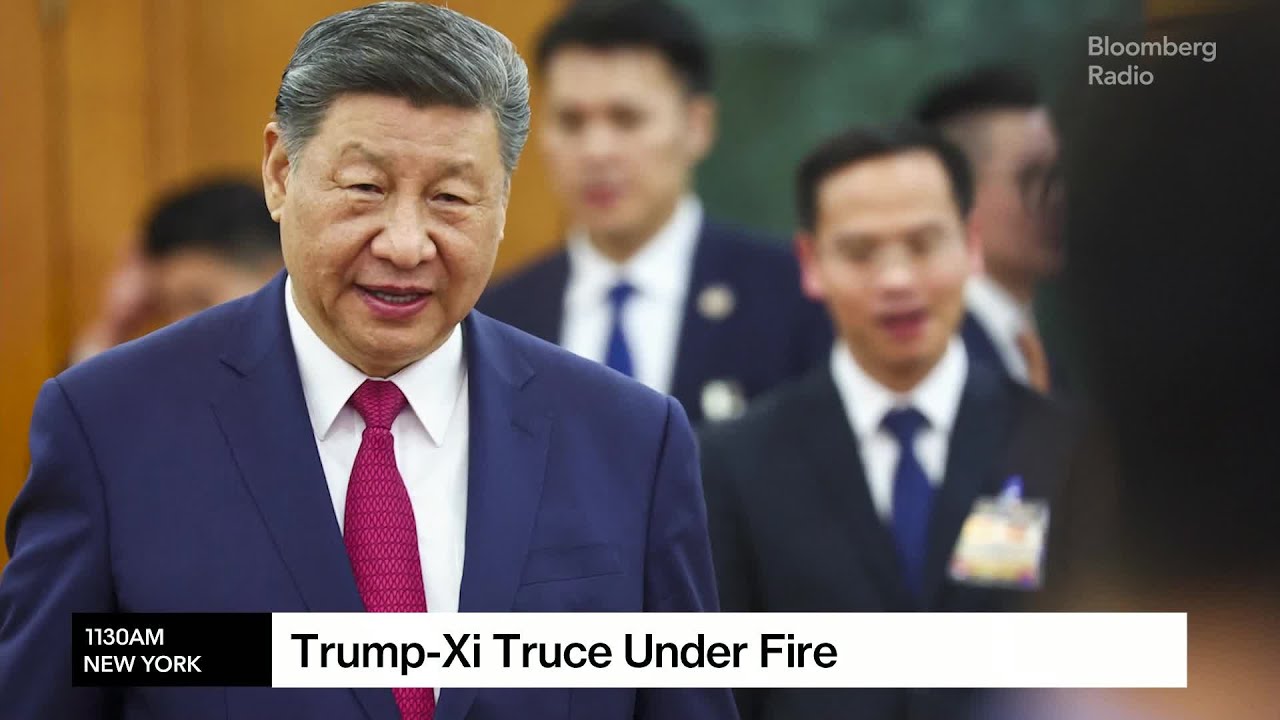
Elizabeth Economy, senior fellow at Stanford's Hoover Institution, breaks down the US-China relationship as the Trump administration makes moves to further curb chip exports and revoke the visas of Chinese students studying in the US.
Just weeks after US President Donald Trump declared a “total reset” with China following a trade truce in Geneva, tensions are rising again between the world’s biggest economies.
Trump’s administration on Wednesday announced it would start revoking Chinese student visas, while also introducing new restrictions on the sales of chip design software and reportedly some jet engine parts to China. That came shortly after it sought to block Huawei Technologies Co. from selling advanced AI chips anywhere in the world, prompting an angry rebuke from Beijing.
“Geneva was positive because both sides are officially talking to each other,” said Alfredo Montufar-Helu, senior adviser to the China Center at the Conference Board. “But the negotiations didn’t really deal with the core issues that are driving competition between the two sides. Chief of them all — technological dominance.”
While US and Chinese negotiators brought down tariffs from eye-watering levels for 90-days, they still need to hammer out a deal to rebalance trade — that took years in Trump’s first term. Both sides are also in disagreement over Beijing’s role in the illegal fentanyl trade, as well as rare earths and chip controls.
In a sign any larger deal is a way off, Trump has yet to speak with his Chinese counterpart since returning to office, despite suggesting several times such a call was imminent.
The crackdown on Chinese students — the second largest international group in the US — was unveiled by Secretary of State Marco Rubio, who before taking office was twice sanctioned by Beijing. That dispelled any notion China hawks within the Trump administration are losing influence, after trade officials in Switzerland showed a preference for dealmaking with Beijing.
China’s Foreign Ministry called the visa policy “discriminatory” at a regular briefing in Beijing on Thursday, with spokeswomen Mao Ning saying it would “only further undermine” America’s global reputation. That relatively restrained response, along with the fact officials didn’t signal any retaliation, suggests Beijing is trying to avoid sending ties into another tailspin.
Still, the decision to put Chinese students under fresh scrutiny highlights the deep suspicion underpinning bilateral ties, with Republicans and Democrats alike now viewing China as a major threat to American security. For its part, Beijing has launched an anti-spying campaign that casts a wide net of suspicion on foreigners, particularly from the US.
John Moolenaar, chairman of the House Select Committee on the Chinese Communist Party, denied the US actions were designed to target ordinary people in the Asian country. “It’s the aggression of the Chinese Communist Party that we’re pushing back on,” he told Bloomberg Television.
--------
Get more on the Bloomberg Surveillance Podcast
Follow us on X
Listen on Apple CarPlay and Android Auto with the Bloomberg Business app:
Apple CarPlay
Android Auto
Visit our YouTube channels:
Bloomberg Podcasts
Bloomberg Television
Bloomberg Originals
Sentinel Indexing in Progress
Metadata and chapters are available. Claim extraction for this episode is pending.
All video content is delivered via YouTube embedded players in accordance with the YouTube Terms of Service. Sentinel provides research tools that promote discovery and accountability across political media.