Bloomberg Podcasts
@bloombergpodcasts·503K subscribers·32.4K videos
Hegseth Warns of China's 'Imminent' Invasion of Taiwan
Posted
June 2, 2025
Views
14,888
Likes
111
Comments
88
Engagement
June 2, 2025
14,888
111
88
1.34%
Every word spoken in this episode is indexed. Type any phrase to jump straight to the moment it was said.
Type any word or phrase that may have been spoken. Click a result to seek the player to that exact moment.
Try a name, a topic, or a quoted line
See what was published immediately before and after this episode.
 5:48Now Playing
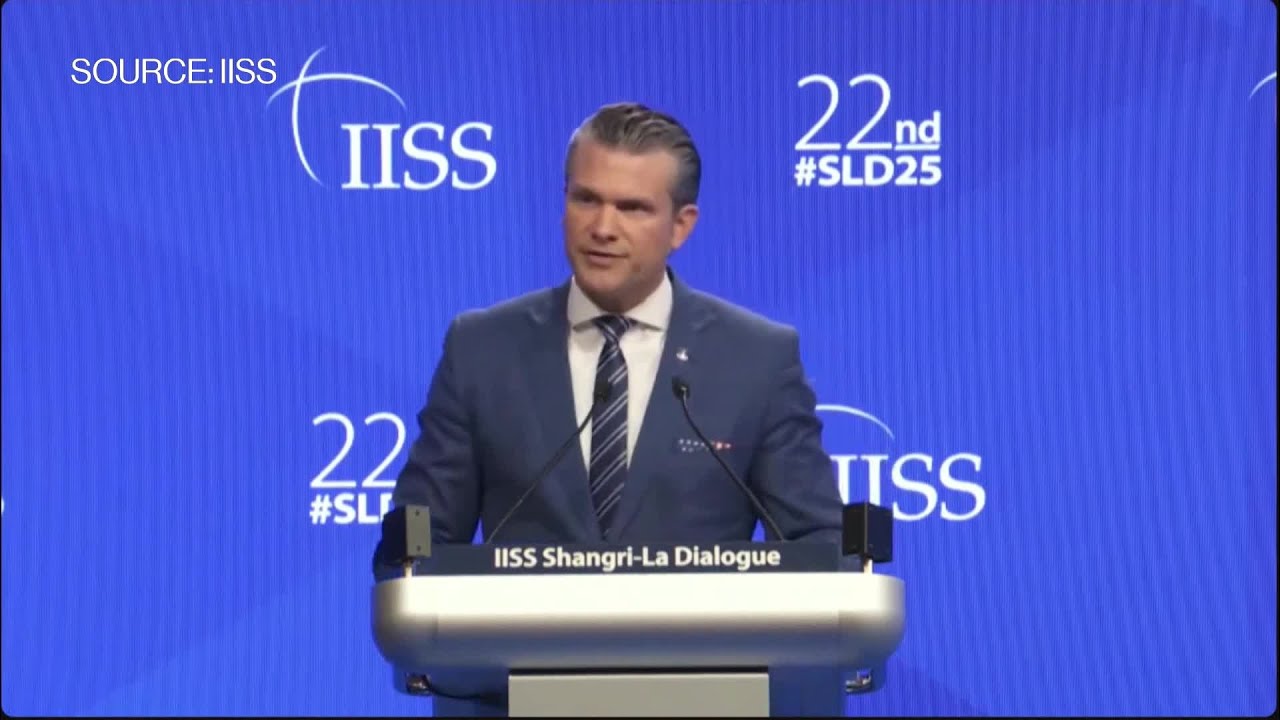
After US military allies in Europe were torched by Vice President JD Vance in March over military spending, free speech and the war in Ukraine, America’s partners in Asia warily awaited Defense Secretary Pete Hegseth’s arrival at a security conference in Singapore.
Turns out there was little reason to worry, apart from the perpetual anxiety over President Donald Trump’s social media feed.
While Hegseth delivered Trump’s demands for higher security spending on par with Europe, he couched it as necessary to prepare for a potentially “imminent” Chinese invasion of Taiwan. The US wouldn’t be pushed out the region, he said, nor let allies and partners “be subordinated and intimidated” — a commitment lauded by many in attendance.
But in the hallways of the Shangri-La Hotel, Hegseth couldn’t dispel concerns about the erratic policymaking of his boss. Many of the generals, defense ministers and intelligence officers from Asia and Europe — who are key to helping the US counter China — were still reeling from the shock of Trump’s sectoral levies and “reciprocal” tariffs.
Hegseth “offered a needed level of reassurance to allies and partners that the United States will remain present in the Indo-Pacific and committed to countering China’s coercive threats,” said Rory Medcalf, head of the National Security College at the Australian National University. “But this message will remain discounted by the dysfunction we are seeing in Washington.”
On his second trip to Asia since March, the Pentagon chief displayed some diplomatic nuance that surprised some officials who expected more grandstanding from the former television personality. Hegseth was also able to capitalize on a huge absence at the annual gathering: China didn’t send a defense minister for the first time since 2019, putting Beijing’s lower-level officials on the back foot.
That void gave US officials space to set the tone and work the room, vowing greater cooperation with countries like Cambodia, Thailand and Indonesia. And it gave America’s traditional partners even more room to criticize Beijing, despite their dependence on trade with China.
--------
Watch Bloomberg Radio LIVE on YouTube
Weekdays 7am-6pm ET
Follow us on X
Subscribe to our Podcasts:
Bloomberg Daybreak
Bloomberg Surveillance
Bloomberg Intelligence
Balance of Power
Bloomberg Businessweek
Listen on Apple CarPlay and Android Auto with the Bloomberg Business app:
Apple CarPlay
Android Auto
Visit our YouTube channels:
Bloomberg Podcasts
Bloomberg Television
Bloomberg Originals
Sentinel Indexing in Progress
Metadata and chapters are available. Claim extraction for this episode is pending.
All video content is delivered via YouTube embedded players in accordance with the YouTube Terms of Service. Sentinel provides research tools that promote discovery and accountability across political media.