Bloomberg Podcasts
@bloombergpodcasts·503K subscribers·32.4K videos
Carmakers Use Stealth Price Hikes to Cope With Trump’s Tariffs
Posted
June 6, 2025
Views
8,186
Likes
64
Comments
16
Engagement
June 6, 2025
8,186
64
16
0.98%
Every word spoken in this episode is indexed. Type any phrase to jump straight to the moment it was said.
Type any word or phrase that may have been spoken. Click a result to seek the player to that exact moment.
Try a name, a topic, or a quoted line
See what was published immediately before and after this episode.
 3:39Now Playing
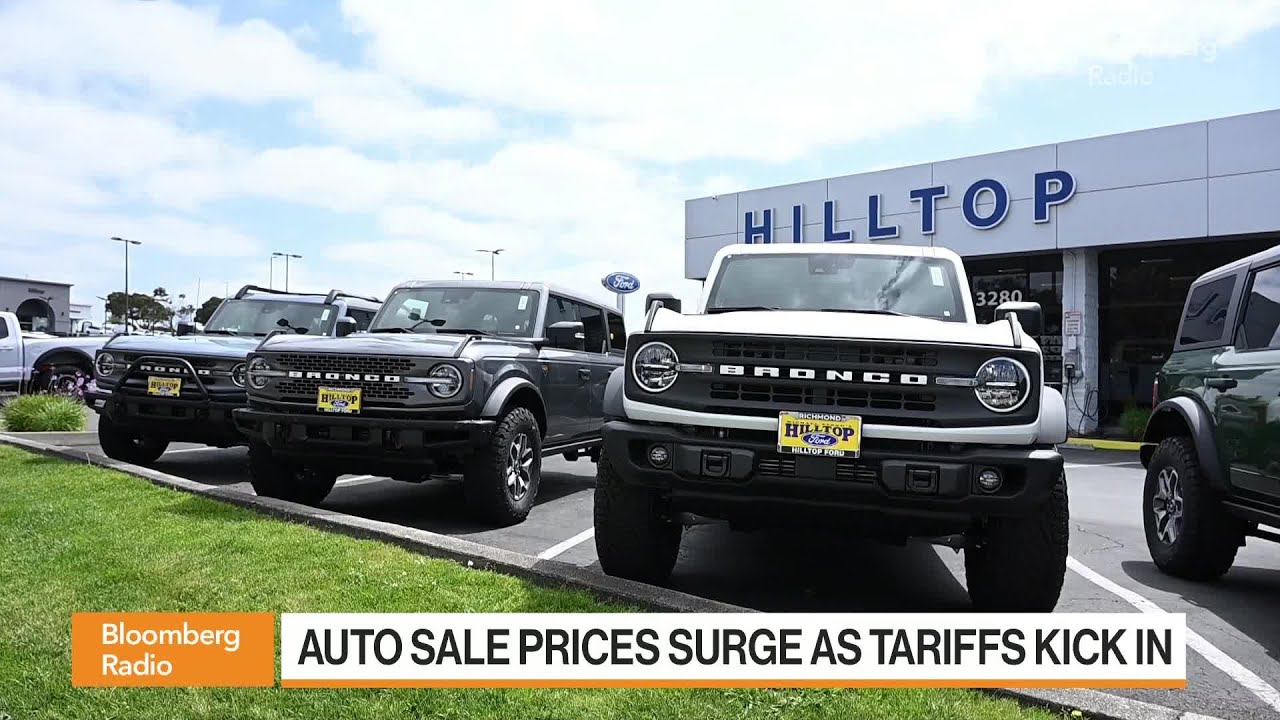
Car buyers racing to get ahead of President Donald Trump’s tariffs face an uncomfortable truth — the trade war is already boosting US auto prices, often in ways nearly invisible to consumers.
The sticker price on a particular make and model may not have changed, at least not yet. But automakers have been quietly cutting rebates and limiting cheap financing deals, adding hundreds of dollars to buyers’ monthly payments even as the companies say they’re holding the line on pricing. Several have boosted delivery charges — a fee everyone must pay when buying a new vehicle — by $40 to $400 dollars, according to automotive researcher Edmunds.com Inc.
Bloomberg's Keith Naughton reports.
Some dealers, meanwhile, have decided to charge more for the cars already on their lots, knowing it will cost more to replace them.
These stealth increases could help automakers cope with Trump’s 25% levies on imported vehicles without risking his wrath, particularly once cars that landed in American ports after the tariffs were imposed finally start reaching showrooms this month. They’d all like to avoid the social-media fury he unleashed on Walmart Inc. after the retail giant said the trade war had forced it to raise prices.
But the auto industry’s subtle price hikes are already having an effect. The average sale price for a new car jumped 2.5% in April, the steepest monthly increase in five years, according to the Kelley Blue Book car buying guide. The average reached $48,699, almost a record. Incentives, which once knocked 10% off the price, fell to 6.7%. Zero-percent financing deals — a key come-on in this age of high interest rates — dropped in April to their lowest rate since 2019, according to researcher Cox Automotive. And at some point, car buyers may balk.
“On the consumer side, they’re seeing several thousand dollars of actual-experience price increase, whereas the factory is saying, ‘No man, we didn’t raise prices at all,’” said Morris Smith III, a Ford dealer in Kansas. “Stealth is a good word for it.”
While the steps have helped car companies avoid outright price hikes until now, those are coming. Ford Motor Co. told dealers it will raise sticker prices as much as $2,000 on three models it builds in Mexico — the Maverick pickup, the Bronco Sport and the electric Mustang Mach-E. Japan’s Subaru Corp. is boosting prices $1,000 to $2,000 to help offset tariff costs, according to people familiar with the matter. Hyundai Motor Co. is considering a 1% increase to the suggested retail price of every model in its lineup, a hike of at least several hundred dollars, Bloomberg reported last week. The Korean company also is likely to jack up shipping charges and fees for options such as floor mats and roof rails, which could turn off some inflation-weary consumers.
Other automakers are hiking prices on their new 2026 models coming this summer and fall, but attributing the increases to the model-year changeover rather than tariffs.
“With a new product, having a higher price is not ‘raising price’ in the game of semantics,” said John Murphy, an analyst with Bank of America Corp., at an event in Detroit Wednesday. “So they don't really enrage certain folks that might come down on them for raising price.”
All of these changes — the sticker price increases, reduced incentives and higher fees — will become more visible to car shoppers in the coming weeks. Since the 25% levies went into effect on April 3, dealers have been selling from a shrinking stockpile of pre-tariff cars. (There’s an exemption for cars that comply with the terms of the US, Mexico and Canada free trade agreement, which only face an import tax on their non-American content.) That process is nearly done, and by late June, dealers will face the new reality of lots filled with cars that cost more to bring into the country.
“There’s nothing they can do to prevent this from having an impact,” said Sean Tucker, editor of Kelley Blue Book. “There’s not a single cliff, but the date they run out of those pre-tariff cars, that’s when you’re going to see the most dramatic change.”
--------
Watch Bloomberg Radio LIVE on YouTube
Weekdays 7am-6pm ET
Follow us on X
Subscribe to our Podcasts:
Bloomberg Daybreak
Bloomberg Surveillance
Bloomberg Intelligence
Balance of Power
Bloomberg Businessweek
Listen on Apple CarPlay and Android Auto with the Bloomberg Business app:
Apple CarPlay
Android Auto
Visit our YouTube channels:
Bloomberg Podcasts
Bloomberg Television
Bloomberg Originals
Sentinel Indexing in Progress
Metadata and chapters are available. Claim extraction for this episode is pending.
All video content is delivered via YouTube embedded players in accordance with the YouTube Terms of Service. Sentinel provides research tools that promote discovery and accountability across political media.