Bloomberg Podcasts
@bloombergpodcasts·503K subscribers·32.4K videos
Fed’s Mary Daly Says Muted Tariff Impact May Open Door to Cut in Fall
Posted
June 26, 2025
Views
521
Likes
8
Comments
3
Engagement
June 26, 2025
521
8
3
2.11%
Every word spoken in this episode is indexed. Type any phrase to jump straight to the moment it was said.
Type any word or phrase that may have been spoken. Click a result to seek the player to that exact moment.
Try a name, a topic, or a quoted line
 9:06Now Playing
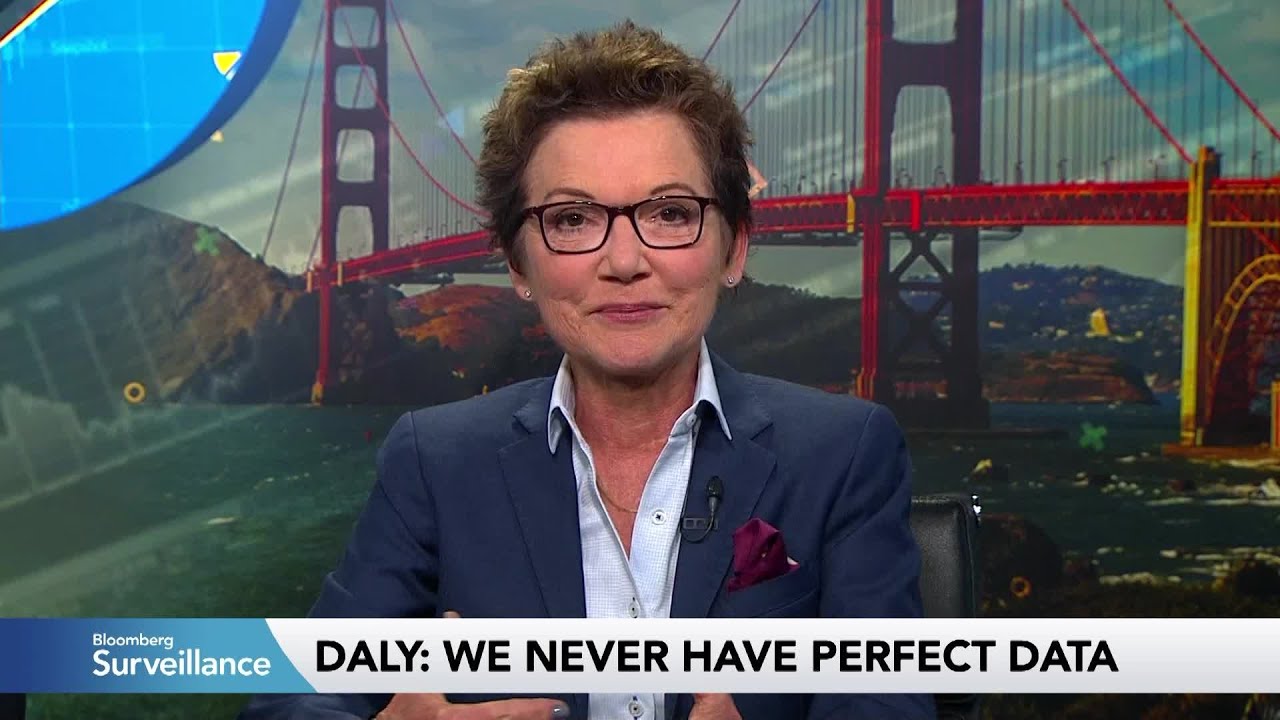
Federal Reserve Bank of San Francisco President Mary Daly said she’s seeing increasing evidence that tariffs may not lead to a large or sustained inflation surge, helping bolster the case for a rate cut in the fall.
“My modal outlook has been for some time that we would begin to be able to adjust the rates in the fall, and I haven’t really changed that view,” Daly said Thursday in an interview on Bloomberg Television.
The San Francisco Fed chief outlined three scenarios of how tariffs could impact prices: one in which tariffs have a delayed but persistent effect on inflation, another where it’s more of a one-off boost to prices and a third in which tariffs don’t increase prices much.
While the third scenario is not her modal outlook “it’s increasingly possible,” Daly said.
Prices have cooled more than forecast this year, with the Fed’s preferred gauge rising 2.1% in April, just above the central bank’s 2% target.
Daly repeated that monetary policy is in a “good place” currently. Fed officials have kept interest rates unchanged at each of their four meetings this year as they wait to see how tariffs, fiscal policy and other Trump administration moves impact the economy.
Daly said that while the labor market is slowing, she’s not seeing warnings signs that its weakening.
Data released earlier Thursday showed continuing claims for unemployment benefits jumped to their highest level since November 2021, extending a sharp increase over the past six weeks and signaling more people are staying out of work for longer. At the same time, initial jobless claims fell in the week ended June 21.
Barkin and Goolsbee
Two other Fed officials, speaking separately Thursday, also signaled they aren’t ready to support a cut at the Fed’s next meeting, July 29-30.
Richmond Fed President Tom Barkin, in remarks to the New York Association for Business Economics, said he expects tariffs will put upward pressure on prices. With so much remaining uncertain, he added, the central bank should wait for more clarity before adjusting rates.
“There is little upside in heading too quickly in any one direction,” Barkin said. “Given the strength in today’s economy, we have time to track developments patiently and allow the visibility to improve.”
Chicago Fed President Austan Goolsbee said the central bank could resume rate cuts if inflation is clearly trending toward policymakers’ 2% goal and uncertainty in the economic outlook recedes.
Asked whether a cut could be possible as soon as July, as suggested recently by Fed Governors Christopher Waller and Michelle Bowman, Goolsbee pointed to lingering uncertainties.
“I’m optimistic that we’ve been getting good readings and maybe the impact of tariffs will be held just in their lane, but we want to be sure,” he said.
--------
Watch Bloomberg Radio LIVE on YouTube
Weekdays 7am-6pm ET
Follow us on X
Subscribe to our Podcasts:
Bloomberg Daybreak
Bloomberg Surveillance
Bloomberg Intelligence
Balance of Power
Bloomberg Businessweek
Listen on Apple CarPlay and Android Auto with the Bloomberg Business app:
Apple CarPlay
Android Auto
Visit our YouTube channels:
Bloomberg Podcasts
Bloomberg Television
Bloomberg Originals
Sentinel Indexing in Progress
Metadata and chapters are available. Claim extraction for this episode is pending.
All video content is delivered via YouTube embedded players in accordance with the YouTube Terms of Service. Sentinel provides research tools that promote discovery and accountability across political media.