Bloomberg Podcasts
@bloombergpodcasts·503K subscribers·32.4K videos
Supreme Court Curbs Judges in Birthright Case as Trump Touts Win
Posted
June 27, 2025
Views
2,271
Likes
25
Comments
8
Engagement
June 27, 2025
2,271
25
8
1.45%
Every word spoken in this episode is indexed. Type any phrase to jump straight to the moment it was said.
Type any word or phrase that may have been spoken. Click a result to seek the player to that exact moment.
Try a name, a topic, or a quoted line
 6:43Now Playing
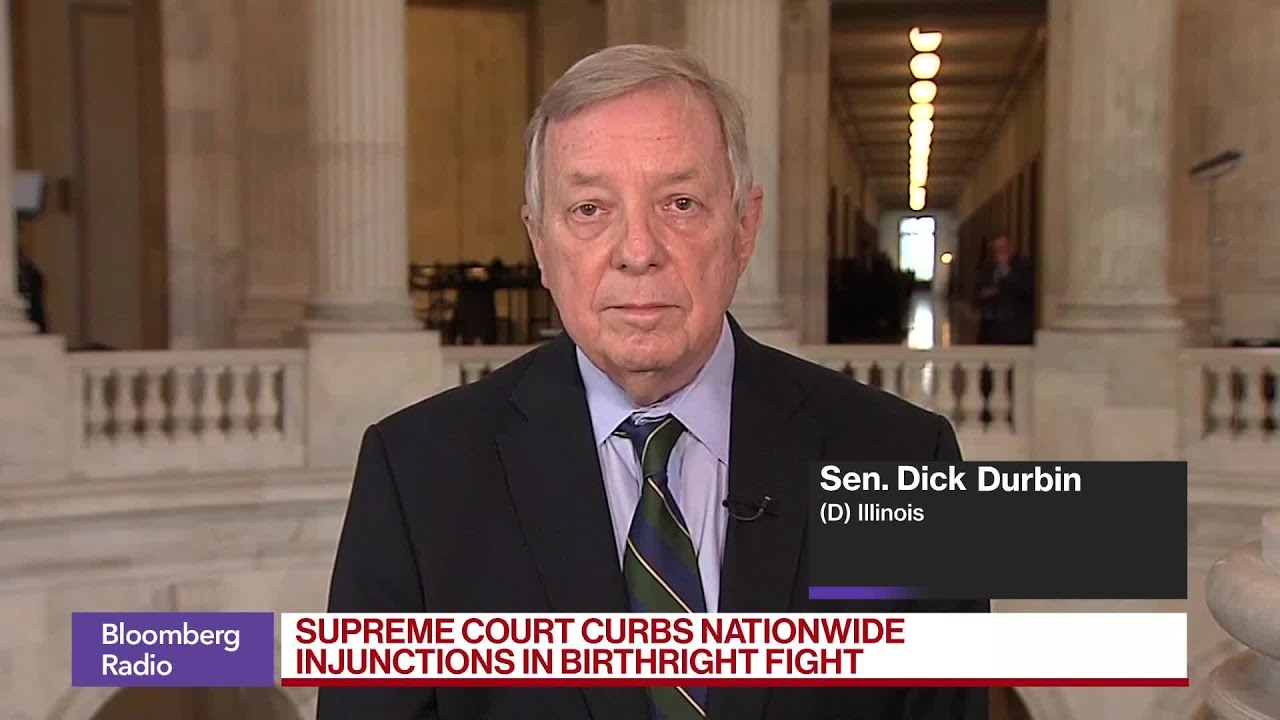
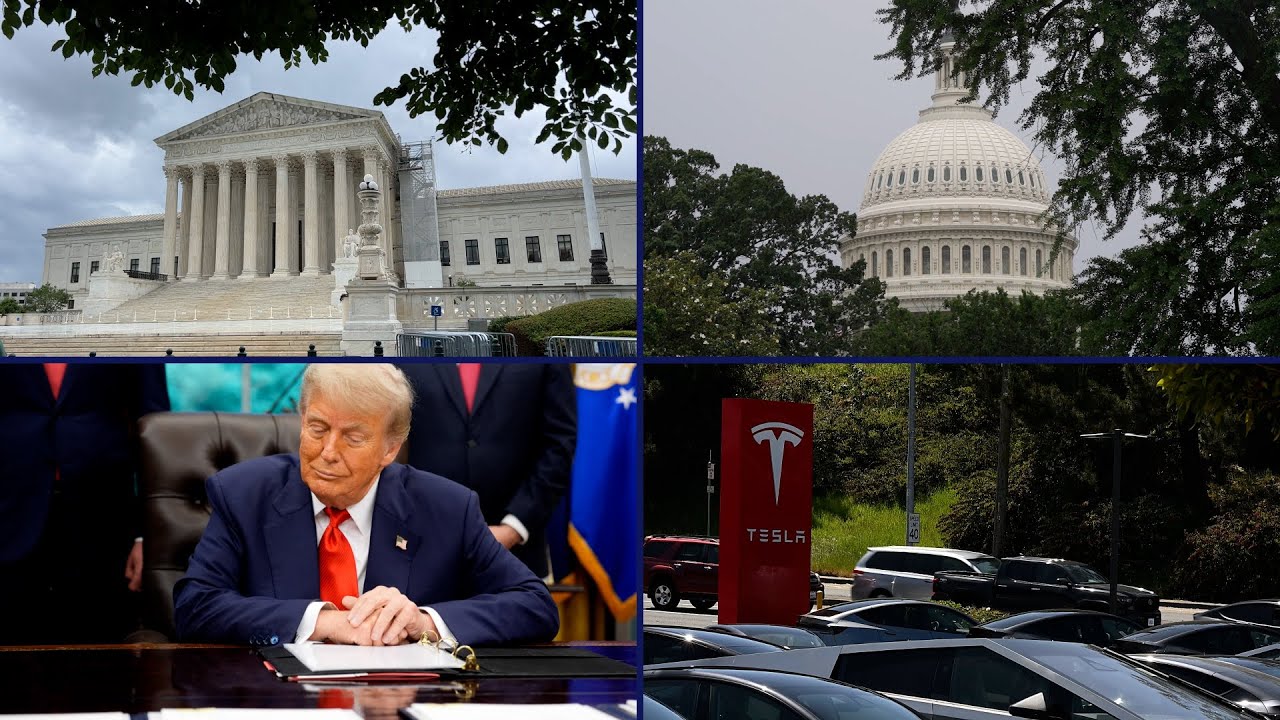
The US Supreme Court has limited the power of judges to block government policies nationwide, but left unresolved a fight over President Donald Trump's restrictions on automatic birthright citizenship.
The 6-3 ruling said Trump's restrictions on birthright citizenship won't take effect for 30 days, and the justices returned three cases to the lower courts to consider whether to keep the rules on hold for longer.
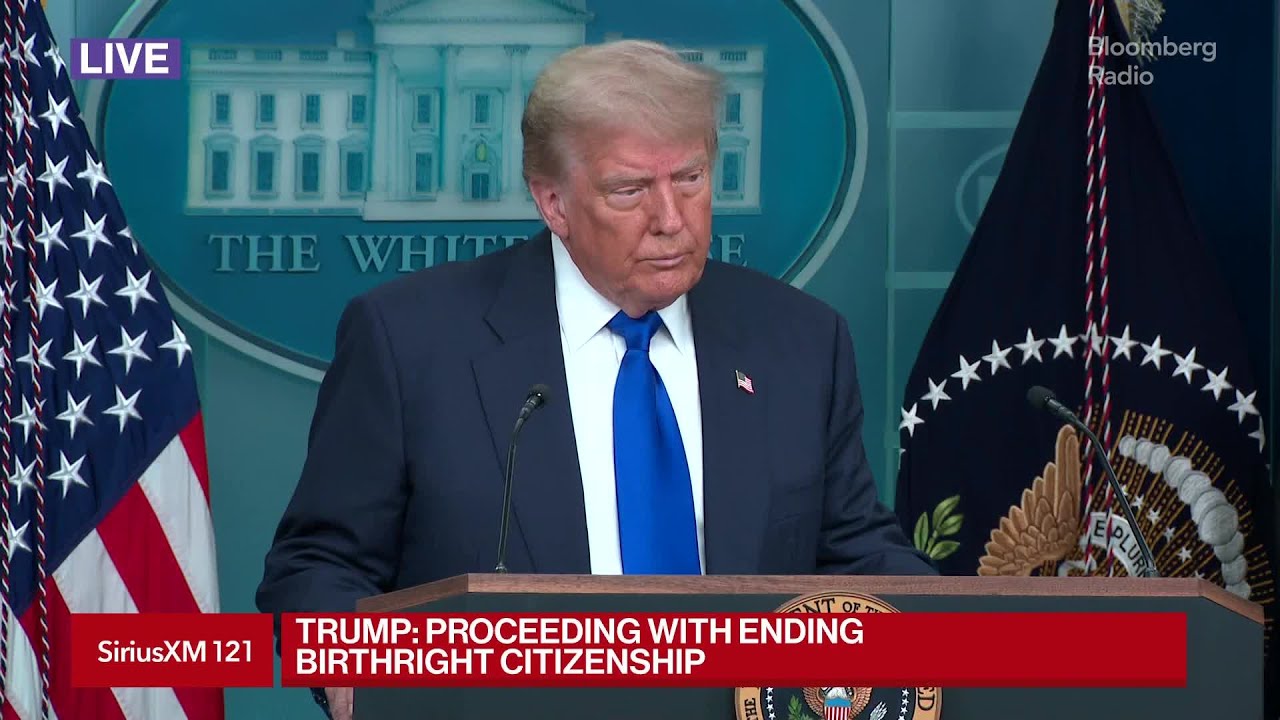
Trump hailed the decision as a "monumental victory" and said the administration would move to get blocks lifted on a number of his policies that have been put on hold by federal courts. The US Supreme Court has limited the power of judges to block government policies nationwide, but left unresolved a fight over President Donald Trump's restrictions on automatic birthright citizenship.
The 6-3 ruling said Trump's restrictions on birthright citizenship won't take effect for 30 days, and the justices returned three cases to the lower courts to consider whether to keep the rules on hold for longer.
Trump hailed the decision as a "monumental victory" and said the administration would move to get blocks lifted on a number of his policies that have been put on hold by federal courts. Robert McWhirter, Constitutional lawyer and a practicing criminal defense and civil rights lawyer in Maricopa County, joins Balance of Power to react to the Supreme Court ruling.
14th Amendment
Trump’s Jan. 20 executive order would jettison what has been the widespread understanding that the Constitution’s 14th Amendment confers citizenship on virtually everyone born on US soil. Trump would restrict that to babies with at least one parent who is a US citizen or green card holder, meaning that even the newborn children of people on temporary visas wouldn’t become Americans.
The administration didn’t ask the court to directly consider the constitutionality of the executive order, focusing instead on nationwide injunctions — a practice that has roiled presidents from both parties over the years. The Supreme Court took the unusual step of hearing oral arguments on the emergency requests on May 15.
The executive order is being challenged by immigrant-rights organizations, affected individuals and 22 Democratic-run states, plus the District of Columbia. In each of the three cases, a federal appeals court refused to intervene after a trial judge blocked the executive order across the country.
Trump asked the high court to limit those rulings to particular people connected to the cases, or to the states and other jurisdictions that sued.
Barrett said the nationwide orders “likely exceed the equitable authority that Congress has granted to federal courts.”
But she also said judges have power to give “complete relief” to suing parties, leaving open the possibility that lower court judges could block the policy in the jurisdictions that sued and possibly more broadly.
The states, which are involved in two of the suits, say they would receive less federal aid if the policy took effect because many programs apply only to citizens. And the states say letting the restrictions take effect in neighboring jurisdictions would be unworkable given that children often move across state lines.
Barrett said the lower courts should consider whether there are ways to address those issues short of a nationwide block on the policy. She didn’t resolve the administration’s separate argument that the states lacked legal standing to sue at all.
She also left open the possibility that, at least in some cases, individuals could use class action suits to seek far-reaching court orders.
Critics say Trump is trying to unilaterally overturn part of the 14th Amendment, which confers citizenship on anyone who is born in the US and “subject to the jurisdiction thereof.”
The Supreme Court said in 1898 that the provision covered a man born in California to two Chinese parents, and the court reinforced that decision in a 1982 ruling backing the right of undocumented immigrants to attend public school.
The cases are Trump v. CASA, 24a884; Trump v. Washington, 24a885; and Trump v. New Jersey, 24a886.
--------
Watch Bloomberg Radio LIVE on YouTube
Weekdays 7am-6pm ET
Follow us on X
Subscribe to our Podcasts:
Bloomberg Daybreak
Bloomberg Surveillance
Bloomberg Intelligence
Balance of Power
Bloomberg Businessweek
Listen on Apple CarPlay and Android Auto with the Bloomberg Business app:
Apple CarPlay
Android Auto
Visit our YouTube channels:
Bloomberg Podcasts
Bloomberg Television
Bloomberg Originals
Sentinel Indexing in Progress
Metadata and chapters are available. Claim extraction for this episode is pending.
All video content is delivered via YouTube embedded players in accordance with the YouTube Terms of Service. Sentinel provides research tools that promote discovery and accountability across political media.