
Bloomberg Podcasts
@bloombergpodcasts·503K subscribers·32.4K videos
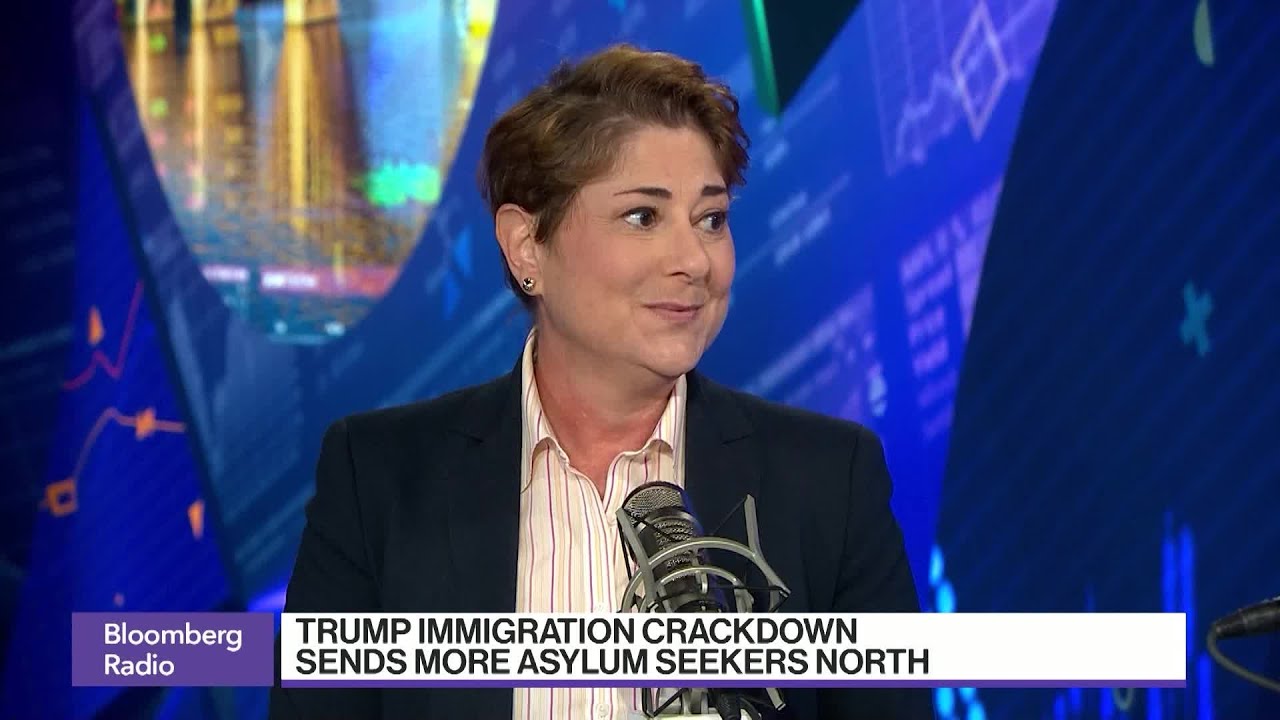
Immigration Crackdown Likely to Lead to 'Startling' Labor Market Numbers, Says Edelberg
Posted
July 11, 2025
Views
151,348
Likes
2,025
Comments
954
Engagement
July 11, 2025
151,348
2,025
954
1.97%
Every word spoken in this episode is indexed. Type any phrase to jump straight to the moment it was said.
Type any word or phrase that may have been spoken. Click a result to seek the player to that exact moment.
Try a name, a topic, or a quoted line
 6:35Now Playing
Wendy Edelberg, senior fellow in economic studies at the Brookings Institution, breaks down the economic impact of President Trump's immigration crackdown and what that it means for the future of the US labor market.
A growing number of migrants in the US are heading north to seek asylum, even as Canada adopts increasingly restrictive immigration policies of its own.
During the first six days of July, Canadian officials at the Saint-Bernard-de-Lacolle border crossing — the busiest land port between New York and Quebec — received 761 asylum claims, a more than 400% increase from the same period a year ago, according to data from the Canada Border Services Agency. The number of claims at the crossing rose 128% in June and is up 82% since the start of the year.
The spike comes amid a renewed push by President Donald Trump to tighten immigration enforcement. In recent months, US authorities have stepped up immigration arrests and begun unwinding temporary humanitarian programs that had allowed hundreds of thousands of people from Cuba, Haiti, Nicaragua, Venezuela and other nations to live and work in the US, in many cases for years.
The Saint-Bernard-de-Lacolle crossing has become a key entry point for northbound flows. The surrounding area was once known for its wooded footpaths that allowed asylum seekers to bypass official checks. But 2023 rule changes clamped down on those informal routes, pushing more people through the official port of Saint-Bernard-de-Lacolle, about an hour south of Montreal and within reach of US cities like New York and Boston.
Haitians and Venezuelans are currently the most common nationalities applying for asylum in Canada by land, according to border agency data. Colombians, Pakistanis and US citizens also rank high.
With a well-established Haitian community in French-speaking Quebec and growing anxiety among undocumented populations in the US, migration experts say a continued — even if modest — increase in Canadian asylum claims is likely.
“All the people who arrive here are afraid of being arrested, whether they have papers or not,” said Marjorie Villefranche, an advocate for the Haitian community in Montreal and former director of Maison d’Haiti, an organization that assists migrants.
The jump in claims is especially striking given that both the US and Canada have tightened rules around their asylum systems, which had previously led to influxes at the Canadian border, including during Trump’s first term. A 2023 update to the Safe Third Country Agreement between the two nations effectively closed a longstanding loophole, now requiring asylum seekers to apply at official ports of entry, where they are more likely to be turned away unless they can prove close family ties in Canada.
More than 2,000 foreign nationals who showed up at a Canadian port of entry and made a claim have already been removed and sent back to the US so far this year. That’s about one for every 10 asylum claimants. The border agency said in a statement that it’s “committed” to increasing the number of removals.
“Once they’re rejected, it’s quite likely they’ll be detained. So it’s a very risky proposition,” said Pia Zambelli, chairwoman of the refugee committee at the Canadian Immigration Lawyers Association. “They could end up being in a great deal more danger by approaching the Canadian border and getting turned back than if they had attempted to see if there’s any avenues for them to remain or claim asylum in the US.”
Canada’s approach reflects a broader shift in public sentiment. After years of relatively open immigration policies, a surge in newcomers following the pandemic has strained housing, health care and public services, leading the government to introduce tighter limits on student visas, work permits and family reunification. It’s set a target of reducing temporary residents to 5% of the population from about 7.3% over three years.
--------
Watch Bloomberg Radio LIVE on YouTube
Weekdays 7am-6pm ET
Follow us on X
Subscribe to our Podcasts:
Bloomberg Daybreak
Bloomberg Surveillance
Bloomberg Intelligence
Balance of Power
Bloomberg Businessweek
Listen on Apple CarPlay and Android Auto with the Bloomberg Business app:
Apple CarPlay
Android Auto
Visit our YouTube channels:
Bloomberg Podcasts
Bloomberg Television
Bloomberg Originals
Sentinel Indexing in Progress
Metadata and chapters are available. Claim extraction for this episode is pending.
All video content is delivered via YouTube embedded players in accordance with the YouTube Terms of Service. Sentinel provides research tools that promote discovery and accountability across political media.