Bloomberg Podcasts
@bloombergpodcasts·503K subscribers·32.4K videos
Japan Deal Raises Fear Trump Undercut Goals
Posted
July 24, 2025
Views
17,101
Likes
174
Comments
52
Engagement
1.32%
July 24, 2025
17,101
174
52
1.32%
Every word spoken in this episode is indexed. Type any phrase to jump straight to the moment it was said.
Type any word or phrase that may have been spoken. Click a result to seek the player to that exact moment.
Try a name, a topic, or a quoted line
See what was published immediately before and after this episode.
 4:59Now Playing
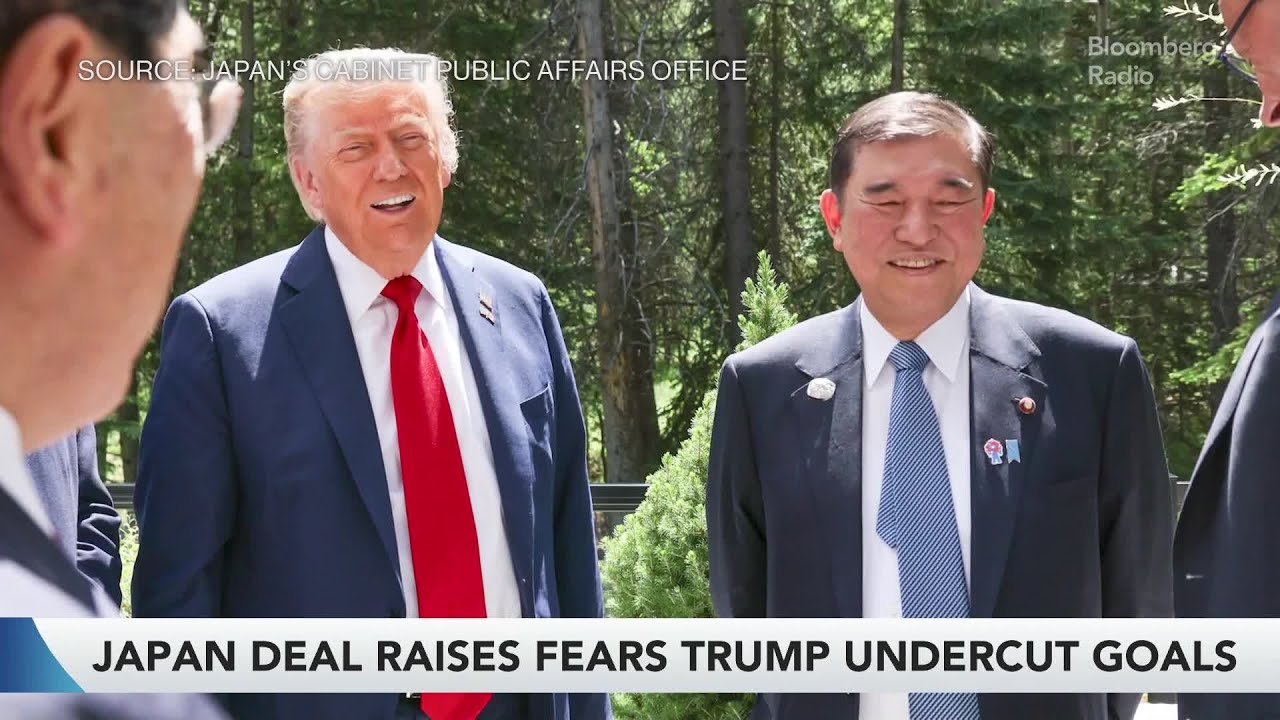
David Gura, host of the Bloomberg "Big Take" podcast, discusses his interviews at the recent Colorado Security Summit and key takeaways from the US's trade deal with Japan.
US industries and protectionists are raising alarms with President Donald Trump’s pact with Japan, saying it risks undercutting his stated goals of rebalancing America’s trading relationships and reviving domestic manufacturing.
Trump and his top negotiators on Wednesday hailed the deal as a potential model for other countries hoping to win tariff concessions, citing Tokyo’s pledge to create a $550 billion fund for US investments.
The president’s decision to grant Japan relief on automobiles, however, provoked criticism that the agreement wouldn’t address the main source of the US’s trade deficit with Japan even as it disadvantages Detroit’s Big Three. Around 80% of the US-Japan trade gap is in cars and car parts.
Tuesday’s announcement marked the latest signal that Trump is willing to negotiate on industry-specific duties on products including chips and pharmaceuticals, potentially undermining the most durable pillar of his tariff strategy.
The reaction underscores the risks of the president’s transactional negotiating style. Industries that have championed much of Trump’s trade strategy and stand to benefit from robust levies on foreign rivals could be left in the lurch as his plans shift.
“Any deal that charges a lower tariff for Japanese imports with virtually no US content than it does North American built vehicles with high US content is a bad deal for the US industry and US auto workers,” said Matt Blunt, president of the American Automotive Policy Council that represents Ford Motor Co., General Motors Co. and Stellantis NV.
Trump defended his approach, which resulted in a deal to reduce Japan’s country-specific rate to 15% and put US levies on cars and parts at the same level — lower than the 25% global charge on vehicles.
“I WILL ONLY LOWER TARIFFS IF A COUNTRY AGREES TO OPEN ITS MARKET. IF NOT, MUCH HIGHER TARIFFS! Japan’s Markets are now OPEN (for first time ever!). USA BUSINESSES WILL BOOM!” Trump posted.
His Commerce Secretary, Howard Lutnick, on Thursday called gripes from US automakers “silly” and said that manufacturing executives he spoke to “are cool with it.”
“When your competitor goes from 25% against them to 15% against them, I guess you’re a little bummed out. But come on, there’s no tariff if you build it in America,” Lutnick said on CNBC.
--------
Watch Bloomberg Radio LIVE on YouTube
Weekdays 7am-6pm ET
Follow us on X
Subscribe to our Podcasts:
Bloomberg Daybreak
Bloomberg Surveillance
Bloomberg Intelligence
Balance of Power
Bloomberg Businessweek
Listen on Apple CarPlay and Android Auto with the Bloomberg Business app:
Apple CarPlay
Android Auto
Visit our YouTube channels:
Bloomberg Podcasts
Bloomberg Television
Bloomberg Originals
Sentinel Indexing in Progress
Metadata and chapters are available. Claim extraction for this episode is pending.
All video content is delivered via YouTube embedded players in accordance with the YouTube Terms of Service. Sentinel provides research tools that promote discovery and accountability across political media.