Bloomberg Podcasts
@bloombergpodcasts·503K subscribers·32.4K videos
Immigration Crackdown An 'Unprecedented Experiment' for Economy, Says Former Treasury Official
Posted
August 1, 2025
Views
36,635
Likes
467
Comments
111
Engagement
August 1, 2025
36,635
467
111
1.58%
Every word spoken in this episode is indexed. Type any phrase to jump straight to the moment it was said.
Type any word or phrase that may have been spoken. Click a result to seek the player to that exact moment.
Try a name, a topic, or a quoted line
See what was published immediately before and after this episode.
 7:58Now Playing
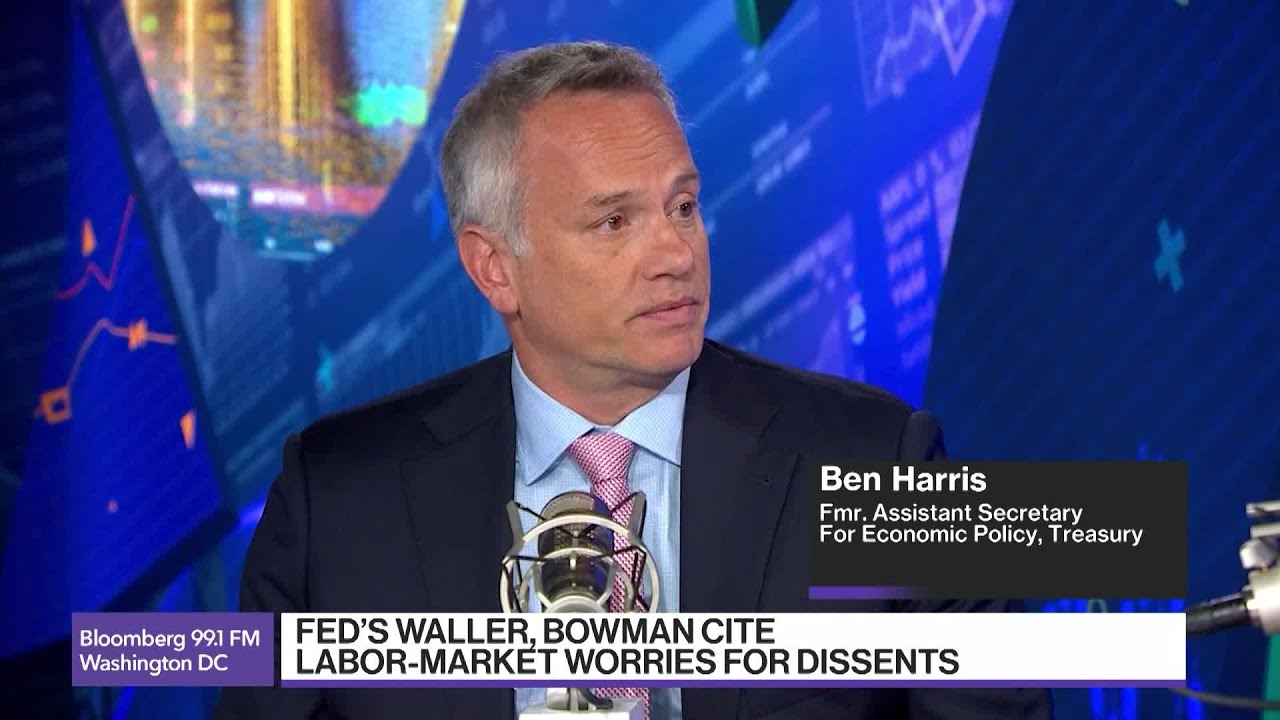
Ben Harris, director of economic studies at the Brookings Institution and former assistant secretary for economic policy at the US Treasury, reacts to the clarity provided by today's week jobs report and says that he doesn't know what kind of impact the Trump administration crackdown on immigration will have on the economy.
US job growth cooled sharply over the past three months and the unemployment rate rose, showing the labor market is shifting into a lower gear amid widespread economic uncertainty.
Payrolls increased 73,000 in July after the prior two months were revised down by nearly 260,000, according to a Bureau of Labor Statistics report out Friday. In the last three months, employment growth has averaged a paltry 35,000 — the worst since the pandemic.
The data send a stronger signal that the labor market is weakening more notably. Not only is job growth cooling markedly and unemployment rising, it’s harder for unemployed Americans to get a job and wage gains have largely stalled. That poses further risks to a slowdown in consumer and business spending that’s already underway.
The report caps a week of high-profile data that show underlying economic momentum is cooling and inflation progress is stagnating, reasons why the Federal Reserve chose to keep interest rates unchanged again in a divided decision. Chair Jerome Powell maintained that the labor market is solid and the central bank needs to be wary of inflation risks — especially with President Donald Trump’s latest round of tariffs.
“The cracks in the labor market have widened substantially and add further pressure on the Federal Reserve to lower interest rates and support the dissenting Fed Governors’ views that the FOMC should have lowered rates this week,” Nationwide Chief Economist Kathy Bostjancic said in a note. She was referring to the Federal Open Market Committee, the panel that sets interest rates.
The latest employment report showed the steepest downward revisions to US jobs growth since the pandemic, offering a dramatically different picture of the labor market in recent months.
The Bureau of Labor Statistics marked down nonfarm payrolls by nearly 260,000 in May and June combined, according to the July employment report released Friday. The two-month revision was due in part to seasonal adjustment issues but also what economists say is a broader trend of low response rates.
Much of the downshift was seen in state and local government education — which substantially boosted June employment only to be largely revised away a month later. In emailed comments to Bloomberg, BLS said those sectors made up about 40% of the revision, and “was largely the result of routine incorporation of additional/corrected sample that came in after the initial release.”
That hints at what’s been a more concerning, underlying trend in not just labor-market data, but statistics overall: declining response rates.
BLS surveys firms in the payrolls survey over the course of three months, gaining a more complete picture as more businesses respond. But a smaller share of firms are responding to the first poll. Initial collection rates have repeatedly slid below 60% in recent months — down from the roughly 70% or more that was the norm before the pandemic.
“The more data you’re missing and comes in later, the higher the odds the revisions will be much larger,” said Omair Sharif, president of Inflation Insights LLC. “Fifty percent is just not enough.”
The jobs report is made up of two surveys: one of businesses, which produces the payrolls figures, and another of households, which is responsible for the unemployment rate. The household survey has also seen a decline in response rates. BLS said its analysts have “found no discernible relationship between collection rates and subsequent revisions” to the payrolls data.
Response rates have been declining for years as the public has become inundated with tedious surveys and trust in government and other institutions has eroded.
--------
Watch Bloomberg Radio LIVE on YouTube
Weekdays 7am-6pm ET
Follow us on X
Subscribe to our Podcasts:
Bloomberg Daybreak
Bloomberg Surveillance
Bloomberg Intelligence
Balance of Power
Bloomberg Businessweek
Listen on Apple CarPlay and Android Auto with the Bloomberg Business app:
Apple CarPlay
Android Auto
Visit our YouTube channels:
Bloomberg Podcasts
Bloomberg Television
Bloomberg Originals
Sentinel Indexing in Progress
Metadata and chapters are available. Claim extraction for this episode is pending.
All video content is delivered via YouTube embedded players in accordance with the YouTube Terms of Service. Sentinel provides research tools that promote discovery and accountability across political media.