Bloomberg Podcasts
@bloombergpodcasts·503K subscribers·32.4K videos
Trump Boosts Tariffs Across The World, Reshaping Global Commerce
Posted
August 1, 2025
Views
10,459
Likes
91
Comments
39
Engagement
August 1, 2025
10,459
91
39
1.24%
Every word spoken in this episode is indexed. Type any phrase to jump straight to the moment it was said.
Type any word or phrase that may have been spoken. Click a result to seek the player to that exact moment.
Try a name, a topic, or a quoted line
See what was published immediately before and after this episode.
 3:46
3:46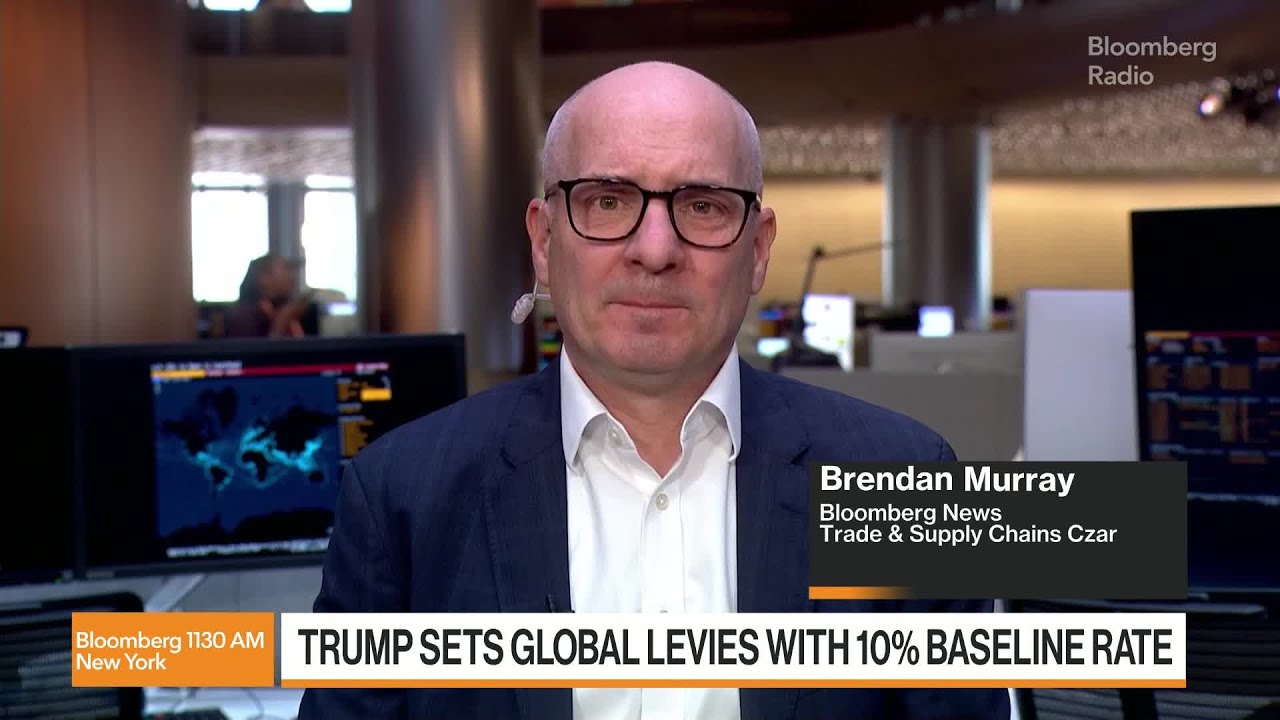 3:41Now Playing
President Donald Trump unveiled a slew of new tariffs that boosted the average US rate on goods from across the world, forging ahead with his turbulent effort to reshape international commerce.
The baseline rates for many trading partners remain unchanged at 10% from the duties Trump imposed in April, easing the worst fears of investors after the president had previously said they could double. Yet his move to raise tariffs on some Canadian goods to 35% threatens to inject fresh tensions into an already strained relationship, while countries like Switzerland and New Zealand also saw increased rates.
Taken together, the average US tariff rate will rise to 15.2% if rates are implemented as announced, according to Bloomberg Economics. That’s up from 13.3% earlier and significantly higher than the 2.3% in 2024 before Trump took office.
Bloomberg's Brendan Murray reports.
Most of the tariffs will take effect after midnight on Aug. 7, to allow time for US Customs and Border Protection to make necessary changes to collect the levies. Trump signed the directive just hours before his prior Aug. 1 deadline for higher tariffs to kick in on scores of trading partners.
Major industrialized economies, including the European Union, Japan and South Korea, accepted 15% duties on their products, while charges on items from Mexico, Canada and China are even bigger.
Trump is expected to unveil separate tariffs on imports of pharmaceuticals, semiconductors, critical minerals and other key industrial products in the coming weeks, meaning ongoing uncertainty for companies and investors.
Stocks came under pressure after Trump announced the new rates. The MSCI All Country World Index slid 0.2%. Contracts for the S&P 500 fell 0.2% and those for Europe declined 0.6%. Asian shares fell 0.7%, marking a sixth straight decline and the longest run of losses this year.
The Taiwan dollar and Korean won led declines in currency markets, while the Swiss franc edged lower after the nation’s products were hit with a 39% charge, one of the few nations that saw its rate go up. The Canadian dollar held steady in the face of higher rates.
“The reality is that we’re still going to see higher tariffs than pre-Liberation Day and we’ll start to see some economic impact of that in the months ahead,” said Shane Oliver, a Sydney-based chief investment officer at AMP Ltd. “There’s still uncertainty about China, Mexico has been delayed by another 90 days and details around sectoral tariffs are also yet to come.”
The announcement brings to a close, at least for now, months of wait-and-see about how Trump would set his country-based tariffs, which he billed as the centerpiece of his plan to shrink trade deficits and revive American manufacturing.
Trump twice delayed his so-called reciprocal tariffs, first announced in April, to allow time for negotiations, first after markets panicked and then as foreign governments bargained to get better terms.
Thursday’s order was signed behind closed doors without the fanfare of Trump’s April tariff rollout, during which he brandished placards with rates during a Rose Garden event. Since then Trump has faced criticism for overpromising on trade deals after he and aides vowed to broker numerous agreements, with at least one pledging “90 deals in 90 days.”
In the end, imports from about 40 countries will face the new 15% rate and roughly a dozen economies’ products will be hit with higher duties, either because they reached a deal or Trump sent them a letter unilaterally setting import taxes. The latter group has the highest goods-trade surpluses with the US.
Some of those were expected, such as a 25% levy on Indian exports that Trump announced this week on social media. Others included charges of 20% on Taiwanese products and 30% on South African goods. Thailand and Cambodia, two countries that were said to have struck a last-minute deal, received a 19% duty, matching rates imposed on regional neighbors including Indonesia and the Philippines. Vietnam’s goods will be tariffed at 20%.
There were signs that Trump’s order took some partners by surprise.
--------
Watch Bloomberg Radio LIVE on YouTube
Weekdays 7am-6pm ET
Follow us on X
Subscribe to our Podcasts:
Bloomberg Daybreak
Bloomberg Surveillance
Bloomberg Intelligence
Balance of Power
Bloomberg Businessweek
Listen on Apple CarPlay and Android Auto with the Bloomberg Business app:
Apple CarPlay
Android Auto
Visit our YouTube channels:
Bloomberg Podcasts
Bloomberg Television
Bloomberg Originals
Sentinel Indexing in Progress
Metadata and chapters are available. Claim extraction for this episode is pending.
All video content is delivered via YouTube embedded players in accordance with the YouTube Terms of Service. Sentinel provides research tools that promote discovery and accountability across political media.