
Bloomberg Podcasts
@bloombergpodcasts·503K subscribers·32.4K videos
Wavering US Consumer, Job Market Show Risks to Economy
Posted
August 4, 2025
Views
1,267
Likes
9
Comments
2
Engagement
0.87%
August 4, 2025
1,267
9
2
0.87%
Every word spoken in this episode is indexed. Type any phrase to jump straight to the moment it was said.
Type any word or phrase that may have been spoken. Click a result to seek the player to that exact moment.
Try a name, a topic, or a quoted line
See what was published immediately before and after this episode.
 2:31Now Playing
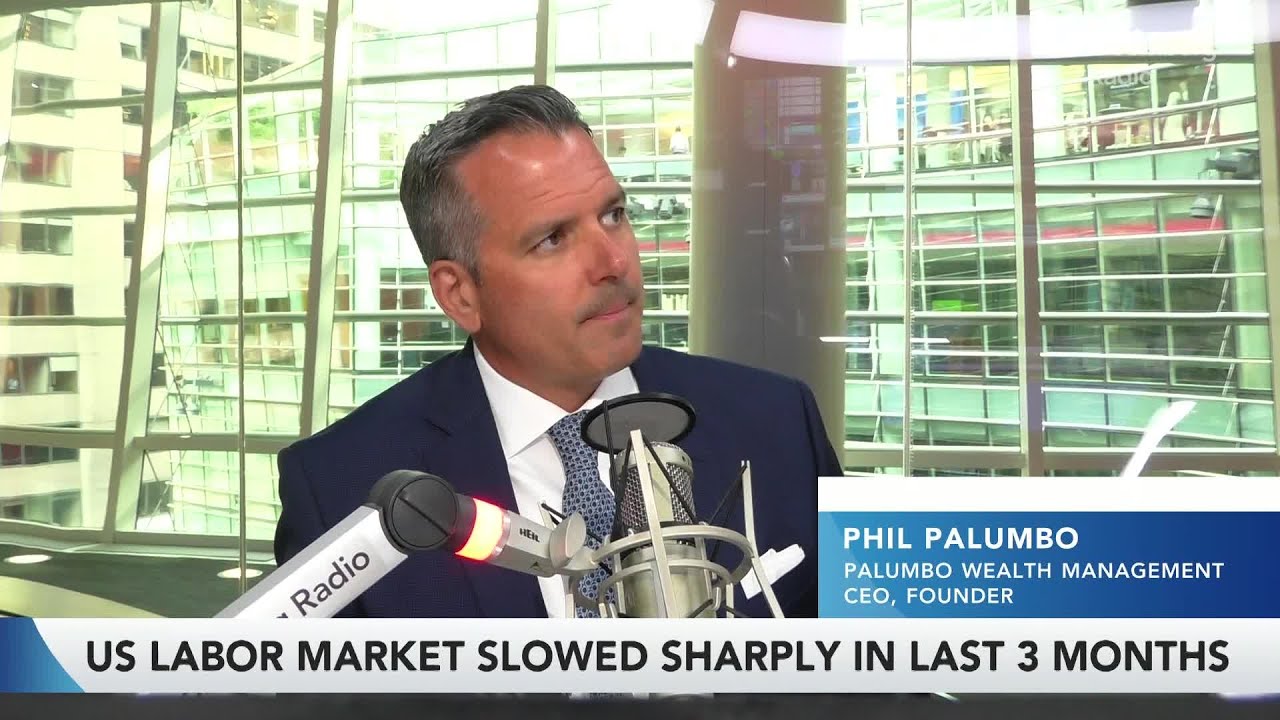
Phil Palumbo, CEO and founder at Palumbo Wealth Management, gives his outlook on the Fed and why he remains bullish on US equities.
Last week’s economic data caught up with the kind of economy that company executives and consumers have long described this year: flashing some warning signs.
Employment numbers released Friday painted a much weaker picture of the labor market than previously reported. Inflation-adjusted consumer spending — which accounts for about two-thirds of US economic activity — fell in the first half of the year, while the Federal Reserve’s preferred price gauge picked up in June.
The US economy is “struggling to maintain its footing,” said Sarah House, a senior economist at Wells Fargo & Co.
“Businesses and consumers have been facing a whirlwind of economic policy changes, elevated inflation and monetary policy that remains somewhat restrictive,” she said. “The loss of momentum feared by this mix is unfortunately beginning to bear out.”
The employment data out Friday, including revisions that shaved off nearly 260,000 jobs from the May and June figures, jolted markets and upended the perception that the labor market had been solid heading into summer. Employment growth averaged just 35,000 over the past three months — the worst since the pandemic.
The Bureau of Labor Statistics report called into question the Fed’s decision to hold interest rates just a few days earlier. It also got caught in the political maelstrom after its publication, with President Donald Trump telling officials to fire the BLS commissioner — and reiterating his call on the Fed and Chair Jerome Powell to lower rates.
Then later Friday came the surprise announcement that Fed Governor Adriana Kugler will resign from her role, offering Trump a sooner-than-anticipated opportunity to install a policymaker that aligns with that vision.
Many firms have put investment and hiring on ice as they try to figure out what the impact from Trump’s economic policies — chief of them tariffs — will be. The housing market just experienced its worst spring season in 13 years. And consumers, facing mounting debt, have cut back on non-essential items.
“This struggle is likely to continue as prices rise and businesses and consumers find it more and more difficult to spend and invest,” said Gregory Daco, chief economist at EY-Parthenon.
That said, the US economy is expected to continue to plow ahead, albeit at a slower pace than in years past. Forecasters anticipate the economy to grow 1.5% this year and 1.7% in 2026, based on the latest survey conducted by Bloomberg News.
At Grata Thai Cuisine in Midtown Manhattan, owner Philip Sirikuptamas sees the slowdown first-hand. He is dealing with the double blow of higher prices and fewer consumers coming into his restaurant. The costs of imported products like coconut milk have gone up substantially, he said, while chicken prices have almost tripled. At the same time, he’s wary of raising prices and scaring away consumers.
“The customers spend less because they are struggling to make money,” said Sirikuptamas, 66. “Same as we are.”
Consumers Pull Back
Companies from Chipotle Mexican Grill Inc. to Procter & Gamble Co. have noted the economic uncertainty is weighing on demand.
“We see consumption trends consistently decelerating, not significantly, but we see a deceleration in the US,” P&G Chief Financial Officer Andre Schulten said during the company’s quarterly earnings call. “The volatility the consumer is seeing, I think is maybe not necessarily grounded in their current reality, but more on what to expect for the future.”
At the same time, June data showed a pickup in prices of goods that are often imported — like furniture and appliances — an indication that some companies are starting to pass the cost of higher duties onto consumers.
Even after the Trump administration reached trade deals with key partners, tariffs announced last week will boost the average US rate on goods from across the world. Many economists expect import levies to push up prices in the coming months.
--------
Watch Bloomberg Radio LIVE on YouTube
Weekdays 7am-6pm ET
Follow us on X
Subscribe to our Podcasts:
Bloomberg Daybreak
Bloomberg Surveillance
Bloomberg Intelligence
Balance of Power
Bloomberg Businessweek
Listen on Apple CarPlay and Android Auto with the Bloomberg Business app:
Apple CarPlay
Android Auto
Visit our YouTube channels:
Bloomberg Podcasts
Bloomberg Television
Bloomberg Originals
Sentinel Indexing in Progress
Metadata and chapters are available. Claim extraction for this episode is pending.
All video content is delivered via YouTube embedded players in accordance with the YouTube Terms of Service. Sentinel provides research tools that promote discovery and accountability across political media.