Bloomberg Podcasts
@bloombergpodcasts·503K subscribers·32.4K videos
Tense Talks May Unravel US, India Relationship
Posted
August 8, 2025
Views
268,594
Likes
2,686
Comments
1,629
Engagement
1.61%
August 8, 2025
268,594
2,686
1,629
1.61%
Every word spoken in this episode is indexed. Type any phrase to jump straight to the moment it was said.
Type any word or phrase that may have been spoken. Click a result to seek the player to that exact moment.
Try a name, a topic, or a quoted line
See what was published immediately before and after this episode.
 6:26Now Playing
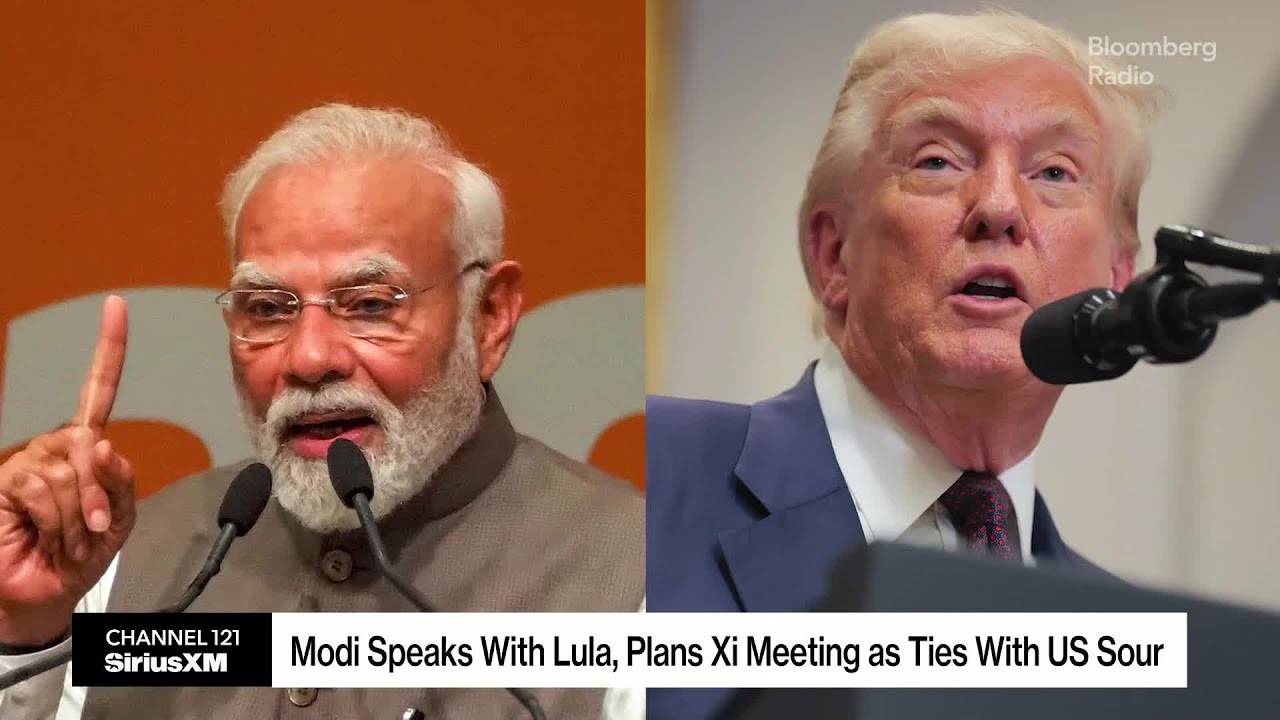
Wendy Cutler, former acting US trade representative, breaks down the long-term implications of President Trump's decision to place tariffs on India for buying Russian oil and how that move could push the country closer to China.
In the weeks after India and Pakistan agreed to a ceasefire in May, officials in New Delhi seethed over Donald Trump’s claims that he brokered an end to a four-day armed conflict.
As the US president repeatedly spoke about how he prevented a nuclear war, Indian diplomats started to push back publicly against his version of events. The tensions came to a head in a June 17 phone call with Narendra Modi, which was held after Trump left the Group of Seven summit in Canada early and couldn’t meet the Indian leader in person.
In the 35-minute conversation, Modi told Trump that the two nations directly discussed a ceasefire upon Pakistan’s request following a bombardment by India. Modi said India “does not and will never accept mediation,” according to an Indian readout, adding that Trump “listened carefully.”
Modi felt like he needed to set the record straight in the call after his aides discovered that Trump planned to host a lunch the following day at the White House for Pakistani Army Chief Asim Munir, according to officials in New Delhi familiar with the matter, who requested anonymity to speak about confidential discussions.
While India had no problem if Trump met Pakistan’s civilian leaders, hosting Munir was seen as giving legitimacy to a military that Modi’s government accuses of supporting militant groups, they said. Wary that Trump would look to orchestrate a meeting between Munir and Modi, the Indian leader turned down an invitation to stop by the White House on the way back from Canada, they said, adding that he was also committed to visiting Croatia.
Although the US never made a direct request for Modi to acknowledge Trump’s role in the ceasefire, India saw a shift in tone from the White House after that phone call, according to the officials in New Delhi. Once Trump began publicly attacking India, they added, it was clear the episode marked a turning point in the broader relationship.
The events in May and June help explain a stunning escalation in tensions between the nations, which culminated this week when Trump said he’d impose a 50% tariff on Indian exports to the US — half of which includes a penalty for purchases of Russian oil. Even though Trump left some wiggle room to strike a deal, his vitriolic comments about India are upending a decades-long push by the US to court the world’s most-populous country as a counterweight to China.
Modi has been defiant after Trump’s escalation this week, vowing to protect the interests of small-scale farmers while his government blasted the US tariffs as “unfair, unjustified and unreasonable.” Still, people familiar with the situation said India has no plans to retaliate and officials are assessing whether to make some concessions — particularly in the agriculture and dairy sectors — to find a deal.
At the same time, Modi is reassessing a recent tilt toward the US. During the Cold War, India formed a strategic relationship with the Soviet Union to counter a US alliance with Pakistan. Over the decades, New Delhi has been able to rely on Russian support, including in its 1971 war with Pakistan and at the United Nations Security Council.
“The Russia relationship is old, time-tested,” said Navdeep Suri, India’s former high commissioner to Australia. “All those days when the US was letting New Delhi down, including at the United Nations, Moscow stood behind India like a rock. Oil is a small part of the current story. India won’t like to be seen as capitulating under pressure.”
China Trip
The US made a concerted effort to court India since the turn of the century, with successive administrations strengthening military and economic ties with the world’s most-populous country. The Quad grouping — comprising the US, India, Japan and Australia — is now central to the US’s Indo-Pacific strategy.
--------
Watch Bloomberg Radio LIVE on YouTube
Weekdays 7am-6pm ET
Follow us on X
Subscribe to our Podcasts:
Bloomberg Daybreak
Bloomberg Surveillance
Bloomberg Intelligence
Balance of Power
Bloomberg Businessweek
Listen on Apple CarPlay and Android Auto with the Bloomberg Business app:
Apple CarPlay
Android Auto
Visit our YouTube channels:
Bloomberg Podcasts
Bloomberg Television
Bloomberg Originals
Sentinel Indexing in Progress
Metadata and chapters are available. Claim extraction for this episode is pending.
All video content is delivered via YouTube embedded players in accordance with the YouTube Terms of Service. Sentinel provides research tools that promote discovery and accountability across political media.