Bloomberg Podcasts
@bloombergpodcasts·503K subscribers·32.4K videos
Nvidia, AMD to Pay 15% of China AI Chip Sales to US
Posted
August 11, 2025
Views
1,505
Likes
25
Comments
5
Engagement
1.99%
August 11, 2025
1,505
25
5
1.99%
Every word spoken in this episode is indexed. Type any phrase to jump straight to the moment it was said.
Type any word or phrase that may have been spoken. Click a result to seek the player to that exact moment.
Try a name, a topic, or a quoted line
See what was published immediately before and after this episode.
 5:35Now Playing
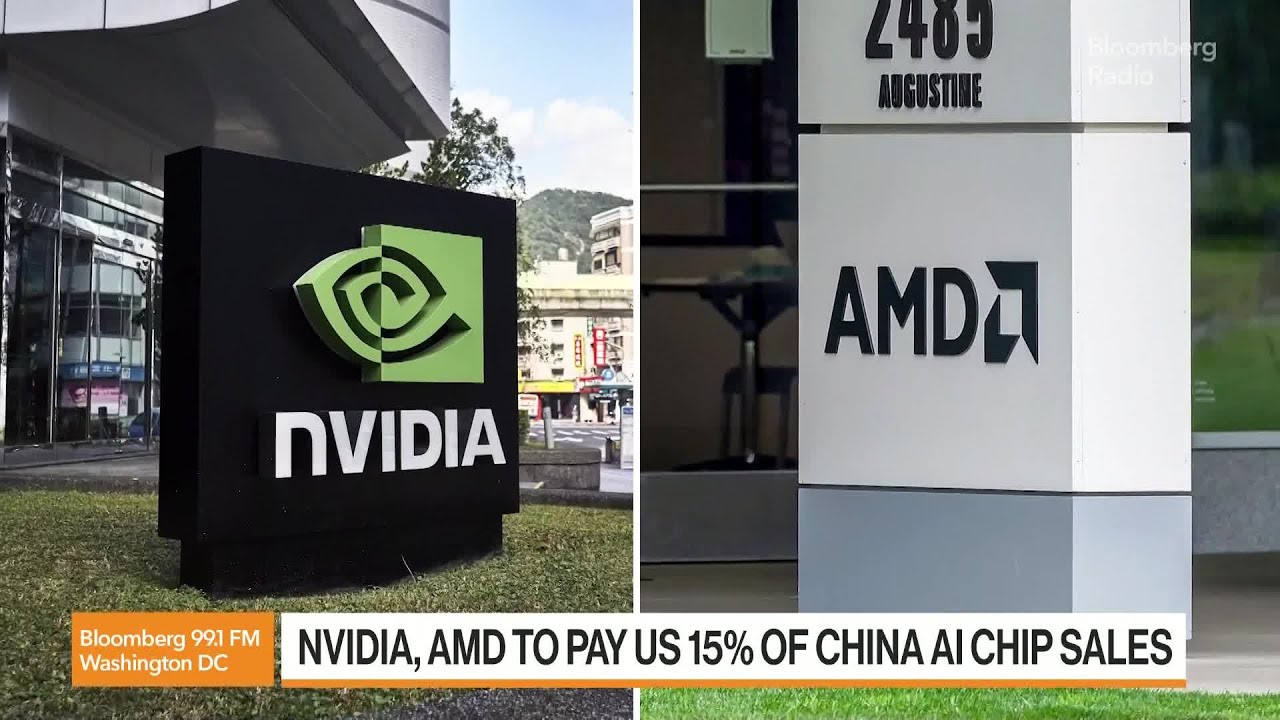
Ed Ludlow, Bloomberg Technology Co-Host, discusses the revenue-for-exports deal between the US government and two of the world's largest chipmakers.
Nvidia Corp. and Advanced Micro Devices Inc. agreed to pay the US government 15% of revenue from some chip sales to China. The chips — Nvidia’s H20 AI accelerator and AMD’s MI308 chips — were earlier banned by the Trump administration and require export licenses to sell.
“To call this unusual or unprecedented would be a staggering understatement,” said Stephen Olson, a former US trade negotiator now with the Singapore-based ISEA — Yusof Ishak Institute. “What we are seeing is in effect the monetization of US trade policy in which US companies must pay the US government for permission to export. If that’s the case, we’ve entered into a new and dangerous world.”
The chip-payment arrangement may face legal challenges because it could be construed as an export tax, something that’s not allowed under the constitution, trade experts said. The proposal is the latest direct government intervention into business and finance since Trump returned to the Oval Office in January. As well as a chaotic tariff campaign and persistent criticism of a sitting Federal Reserve chairman, Trump has used his Truth Social platform for everything from calling on CEOs to resign to offering commentary on corporate advertising campaigns.
Trump’s transactional policy approach saw him approve the sale of United States Steel Corp. to Japan’s Nippon Steel Corp. in a $14.1 billion deal that included caveats such as agreeing to US national security rules and a “golden share” for the US government. Japan, South Korea and the European Union all pledged to invest billions in the US, helping secure tariff rates of 15%, while companies such as Apple Inc. have also skirted levies by promising to invest hundreds of billions of dollars.
The Nvidia and AMD revenue-sharing deals may now prompt the White House to target other industries and goods, according to Deborah Elms, head of trade policy at the Hinrich Foundation in Singapore.
“The sky is the limit,” she said. “You could come up with all sorts of company-specific, country-specific combinations that would say, ‘No one else can trade, but if you pay us directly, then you get the ability to trade.’”
Although Nvidia and AMD agreed to the terms, there are questions about the legality of the agreement, Elms said. The arrangement looks like an export tax, which is forbidden by the US Constitution.
The Trump administration is already in the midst of a lawsuit related to his use of the International Emergency Economic Powers Act to levy what he called “reciprocal” tariffs on the world. On Friday, Trump warned of a “GREAT DEPRESSION” if US courts ruled that his tariffs were illegal.
Chips are at the heart of the US-China battle to dominate industries of the future such as AI and automation. The Biden administration restricted the sale of advanced chips to China, prompting Nvidia to develop the H20, which skirted such restrictions. Trump administration officials tightened export controls in April by barring Nvidia from selling the chips without a permit.
--------
Watch Bloomberg Radio LIVE on YouTube
Weekdays 7am-6pm ET
Follow us on X
Subscribe to our Podcasts:
Bloomberg Daybreak
Bloomberg Surveillance
Bloomberg Intelligence
Balance of Power
Bloomberg Businessweek
Listen on Apple CarPlay and Android Auto with the Bloomberg Business app:
Apple CarPlay
Android Auto
Visit our YouTube channels:
Bloomberg Podcasts
Bloomberg Television
Bloomberg Originals
Sentinel Indexing in Progress
Metadata and chapters are available. Claim extraction for this episode is pending.
All video content is delivered via YouTube embedded players in accordance with the YouTube Terms of Service. Sentinel provides research tools that promote discovery and accountability across political media.