Bloomberg Podcasts
@bloombergpodcasts·503K subscribers·32.4K videos
Trump Tariff Power Still Faces Legal Threat
Posted
August 11, 2025
Views
6,896
Likes
23
Comments
5
Engagement
0.41%
August 11, 2025
6,896
23
5
0.41%
Every word spoken in this episode is indexed. Type any phrase to jump straight to the moment it was said.
Type any word or phrase that may have been spoken. Click a result to seek the player to that exact moment.
Try a name, a topic, or a quoted line
See what was published immediately before and after this episode.
 2:57Now Playing
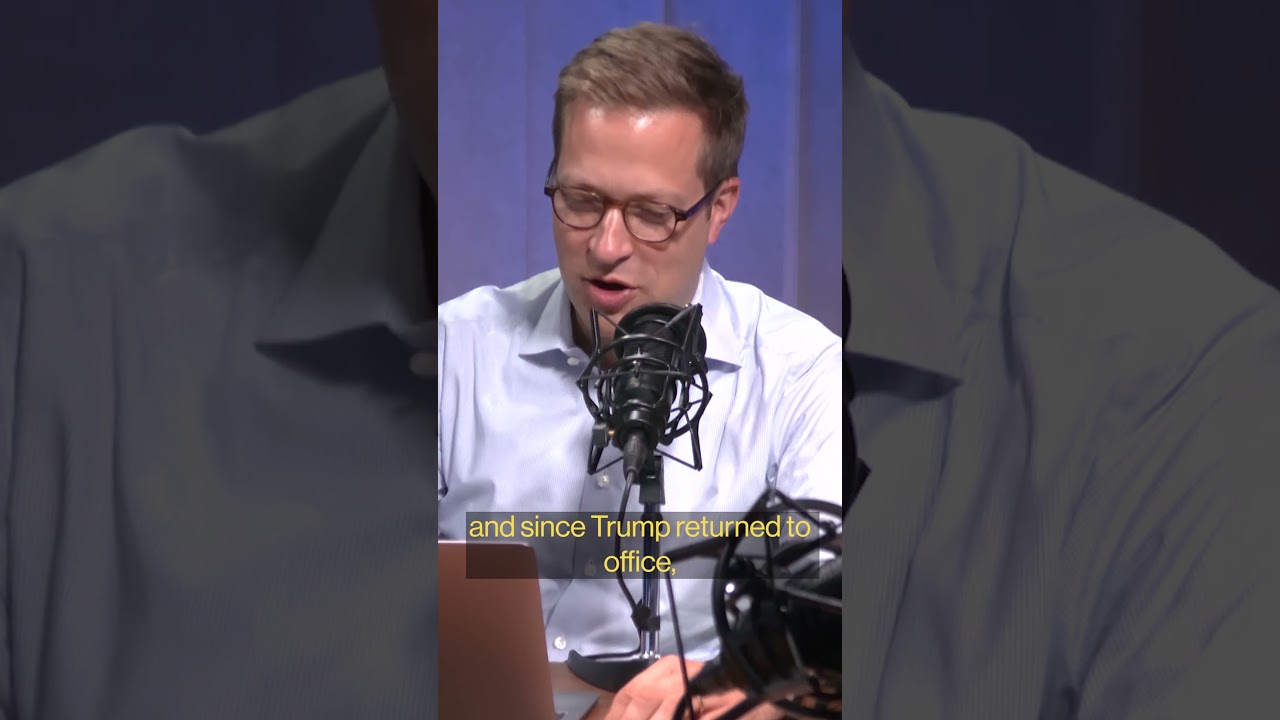
Henrietta Treyz, co-founder at Veda Partners, joins to discuss the pressing issue of President Trump's tariff legality and what we expect from an IEEPA ruling in the coming weeks.
A top administration official signaled confidence that President Donald Trump’s trade plans will survive even if the sweeping global tariffs that pushed other countries to the negotiating table are ultimately deemed illegal.
“The reality is, the countries understand the type of leverage that President Trump has created,” US Trade Representative Jamieson Greer said Friday on Bloomberg Television. “That’s why they’re doing these deals, and they’re going to stick regardless of what happened in litigation.”
Read More: Trump Tariff Blitz Unleashes Delayed Shock to Global Economy
Greer’s comments come after a high-stakes appeals court hearing in Washington, where a majority of an 11-judge panel expressed skepticism about whether Trump had the authority to bypass Congress and issue the tariffs under an emergency law.
A ruling by the US Court of Appeals for the Federal Circuit could take weeks, and the Supreme Court is likely to have the final say.
Greer said the administration feels “very confident in the case” and that a loss in court wouldn’t deter the US from pushing through with its tariff plans, much of which was laid out in an executive order late Thursday.
“I’m not going to go deep into our strategy here, mostly because we’re pretty confident on the current plan, but we will do whatever it takes to make sure that the president can continue to rectify the trade deficit and change the global trading system,” said Greer, a lawyer who served as chief of staff to ex-Trade Representative Robert Lighthizer during Trump’s first term.
What new tariffs are in effect in the US?
Trump has targeted shipments from all the nations America does business with and introduced separate levies on imports for specific sectors. If the tariffs announced as of the start of August proceed as planned, Bloomberg Economics estimates global gross domestic product could take a $2 trillion hit by the end of 2027, relative to its pre-trade war path.
The duties Trump has put into effect include:
A tax of 30% on products from China, with some exceptions. That’s down from 145% after the two countries agreed in mid-May to lower their tariffs on each others’ exports until Aug. 12. It’s yet to be confirmed whether this truce will be extended.
A minimum 10% baseline tariff on other imports, with some exceptions. Goods from countries that have the largest trade surpluses with the US face “reciprocal tariffs” ranging from 10% to 41%, most of which are set to kick in on Aug. 7.
Goods from Canada and Mexico that aren’t covered by a North American free-trade agreement known as the USMCA face a tariff of 25% and 35%, respectively. Imports of Canadian energy face a lower 10% levy.
A 40% additional tariff on goods deemed to be “transshipped,” meaning they are rerouted through another country to evade higher duties. The Trump administration hasn’t specified the so-called rules of origin it will use to define transshipped goods.
Tariffs on industrial metals: a 50% duty on imports of steel and aluminum products, and a 50% levy on imports of semi-finished copper products, such as pipes and wires, and copper derivative products, such as electrical components.
A 25% tax on imports of fully assembled automobiles, with some exceptions for cars coming from Canada and Mexico. A 25% tariff on imports of vehicle parts is being phased in over a two-year period, although components that comply with the USMCA are exempt. Auto imports from Japan, South Korea and the European Union face a lower 15% duty as part of trade deals struck with the Trump administration.
The “de minimis” tariff exemption, which allowed small packages with a retail value no higher than $800 to enter the US duty-free, will come to an end for all trading partners from Aug. 29. The loophole had already been closed for such low-value parcels coming from mainland China and Hong Kong.
--------
Watch Bloomberg Radio LIVE on YouTube
Weekdays 7am-6pm ET
Follow us on X
Subscribe to our Podcasts:
Bloomberg Daybreak
Bloomberg Surveillance
Bloomberg Intelligence
Balance of Power
Bloomberg Businessweek
Listen on Apple CarPlay and Android Auto with the Bloomberg Business app:
Apple CarPlay
Android Auto
Visit our YouTube channels:
Bloomberg Podcasts
Bloomberg Television
Bloomberg Originals
Sentinel Indexing in Progress
Metadata and chapters are available. Claim extraction for this episode is pending.
All video content is delivered via YouTube embedded players in accordance with the YouTube Terms of Service. Sentinel provides research tools that promote discovery and accountability across political media.