
Bloomberg Podcasts
@bloombergpodcasts·503K subscribers·32.4K videos
The Hidden Costs of Firing The CEO
Posted
August 20, 2025
Views
567
Likes
6
Engagement
1.06%
August 20, 2025
567
6
1.06%
Every word spoken in this episode is indexed. Type any phrase to jump straight to the moment it was said.
Type any word or phrase that may have been spoken. Click a result to seek the player to that exact moment.
Try a name, a topic, or a quoted line
See what was published immediately before and after this episode.
 4:43Now Playing
When Starbucks Corp. tapped Brian Niccol as chief executive officer in 2024, it cited the “critical need for a transformative leader” in justifying the hire. If performance significantly improves, stock payouts mean the corner-office switch could cost the company $130 million.
That figure includes estimated exit payments to outgoing CEO Laxman Narasimhan as well as so-called “make whole” awards of cash and stock sufficient to entice Niccol to leave his job running Chipotle Mexican Grill Inc. Starbucks deemed the payments “necessary” to recruit Niccol. But some observers balked.
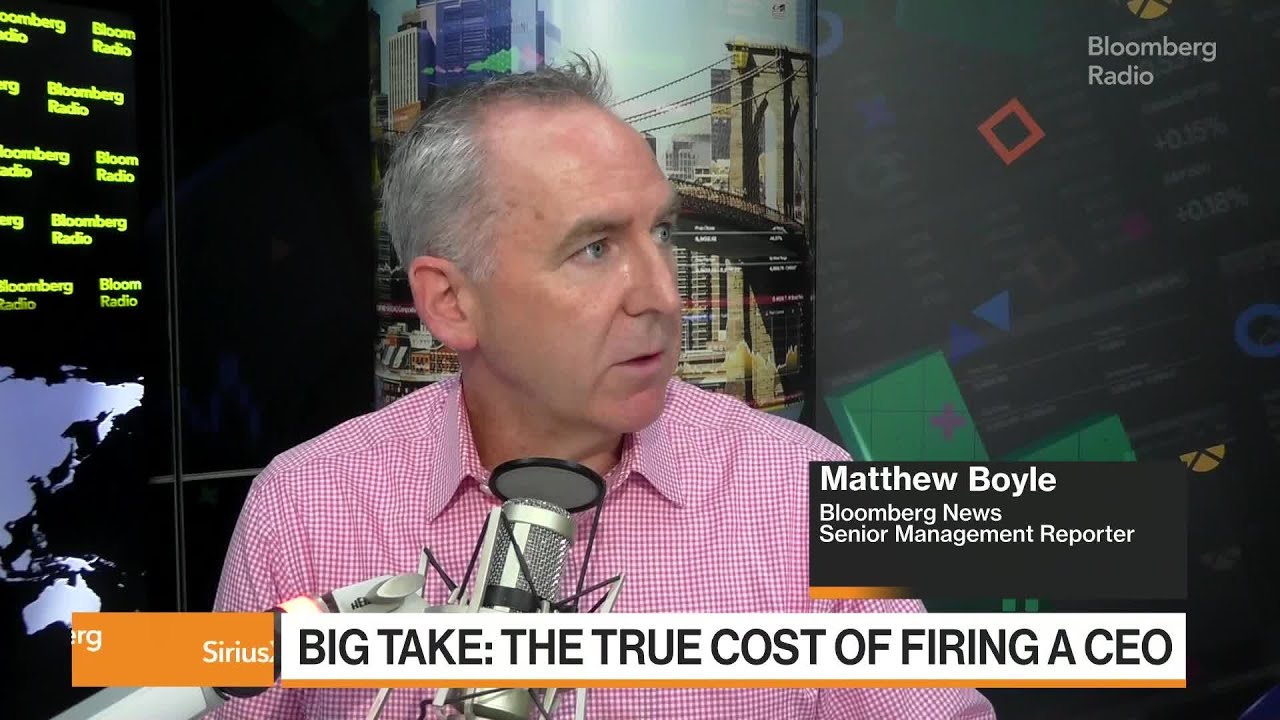
“The price of the transition is staggering,” concluded proxy-advisory firm Glass Lewis, in a February report that criticized the company’s succession planning and urged shareholders to vote against its executive compensation plan. “Shareholders should be critical of the costly nature of a CEO transition.” Bloomberg's Matthew Boyle reports.
They rarely are, though. Starbucks’ shareholders approved the pay packages at the company’s annual meeting in March, displaying the same optimism in Niccol’s turnaround ability that lifted the company’s shares 25% on the day his appointment was announced.
Perhaps if shareholders knew the full cost of a CEO ouster, they’d be more wary, as the price tag goes well beyond severance and sign-on payments made public in filings. There’s been increased turnover in the top job, much of it unplanned. According to Exechange.com, there were 134 CEO force-outs last year at Russell 3000 firms.
CEO Ousters Are On the Rise
Force-outs picked back up after a lull during the pandemic
To give a proper accounting for unplanned CEO departures, Bloomberg News consulted with compensation consultants, academics, corporate lawyers, executive-search advisors and public-relations experts. Farient Advisors, an executive compensation and corporate governance consultant, crunched the numbers and provided estimates based on a sample of last year’s departures at big US firms like Starbucks, Intel Corp. and Nike Inc.
Deciphering the convoluted payments to the outgoing and incoming CEOs was just one element of the analysis. Corporate boards typically hire a bevy of advisors to handle the hunt for a new CEO and other critical aspects of the transition. Tasked with working fast and under scrutiny, none of them comes cheap. Sometimes boards also give retention bonuses to other senior leaders during the transition. The new CEO might then bring in fresh C-suite members, which results in additional replacement costs. (Niccol’s new chief financial officer, Cathy Smith, received cash and stock worth an estimated $11.4 million to come aboard at Starbucks.)
Other indirect costs of a CEO ouster are harder to measure, but still very real, like the impact on employee morale, productivity and turnover, or business opportunities that might get sidelined when the board is consumed with finding a new chief. And then there’s the potential hit to the stock.
As with layoffs, which Bloomberg analyzed last year, the true cost of a CEO ouster is rarely straightforward, but always steep.
Unlike Kohl’s Corp.’s recent firing of CEO Ashley Buchanan, who was found to have channeled millions of dollars of business to a paramour, most CEOs are rarely fired “for cause,” a determination reserved for especially egregious behavior. Often, CEOs who know they’re in danger will voluntarily (and quietly) resign to save face. A formal “retirement” can also mask a firing. Companies are not always required to disclose the true reason for a departure, so lawyers and public-relations reps often work hard to make a dramatic ouster look like a ho-hum transition.
To help determine whether a CEO was actually forced out, we relied on the experts at Exechange.com, whose analysis of leadership transitions cuts through corporate jargon and platitudes like “pursuing other opportunities” to determine the true cause of an executive exit. Exechange scores executive departures on a scale of 0 to 10. Those with a score of 8 or higher are considered to have been forceouts or firings.
--------
Watch Bloomberg Radio LIVE on YouTube
Weekdays 7am-6pm ET
Follow us on X
Subscribe to our Podcasts:
Bloomberg Daybreak
Bloomberg Surveillance
Bloomberg Intelligence
Balance of Power
Bloomberg Businessweek
Listen on Apple CarPlay and Android Auto with the Bloomberg Business app:
Apple CarPlay
Android Auto
Visit our YouTube channels:
Bloomberg Podcasts
Bloomberg Television
Bloomberg Originals
Sentinel Indexing in Progress
Metadata and chapters are available. Claim extraction for this episode is pending.
All video content is delivered via YouTube embedded players in accordance with the YouTube Terms of Service. Sentinel provides research tools that promote discovery and accountability across political media.