Bloomberg Podcasts
@bloombergpodcasts·503K subscribers·32.4K videos
White House Turns Attention to Defense Sector After Intel Deal
Posted
August 26, 2025
Views
885
Likes
11
Comments
3
Engagement
August 26, 2025
885
11
3
1.58%
Every word spoken in this episode is indexed. Type any phrase to jump straight to the moment it was said.
Type any word or phrase that may have been spoken. Click a result to seek the player to that exact moment.
Try a name, a topic, or a quoted line
See what was published immediately before and after this episode.
 3:14Now Playing
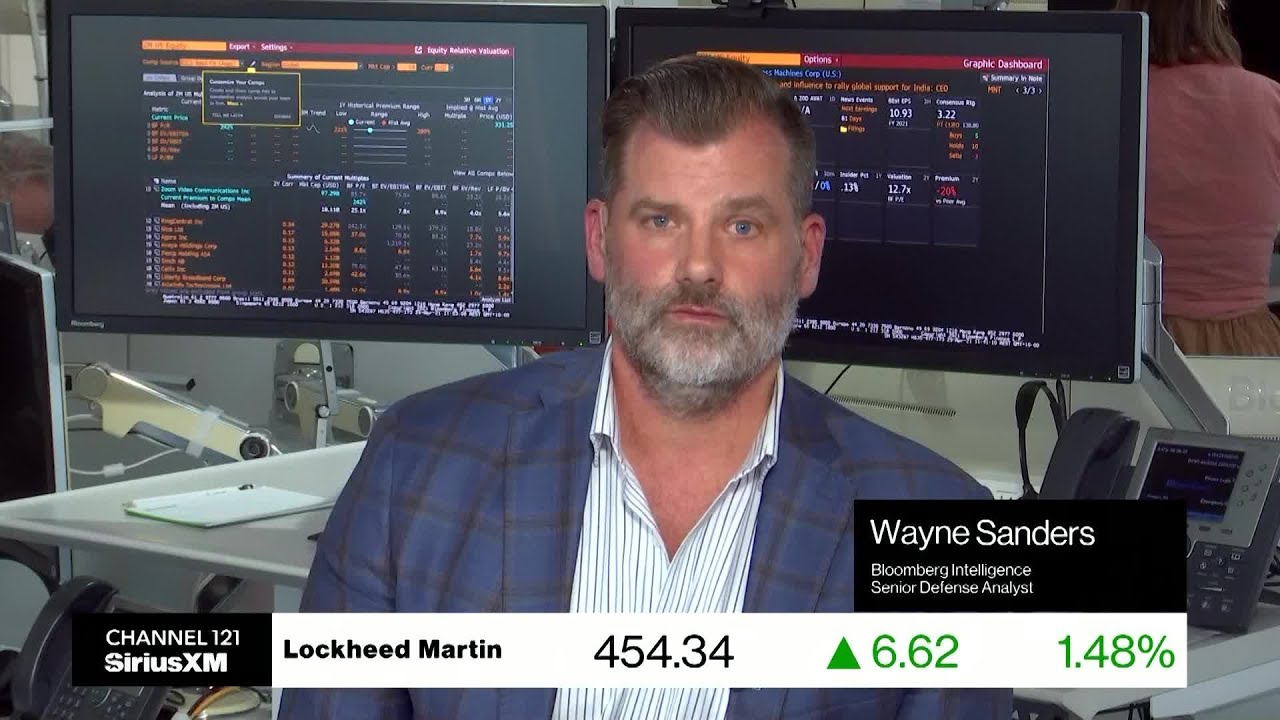
Bloomberg's Wayne Sanders discusses what a government stake could look like for defense companies and what it could mean for a sector that already sees the majority of its demand driven by the US military.
US Commerce Secretary Howard Lutnick suggested the government is looking at the defense sector and other industries for potential stakes in companies after an unorthodox deal that saw the US obtain a 10% share in chipmaker Intel Corp.
“Oh, there’s a monstrous discussion about defense,” Lutnick said Tuesday on CNBC when pressed on whether the administration was considering similar arrangements with companies that benefit from government policies, including in defense.
Lutnick singled out Lockheed Martin Corp., claiming the company makes much of its revenue because of the US government. “They are basically an arm of the US government,” he said.
“They make exquisite munitions,” Lutnick said, before asking: “What’s the economics of that?”
“I’m going to leave that to my secretary of Defense and the deputy secretary of Defense. These guys are on it, and they’re thinking about it,” he added. “But I tell you what, there’s a lot of talking that needs to be had about how do we finance our munitions acquisitions?”
The US government accounted for about 73% of Lockheed Martin’s net sales last year, according to a securities filing. The security and aerospace firm is a major supplier to the US military, including of the F-35 and F-22 fighter jets.
“As we did in his first term, we are continuing our strong working relationship with President Trump and his administration to strengthen our national defense,” Lockheed Martin said in an emailed statement.
Spokespeople for Boeing Co., RTX Corp. and General Dynamics Corp. declined to comment on Lutnick’s remarks or to answer questions about any discussions with the US government on the subject. Representatives for Northrop Grumman Corp. and SAIC did not immediately respond to requests for comment.
Shares of US defense contractors jumped after Lutnick’s remarks. Lockheed Martin shares advanced as much as 1.7% for their biggest intraday gain in almost two weeks, while Northrop Grumman gained 1.2%.
Lutnick’s comments follow a deal finalized last Friday in which the US government obtained a stake in Intel in a bid to turn around the beleaguered chipmaker. Under the agreement, the US will receive 433.3 million shares of common stock — representing nearly 10% of the fully diluted common shares in Intel.
The $8.9 billion investment will be funded by grants from the US Chips and Science Act and Secure Enclave program that had previously been extended but not yet paid, Intel said. Together with the $2.2 billion in Chips and Science Act money that Intel already received, the investment totaled $11.1 billion.
The government will be a passive owner, with no board seat or other governance or information rights, Intel said. Still, the move stunned Wall Street and Washington, highlighting how President Donald Trump has embraced a new brand of economic statecraft in his second term.
White House spokesman Kush Desai said in an emailed statement that the administration “will continue to explore other deals that ensure taxpayers reap the benefits of investments being made with their money by the federal government.”
“From trade deals to peace deals, President Trump has consistently sought to safeguard our national and economic security while ensuring the best bargain for hardworking American taxpayers,” Desai said.
Lutnick in the CNBC interview also invoked US funding of universities whose research later leads to patents and instances where the US “is completely making your business,” such as by facilitating American supply chains for firms reliant on rare Earth magnets currently dominated by China.
The Commerce Department earlier this month threatened Harvard University’s federally funded research programs and intellectual property arising from them, including patents.
--------
Watch Bloomberg Radio LIVE on YouTube
Weekdays 7am-6pm ET
Follow us on X
Subscribe to our Podcasts:
Bloomberg Daybreak
Bloomberg Surveillance
Bloomberg Intelligence
Balance of Power
Bloomberg Businessweek
Listen on Apple CarPlay and Android Auto with the Bloomberg Business app:
Apple CarPlay
Android Auto
Visit our YouTube channels:
Bloomberg Podcasts
Bloomberg Television
Bloomberg Originals
Sentinel Indexing in Progress
Metadata and chapters are available. Claim extraction for this episode is pending.
All video content is delivered via YouTube embedded players in accordance with the YouTube Terms of Service. Sentinel provides research tools that promote discovery and accountability across political media.