
White House, Lawmakers Face Challenging Funding Negotiations
September 5, 2025
3,193
4
2
0.19%
Search the Record
IndexedEvery word spoken in this episode is indexed. Type any phrase to jump straight to the moment it was said.
Type any word or phrase that may have been spoken. Click a result to seek the player to that exact moment.
Try a name, a topic, or a quoted line
Bloomberg Podcasts Episodes Around September 5, 2025
See what was published immediately before and after this episode.




 8:41Now Playing
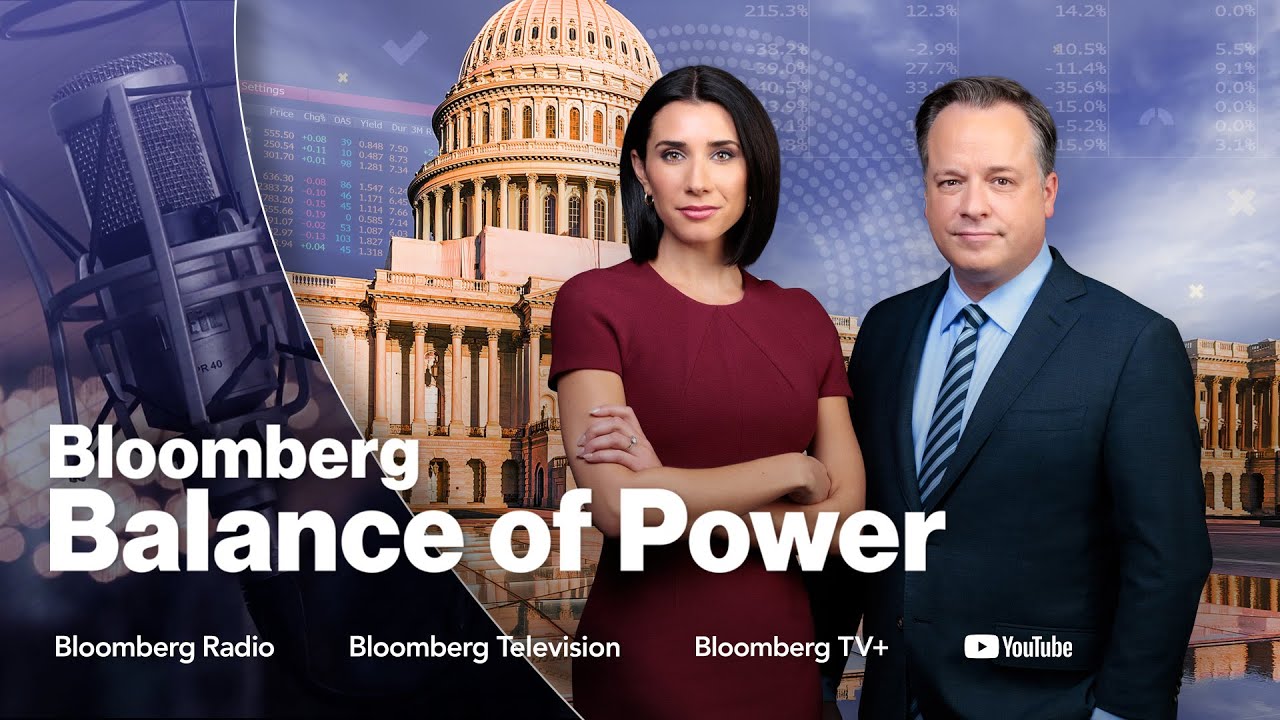
White House, Lawmakers Face Challenging Funding Negotiations





YouTube Description
as posted by the channelMissouri Republican Congressman Jason Smith, who also serves as the chair of the House Ways and Means Committee, says that he is 'disheartened' by the conversations between democrats and republicans around rescissions, as the deadline for a new government funding agreement looms later this month.
Lawmakers and the White House agree they’ll need to pass a stopgap bill to fund the government beyond Sept. 30, but the details are tricky.
Disagreements over the length and language of a continuing resolution have heightened the risk of an Oct. 1 shutdown. The White House wants a longer stopgap measure than appropriators in either party have called for. And lawmakers still haven’t received a list of proposed anomalies — changes to budget levels in a measure that would mostly keep agencies flat-funded for the bill’s duration.
Define ‘Clean': The White House has called for a “clean” continuing resolution — meaning a measure that avoids new, controversial policies and largely keeps agencies running at their previous budget levels. But even the most straightforward stopgaps have some exceptions, which lawmakers will have to negotiate with the White House. And Office of Management and Budget Director Russell Vought has yet to send a proposed list of anomalies, House Appropriations Chairman Tom Cole (R-Okla.) and Senate Appropriations Vice Chair Patty Murray (D-Wash.) told reporters.
Democrats have been frustrated for months by Vought’s unilateral withholding of funds, his rescission of previously approved money, and the broader Republican agenda this Congress. Rep. Rosa DeLauro (Conn.), the top House Democratic appropriator, said her party would seek to protect Democratic priorities and Congress’ power of the purse as part of a funding agreement.
House Republicans made headway on appropriations during the first week back from their August recess, overcoming internal divisions to pass the chamber’s fiscal 2026 Energy and Water spending measure (H.R. 4553).
It marks the third spending bill the House has passed this year, but its narrow passage portends further drama ahead on spending measures in the pipeline and raises the chances of a stopgap bill ahead of Oct. 1.
House appropriators approved their Labor-HHS-Education bill in subcommittee this week, as well as the Financial Services-General Government bill in the full committee. They’ve also scheduled two full committee markups next week on the Labor-HHS-Education and Commerce-Justice-Science bills, which would wrap up the panel’s initial work on all 12 spending bills.
Senate Appropriations Chair Susan Collins (R-Maine) said she plans to hold markups on two more bills next week, though she didn’t specify which. Her panel approved eight measures so far, three of which the Senate passed as a “minibus” package (H.R. 3944) before recess.
--------
Watch Bloomberg Radio LIVE on YouTube
Weekdays 7am-6pm ET
Follow us on X
Subscribe to our Podcasts:
Bloomberg Daybreak
Bloomberg Surveillance
Bloomberg Intelligence
Balance of Power
Bloomberg Businessweek
Listen on Apple CarPlay and Android Auto with the Bloomberg Business app:
Apple CarPlay
Android Auto
Visit our YouTube channels:
Bloomberg Podcasts
Bloomberg Television
Bloomberg Originals
Guests & Subjects Covered
Sentinel Indexing in Progress
Metadata and chapters are available. Claim extraction for this episode is pending.
All video content is delivered via YouTube embedded players in accordance with the YouTube Terms of Service. Sentinel provides research tools that promote discovery and accountability across political media.