Bloomberg Podcasts
@bloombergpodcasts·503K subscribers·32.4K videos
Nvidia CEO Says Trump Admin Not Involved in Intel Deal
Posted
September 18, 2025
Views
1,283
Likes
7
Comments
7
Engagement
September 18, 2025
1,283
7
7
1.09%
Every word spoken in this episode is indexed. Type any phrase to jump straight to the moment it was said.
Type any word or phrase that may have been spoken. Click a result to seek the player to that exact moment.
Try a name, a topic, or a quoted line
 2:41Now Playing
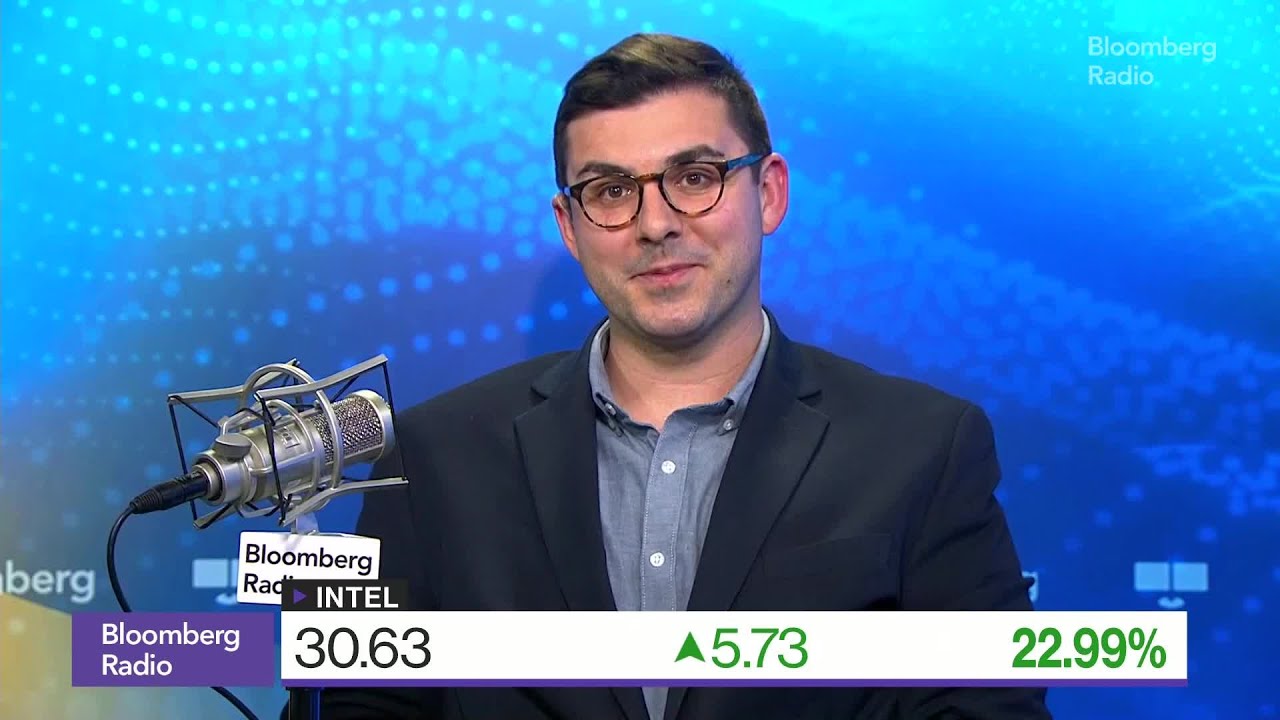
Bloomberg's Ed Ludlow breaks down the particulars of the deal between tech giants Nvidia and Intel and the relationship between the two companies and the US government.
Nvidia Corp. agreed to invest $5 billion in Intel Corp. and said the two will co-develop chips for PCs and data centers, a surprise move to help prop up an ailing archrival that sent Intel shares soaring.
Nvidia will buy Intel common stock at $23.28 per share, the two companies said on Thursday. Intel will use Nvidia’s graphics technology in upcoming personal computer chips and also provide its processors for data center products built around Nvidia hardware.
Intel and Nvidia billed their agreement as a product hook-up that gives them the opportunity to move into areas of the computer market they don’t currently reach, an overall opportunity that may be worth as much as $50 billion a year, according to Nvidia’s Chief Executive Officer Jensen Huang. Investors saw the announcement as a shot in the arm for Intel as the company struggles to stem losses and catch competitors, like Nvidia, that it once dwarfed.
Intel shares, which surged as much as 30%, jumped 23% to $30.70 at 2:26 p.m. in New York. Nvidia stock gained 3.7% to $176.63 and has increased 32% this year.
The new funds for Intel follow the US government’s decision in August to take a roughly 10% stake in the company and President Donald Trump took on the role of pitchman. Japan’s SoftBank Group Corp., which has committed to invest tens of billions into US chipmaking and cloud infrastructure, made a surprise $2 billion investment last month and Intel is also raising cash by selling assets to investors.
The chipmaker’s current operations, hit by market share losses, can’t shoulder the burden of intensive spending associated with trying to build leading-edge semiconductors. On paper, the value of the US government’s stake has jumped by more than 55%, or $4.9 billion, and is now worth about $14 billion.
“We thought it was going to be such an incredible investment,” Huang said on a conference call Thursday with his Intel counterpart, Lip-Bu Tan. “The return on that investment is going to be fantastic.”
Huang said the engineering teams of the two companies have been working on the agreement for about a year and the deal wasn’t prompted by the Trump administration. He said he called Secretary of Commerce Howard Lutnick to inform him about the companies’ cooperation and Lutnick’s reaction was “supportive.”
Under the deal, Intel will offer PC chips that combine general-purpose processing with powerful graphics components from Nvidia, better helping it compete with Advanced Micro Devices Inc., which has been seizing market share in desktops and laptops. The two companies didn’t offer a timeline for when the first parts will go on sale and said the announcement doesn’t affect their individual future plans.
AMD’s stock fell as much as 5.9% on the news of Nvidia’s investment in Intel before regaining most of the decline. AMD is also Nvidia’s closest competitor in graphics chips. Nvidia continues to evaluate whether to outsou
AMD said the announcement hasn’t changed its belief it can keep taking business away from Intel.
“We’re confident in our ability to continue driving innovation and market share growth and reinforcing AI as the company’s top strategic priority,” AMD said in an emailed statement.
The news is “very marginally negative for AMD,” Wolfe Research analysts said in a note, and likely doesn’t change their thesis for Intel. “What’s unclear is whether this represents token cooperation intended for political purposes, or if it’s the start of a wider collaboration that would more significantly benefit Intel,” they said.
“Whether or not Nvidia would be willing to collaborate on manufacturing is a much more important issue,” the Wolfe analysts added, saying Intel suffers from a lack of volume in its manufacturing facilities.
In data centers, where Nvidia’s artificial intelligence accelerators dominate and have pushed rivals to minor roles, Intel will provide processors for integration into some Nvidia products.
--------
Watch Bloomberg Radio LIVE on YouTube
Weekdays 7am-6pm ET
Follow us on X
Subscribe to our Podcasts:
Bloomberg Daybreak
Bloomberg Surveillance
Bloomberg Intelligence
Balance of Power
Bloomberg Businessweek
Listen on Apple CarPlay and Android Auto with the Bloomberg Business app:
Apple CarPlay
Android Auto
Visit our YouTube channels:
Bloomberg Podcasts
Bloomberg Television
Bloomberg Originals
Sentinel Indexing in Progress
Metadata and chapters are available. Claim extraction for this episode is pending.
All video content is delivered via YouTube embedded players in accordance with the YouTube Terms of Service. Sentinel provides research tools that promote discovery and accountability across political media.