
Bloomberg Podcasts
@bloombergpodcasts·503K subscribers·32.4K videos
Epstein Emails Show Support, Advice From Elite Network
Posted
September 26, 2025
Views
39,625
Likes
1,198
Comments
78
Engagement
September 26, 2025
39,625
1,198
78
3.22%
Every word spoken in this episode is indexed. Type any phrase to jump straight to the moment it was said.
Type any word or phrase that may have been spoken. Click a result to seek the player to that exact moment.
Try a name, a topic, or a quoted line
 5:48Now Playing
A cache of more than 18,000 emails from Jeffrey Epstein’s personal Yahoo account obtained by Bloomberg News has already provided new details about his close ties to Ghislaine Maxwell and to one of the UK’s most influential figures. Those emails also reveal new details about academics, attorneys and media specialists who helped him—in different ways and to varying degrees—just as his life threatened to spin out of control.
The emails, which span 20 years but mostly were exchanged between 2005 and 2008, shine new light on an elite network whose members defended Epstein in public and private, deflected harsh questions, offered coaching and countermessaging, and polished his reputation.
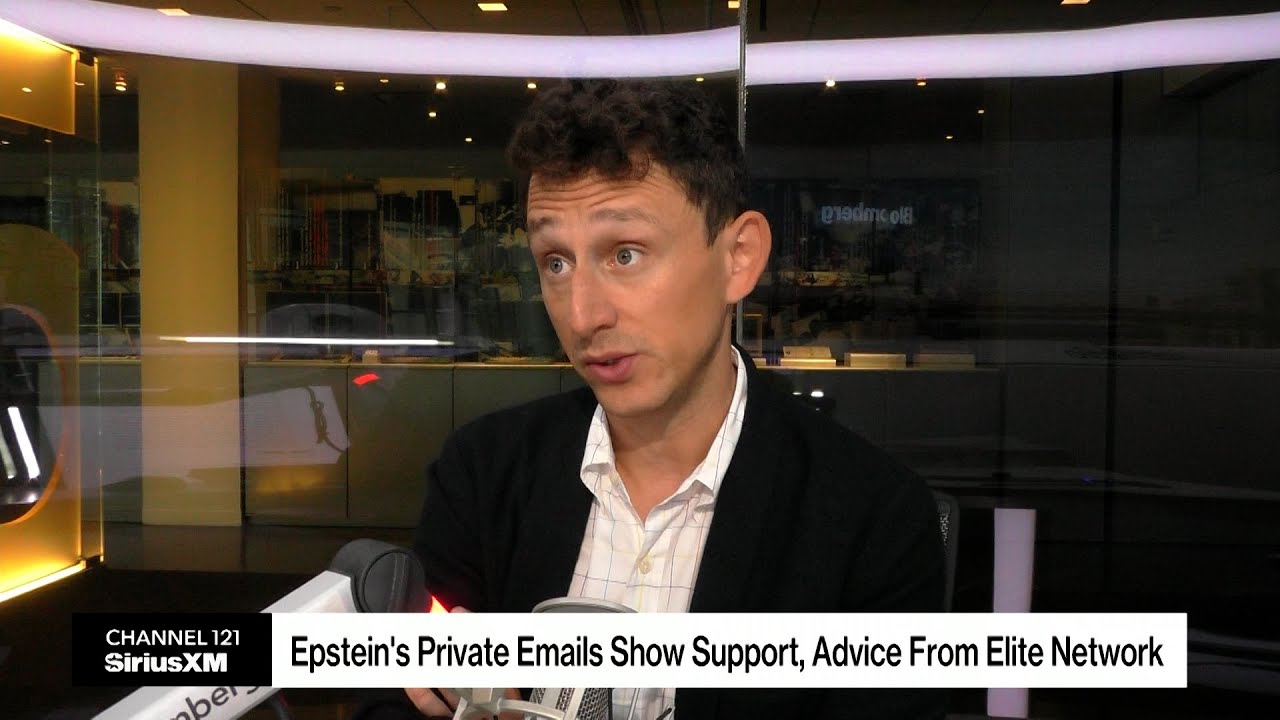
His emails, riddled with spelling errors, swung between domineering and cloying. Here are five other takeaways from Bloomberg’s investigation: Bloomberg's Max Abelson joined Carol Massar and Tim Stenovec on 'Bloomberg Businessweek Daily' to break it all down.
‘Hour of terror’
Though Epstein never offered a broad public apology to the people he harmed, the emails show what it might have sounded like. Merrie Spaeth, a crisis strategist who had once directed media relations for Ronald Reagan’s White House, sent Epstein three options for a public apology in early 2008. The first was both contrite and about contrition, opening with memories of saying sorry as a child. The concise second option offered an apology “for my actions which brought scandal and shame to my name.” A philosophical third version cited ideas from William James about “the hour of terror” and said he had “failed to ask what was really important.”
Spaeth’s firm was hired through a lawyer to provide communications options to Epstein, she told Bloomberg News, and she “ultimately terminated the engagement because of my discomfort.”
‘The Epstein Brain’
Though Epstein’s rich connections to academia have been well established, the emails reveal just how deep they went. In 2008, for example, renowned neuropsychologist Elkhonon Goldberg sent an email with a proposal to name a project to study cognition “The Epstein Brain.”
Epstein surrounded himself with prominent scientists because he might have fantasized about being one himself, Goldberg told Bloomberg News, and Epstein never ended up funding the project. Even in the days before Epstein went to jail, in correspondence with a computer scientist, he weighed a “Manhattan Project” for AI.
‘We could do better’
Epstein had a proclivity for drawing powerful people around him and for telling them what to say. Ken Starr, whose report as independent counsel had led to Bill Clinton’s impeachment, is one example. First, Epstein told his lawyers that Starr needed to explain his appearance in the case. Later, Epstein proposed language and ideas, while apparently trying not to cause offense: “I don't mean to put words in your eloquent mouth,” he told Starr in June 2008.
In September 2006, a letter that appeared over the name of his lawyer Alan Dershowitz was flattering and savvy: “I am writing this letter to Jeffrey’s close friends as one of his close friends, not as a lawyer,” it read. “When the full story finally comes out, the world will learn what we already know—that Jeffrey is a good person who does many good things.” Dershowitz told Bloomberg he doesn’t recall the letter. Its wording wasn't enough for Epstein, who wrote: “I think we could do better thatn the last paragraph ,, JEffrey is a ‘good person’.. great friend. , loyal, funny, generous, not GOOD.”
‘County State Attorney’s Office.
“These girls are self-described prostitutes, they don’t feel harmed, and they’re out for money,” Dershowitz said during that meeting, according to the memo. He said that Epstein was “decimated already. He hasn’t slept in months. I want to leave here and tell him we’ve got this resolved. Why can’t we figure something out today?” Discussing possible outcomes, Dershowitz said he refused to make Epstein “into a public pariah.” Dershowitz told Bloomberg that the emails included “privileged lawyer client communications and should not have been provided to you or made public.”
--------
Watch Bloomberg Radio LIVE on YouTube
Weekdays 7am-6pm ET
Follow us on X
Subscribe to our Podcasts:
Bloomberg Daybreak
Bloomberg Surveillance
Bloomberg Intelligence
Balance of Power
Bloomberg Businessweek
Listen on Apple CarPlay and Android Auto with the Bloomberg Business app:
Apple CarPlay
Android Auto
Visit our YouTube channels:
Bloomberg Podcasts
Bloomberg Television
Bloomberg Originals
Sentinel Indexing in Progress
Metadata and chapters are available. Claim extraction for this episode is pending.
All video content is delivered via YouTube embedded players in accordance with the YouTube Terms of Service. Sentinel provides research tools that promote discovery and accountability across political media.