Bloomberg Podcasts
@bloombergpodcasts·503K subscribers·32.4K videos
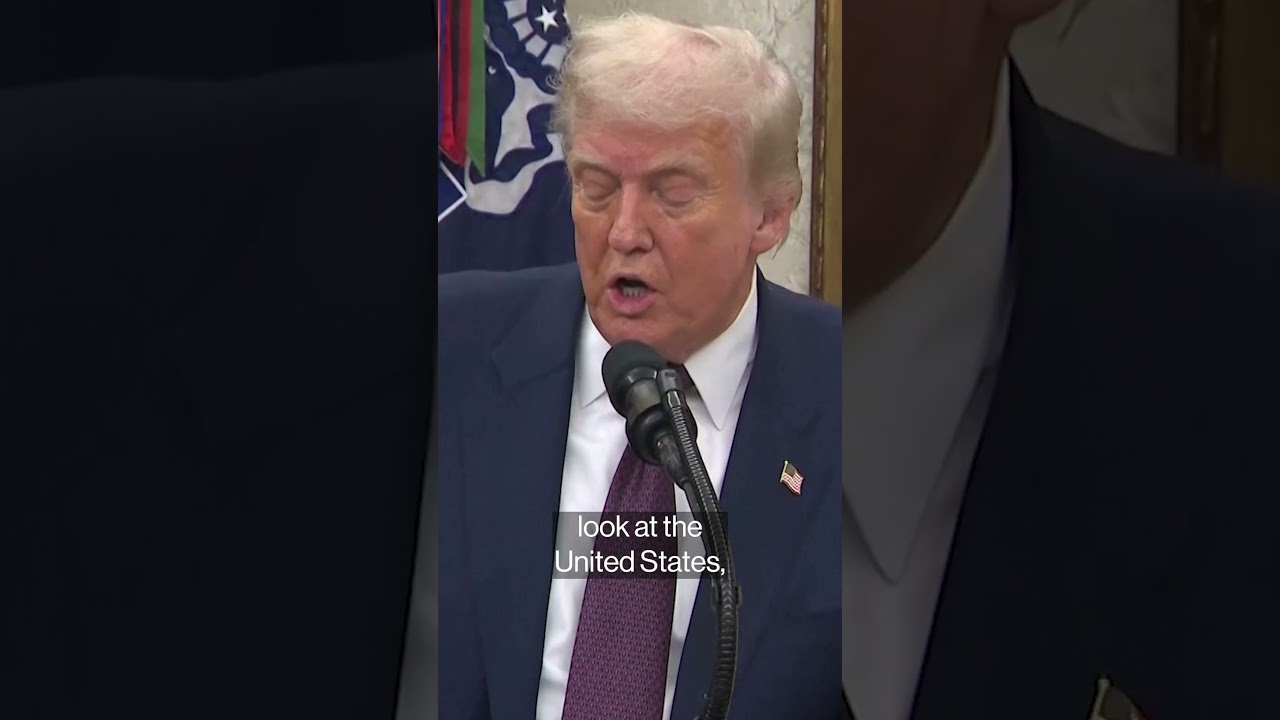
Trump Plans 100% Tariff on Patented Drugs
Posted
September 26, 2025
Views
2,334
Likes
21
Comments
23
Engagement
1.89%
September 26, 2025
2,334
21
23
1.89%
Every word spoken in this episode is indexed. Type any phrase to jump straight to the moment it was said.
Type any word or phrase that may have been spoken. Click a result to seek the player to that exact moment.
Try a name, a topic, or a quoted line
 2:43Now Playing
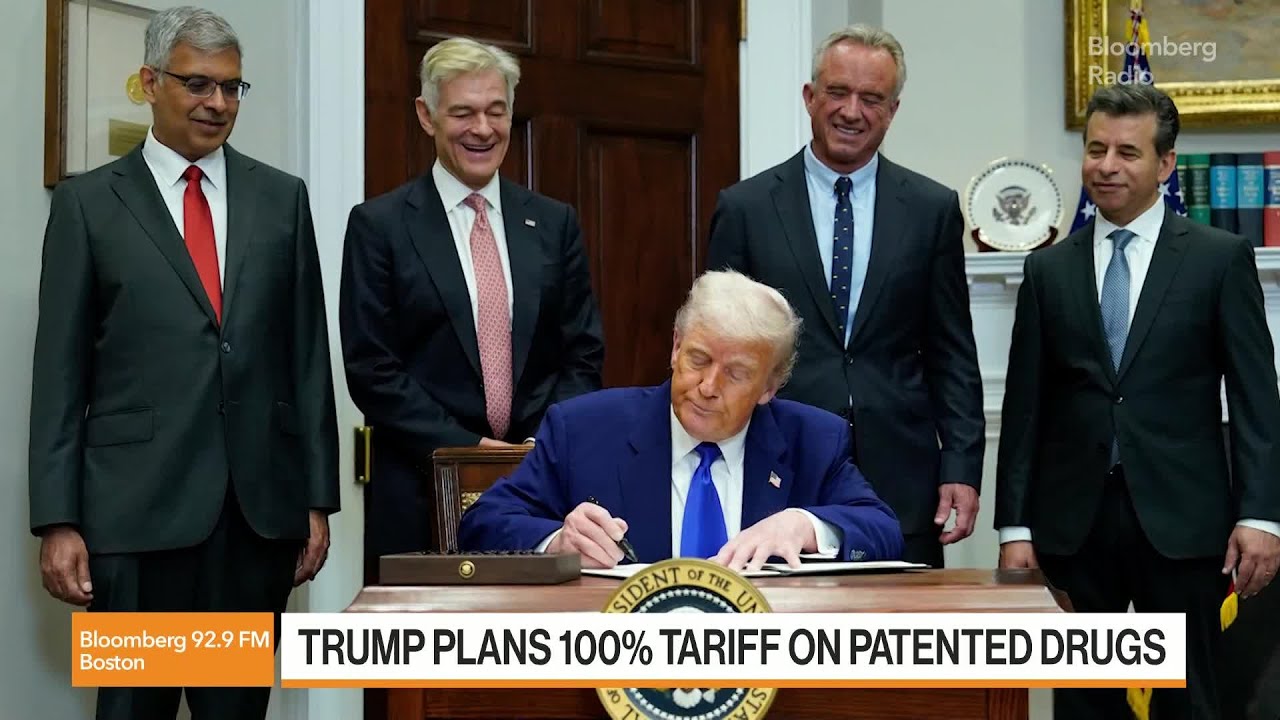
President Donald Trump’s plan to impose a 100% tariff on branded drug imports was greeted with a shrug by many investors, who are betting his exemptions for companies with US manufacturing will soften any blow.
While Trump’s move threatens to double the cost of some imported treatments if construction on US manufacturing sites hasn’t begun by Oct. 1, many big drugmakers already have US plants or are building them.
“All big pharma companies have a US presence and almost all have announced large investments in the years to come,” Vontobel analyst Sibylle Bischofberger Frick said in a note. “Will that prevent their drugs from tariffs? In our view, yes.”
Merck & Co., Novo Nordisk A/S and Eli Lilly & Co. are among firms that have started US construction since 2023, with building sites in Delaware, North Carolina and Texas. The projects are aimed at anchoring supply chains inside US borders and supporting blockbuster medicines in cancer, diabetes and immunology.
Others, including Novartis AG and Sanofi SA, have announced large US investments, though it isn’t clear how far those projects have progressed. On Friday, Amgen Inc. announced a new US investment, saying it plans to spend $650 million to expand a manufacturing plant in Puerto Rico.
Bloomberg's Sam Fazeli reports.
Novartis doesn’t expect any impact from the 100% tariffs as it’s “well prepared with product supply in the US through mid-2026,” the Swiss pharma group said, adding it’s pushing forward with a $23 billion investment in US-based infrastructure. Sanofi didn’t immediately comment.
Major US drugmakers Lilly and Pfizer Inc. rose about 1% at the start of trading in New York on Friday. The Europe Stoxx 600 pharmaceuticals index was up less 0.5%, with a few stocks, such as GSK Plc and Novartis, edging higher. Ozempic-maker Novo Nordisk was down 1.7% at 3:30 p.m. in Copenhagen.
“The actual comment from the president is direct but its impact may be somewhere between nebulous and negligible,” Mizuho Securities health-care specialist Jared Holz said in a note. “All major players have some production presence domestically and almost all have announced increased investment directly tied towards local manufacturing.”
Bloomberg Intelligence economists Nicole Gorton-Caratelli and Maeva Cousin estimate the new duties could hit about $220 billion of US pharmaceutical imports and lift the average tariff rate by 3.3 percentage points.
Still, Trump’s plan — announced in a social media post — released few specifics on which producers would be affected. Substantial uncertainty remains, including whether countries or regions that have struck trade deals with the US will avoid the new levy.
For example, a European Union spokesman on Friday said the bloc had agreed terms in its framework trade deal with the US that tariffs on its pharmaceutical, semiconductor and lumber exports won’t exceed 15%.
Overall, Trump’s announcement looks like a “win” for the pharmaceutical industry, Jefferies analysts said in a note.
Still, some drugmakers could be left vulnerable. John Crowley, the President and chief executive officer of the US-based Biotechnology Innovation Organization, decried the tariffs as disproportionately impacting small companies that rely on contractors to do their manufacturing.
“The immediacy of punitive, 100% tariffs on innovative medicines for any company without ‘shovels in the ground’ would devastate our nation’s small and mid-sized biotechnology companies,” Crowley said in a written statement.
Multinational drugmakers have said they primarily rely on plants in the US to supply the domestic market, but not all of them have broken ground on promised investments. PhRMA, the US drug industry’s largest lobbying group, said in a statement that imposing levies on drugs could threaten companies’ plans to expand, “because every dollar spent on tariffs is a dollar that cannot be invested in American manufacturing or the development of future treatments and cures.”
--------
Watch Bloomberg Radio LIVE on YouTube
Weekdays 7am-6pm ET
Follow us on X
Subscribe to our Podcasts:
Bloomberg Daybreak
Bloomberg Surveillance
Bloomberg Intelligence
Balance of Power
Bloomberg Businessweek
Listen on Apple CarPlay and Android Auto with the Bloomberg Business app:
Apple CarPlay
Android Auto
Visit our YouTube channels:
Bloomberg Podcasts
Bloomberg Television
Bloomberg Originals
Sentinel Indexing in Progress
Metadata and chapters are available. Claim extraction for this episode is pending.
All video content is delivered via YouTube embedded players in accordance with the YouTube Terms of Service. Sentinel provides research tools that promote discovery and accountability across political media.