Bloomberg Podcasts
@bloombergpodcasts·503K subscribers·32.4K videos
Trump, Congressional Leaders to Meet As Shutdown Looms
Posted
September 29, 2025
Views
14,362
Likes
77
Comments
38
Engagement
September 29, 2025
14,362
77
38
0.80%
Every word spoken in this episode is indexed. Type any phrase to jump straight to the moment it was said.
Type any word or phrase that may have been spoken. Click a result to seek the player to that exact moment.
Try a name, a topic, or a quoted line
 7:03Now Playing
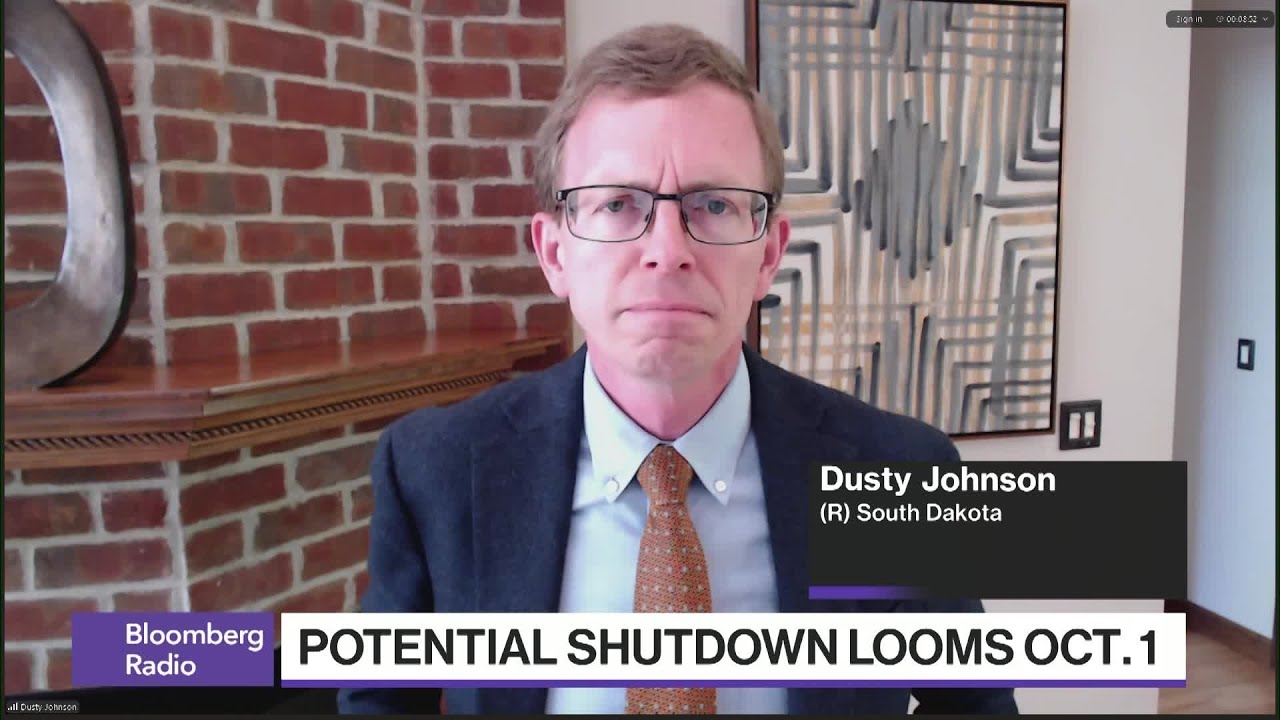
Republican Representative Dusty Johnson said it appears unlikely that the standoff over government funding can be ended before the deadline for a government shutdown.
President Donald Trump and top congressional leaders have strong political incentives to stoke the ongoing standoff during a White House meeting Monday even as they drive the US to its first government shutdown in nearly seven years.
Democrats are keen to use the shutdown battle to frame the next election around rising costs, particularly for health care. Republicans are equally eager to blame the Democrats and show them to be poor stewards of the government and the US economy ahead of the 2026 midterms.
Progressive Democrats are putting party leaders under enormous pressure to show they are willing to fight the Trump administration. Those leaders are confident they can unite their members behind the health care issue and prevent a defection by the eight Democrats needed to pass the Republican bill, which would keep the government funded until Nov. 21.
GOP leaders say they can negotiate after the short-term bill, known as a continuing resolution, is passed, but Democrats have said they don’t trust Trump or the Republican leaders to keep that promise. White House Press Secretary Karoline Leavitt told Fox News Monday that Trump has leverage in the confrontation because the public dislikes government shutdowns.
“There is zero good reason for Democrats to vote against this clean continuing resolution,” Leavitt said. “The president is giving Democrats one last chance to be reasonable today. Look, there is nothing to negotiate when you have a clean CR look.”
Federal agencies are preparing for a possible government shutdown with detailed plans that call for temporary furloughs but not permanent mass firings — even after the White House pressed departments to consider reductions in force as part of their contingency planning.
At least eight cabinet departments comprising more than two-thirds of the federal workforce had detailed their shutdown plans as of Monday afternoon. Together they call for more than 400,000 employees to be sent home as nonessential.
But those plans contained only one reference to permanent staffing reduction. The Centers for Disease Control and Prevention said it had 1,563 positions in “RIF status,” but it was unclear whether those reductions were previously authorized or part of the shutdown plan. Officials at the CDC and the Department of Health and Human Services did not respond to requests for comment about the language in the CDC contingency plan.
The White House budget office told agencies last week to propose job cuts as part of their shutdown plans — a thinly veiled threat to congressional Democrats that President Donald Trump might permanently wind down unfunded programs rather than put them on pause.
The Office of Management and Budget did not respond to questions about why agency shutdown plans didn’t follow up on that directive.
Downsizing the federal workforce can be a time-consuming process. Under civil service rules, affected workers must be given notice and may have “bumping rights” that allow more senior employees whose positions are eliminated to take another job. Unionized workers may have additional protections.
That’s one reason why Tesla CEO Elon Musk’s government downsizing initiative used a voluntary deferred resignation program he called the “Fork in the Road.” About 150,000 federal employees accepted the offer of six months or more of pay in exchange for exiting their role. For most who accepted, those paychecks run out at the end of the fiscal year on Tuesday.
During a government shutdown, essential employees continue to work. Those include workers in law enforcement, safety inspections and other critical positions. The definition of essential can be broad, and includes IT employees needed to preserve data, scientists working on biological research and mortuary affairs workers in the Department of Defense.
Under a 2019 law signed in Trump’s first term, both essential and nonessential workers automatically get back pay when the shutdown ends.
--------
Watch Bloomberg Radio LIVE on YouTube
Weekdays 7am-6pm ET
Follow us on X
Subscribe to our Podcasts:
Bloomberg Daybreak
Bloomberg Surveillance
Bloomberg Intelligence
Balance of Power
Bloomberg Businessweek
Listen on Apple CarPlay and Android Auto with the Bloomberg Business app:
Apple CarPlay
Android Auto
Visit our YouTube channels:
Bloomberg Podcasts
Bloomberg Television
Bloomberg Originals
Sentinel Indexing in Progress
Metadata and chapters are available. Claim extraction for this episode is pending.
All video content is delivered via YouTube embedded players in accordance with the YouTube Terms of Service. Sentinel provides research tools that promote discovery and accountability across political media.