Bloomberg Podcasts
@bloombergpodcasts·503K subscribers·32.4K videos
GOP 'Not Even Close' To 60 Votes To End Shutdown: Sen. James Lankford
Posted
October 7, 2025
Views
1,721
Likes
19
Comments
7
Engagement
October 7, 2025
1,721
19
7
1.51%
Every word spoken in this episode is indexed. Type any phrase to jump straight to the moment it was said.
Type any word or phrase that may have been spoken. Click a result to seek the player to that exact moment.
Try a name, a topic, or a quoted line
 8:49Now Playing
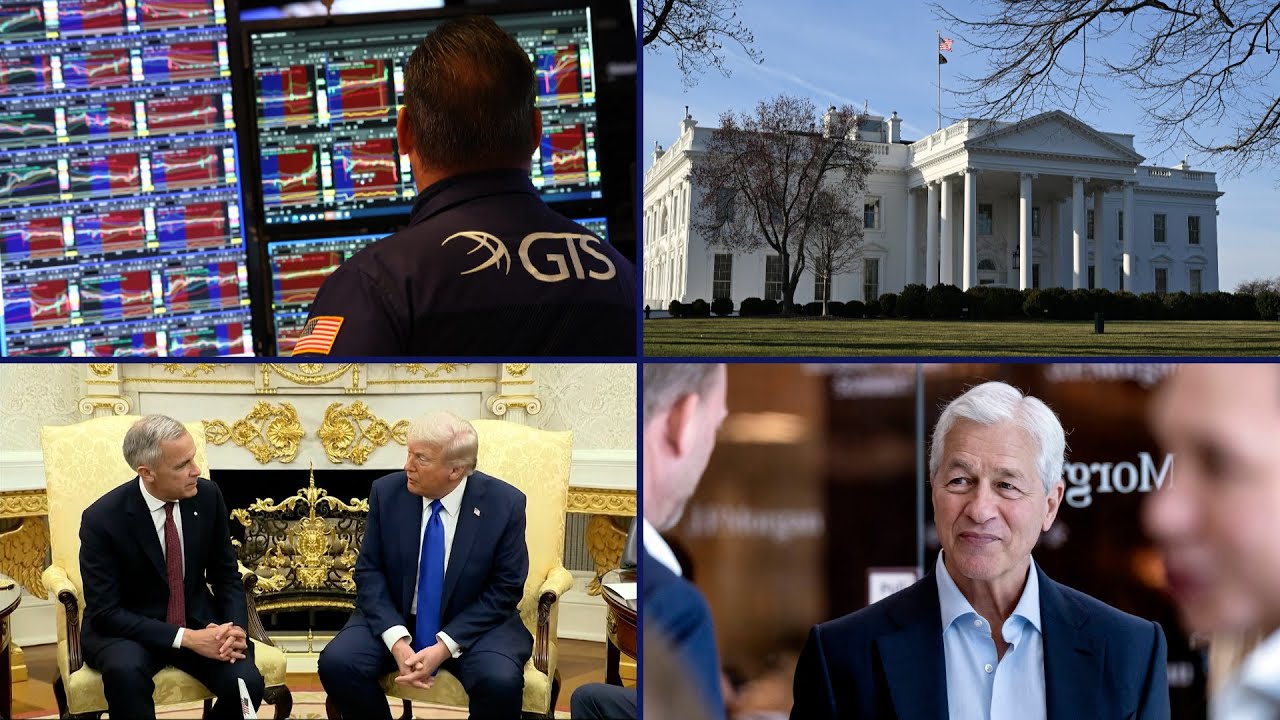
President Donald Trump opened the door to blocking back pay for certain federal workers when the government reopens, a move that would heighten legal scrutiny of the administration’s maneuvers during the shutdown.
“It really depends on who you’re talking about, but for the most part, we’re going to take care of our people,” he told reporters at the White House. “There are some people that really don’t deserve to be taken care of and we’ll take care of them in a different way.”
The White House’s Budget Office led by Russell Vought has drafted a memo that says the workers aren’t guaranteed compensation during the shutdown, a posture that raises the stakes in the confrontation with Democrats nearly a week after agencies and departments suspended non-essential operations.
Senator James Lankford (R-OK) shares his thoughts on President Trump suggesting to fire or eliminate some federal positions during the shutdown and states he believes federal employees should get backpay once the government reopens. He also talks about if there are the group negotiations happening around health care and state the Senate GOP is 'not even close' to 60 votes. Sen. Lankford speaks with Joe Mathieu on the late edition of Bloomberg's "Balance of Power."
More than a quarter million federal employees didn’t receive their scheduled paychecks this week as the US government shutdown enters its second week.
Another two million will go without pay if the impasse extends into a third week. The missed payrolls mark a tangible pain point in the partisan standoff, adding to the pressure for Congress to pass a spending bill to reopen the government.
The Trump administration is turning that pressure up. The latest threat comes in a draft legal memo from the White House’s Office of Management and Budget arguing that workers won’t necessarily get back pay once the shutdown ends.
That interpretation would upend four decades of past practice and seemingly defy a 2019 law making back pay automatic. President Donald Trump suggested Tuesday that his administration would pick and choose which employees are made whole.
“It really depends on who you’re talking about, but for the most part, we’re going to take care of our people,” Trump told reporters at the White House. “There are some people that really don’t deserve to be taken care of, and we’ll take care of them in a different way.”
Withholding back pay is part of Trump’s broader strategy of maximizing the political pain of the shutdown on Democratic constituencies, while protecting the military and immigration enforcement functions deemed “essential.” The president has threatened to announce plans to lay off thousands of workers in the coming days, and his budget director has suspended federal funding for projects in Democratic strongholds.
Democrats have accused the White House of holding federal workers hostage in the budget showdown. The party’s leaders say they won’t support a bill to fund the government unless it includes a renewal of some health insurance subsidies.
Most shutdowns last only a matter of hours or days — sometimes over a weekend when the impact is minimal. The current lapse is now the fourth longest in modern history.
The Trump administration is making more federal employees report to work than it has in previous shutdowns, furloughing less than 30% of the workforce. Neither essential employees nor those on furlough are getting paid except at agencies that don’t rely on annual appropriations.
Withholding back pay or firing federal workers would produce a more severe negative economic effect than prior shutdowns, Gregory Daco, chief economist at EY-Parthenon said. Lost income would reduce household spending and amplify the drag on gross domestic product, with an estimated loss of roughly 0.1 percentage point per week under current conditions, Daco said.
Problems mount as paychecks get missed. During the last shutdown, which lasted 35 days from 2018 to 2019, unscheduled absences at the Transportation Security Administration led to longer lines at airport checkpoints.
--------
Watch Bloomberg Radio LIVE on YouTube
Weekdays 7am-6pm ET
Follow us on X
Subscribe to our Podcasts:
Bloomberg Daybreak
Bloomberg Surveillance
Bloomberg Intelligence
Balance of Power
Bloomberg Businessweek
Listen on Apple CarPlay and Android Auto with the Bloomberg Business app:
Apple CarPlay
Android Auto
Visit our YouTube channels:
Bloomberg Podcasts
Bloomberg Television
Bloomberg Originals
Sentinel Indexing in Progress
Metadata and chapters are available. Claim extraction for this episode is pending.
All video content is delivered via YouTube embedded players in accordance with the YouTube Terms of Service. Sentinel provides research tools that promote discovery and accountability across political media.