Bloomberg Podcasts
@bloombergpodcasts·503K subscribers·32.4K videos
Stocks Tumble as US, China Trade War Flares
Posted
October 10, 2025
Views
35,852
Likes
369
Comments
145
Engagement
1.43%
October 10, 2025
35,852
369
145
1.43%
Every word spoken in this episode is indexed. Type any phrase to jump straight to the moment it was said.
Type any word or phrase that may have been spoken. Click a result to seek the player to that exact moment.
Try a name, a topic, or a quoted line
 4:30Now Playing
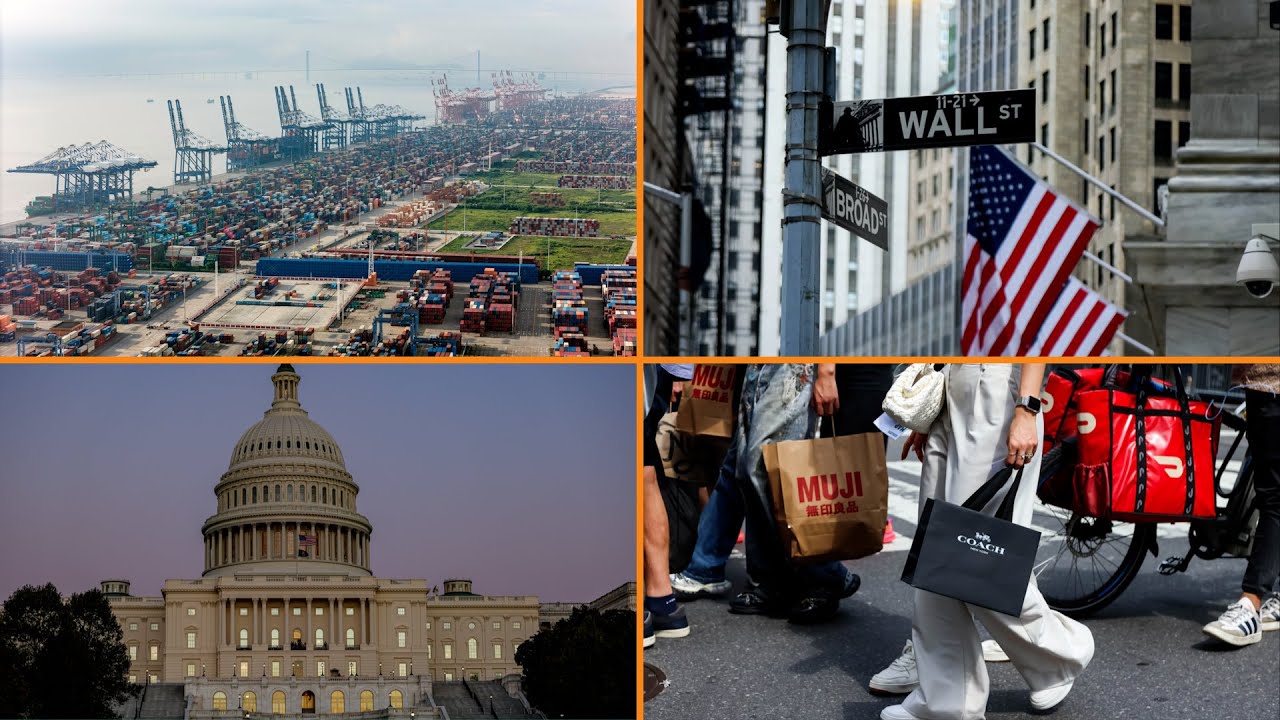
Flaring trade tensions between the US and China sent shockwaves across markets Friday, hammering stocks, oil and crypto while spurring a dash for the perceived safety of Treasuries and gold.
President Donald Trump’s threat of a “massive increase” in China tariffs shook Wall Street at the end of an already-volatile week that saw concern build about a bubble in artificial-intelligence companies. His remarks sent the S&P 500 down over 1.5%, with the gauge set for its worst day since April. The dollar slid at the end of its best week this year. Crude plunged 4%.
Bloomberg's Tom Keene reports.
Trump said he saw “no reason” to meet Chinese President Xi Jinping, citing recent “hostile” export controls. His social-media post followed a series of moves by both the US and China to potentially curb flows of technology and materials between the countries — all ahead of the presidents’ planned meeting in Asia later this month.
“That was clearly not something traders wanted to hear,” said Steve Sosnick at Interactive Brokers in a note titled “Tariff Rug Pull.” “The reactions may say as much about recent market complacency as they do about the policy ramifications.”
Big downward moves in risky assets have been a rarity of late, which may itself be a factor in Friday’s jarring reaction.
Since the tariff-fueled meltdown in April, the S&P 500 has surged on optimism about AI and hopes for Federal Reserve rate cuts. The gauge is trading near one of its highest valuations in 25 years — leaving a thin cushion for bad news.
“Throughout the summer, greed has far outpaced fear in the US equity market, and the high level of complacency leaves investors vulnerable,” said Michael O’Rourke at Jonestrading. “The selloff has the potential to evolve into a larger correction, especially if the US-China trade truce is over.”
About 400 shares in the S&P 500 fell, while the tech-heavy Nasdaq 100 lost 2.8%. In another sign of stress, a key gauge of volatility - the VIX - topped 20. The yield on 10-year Treasuries sank nine basis points to 4.04%. Bitcoin slid 3%. Commodities from copper to soybeans, wheat and cotton slumped.
Trump’s post follows a series of moves by both the US and China to potentially curb flows of technology and materials between the countries — which had been seen as ways to gain an edge ahead of the presidents’ planned meeting in Asia.
“This is a very dangerous moment for global supply chains, including those powering AI, but it is important to note that neither side has yet implemented its threatened measures,” said Michael Hirson and Houze Song at 22V Research. “There is still a window to back down, and Trump faces significant political risks if he follows through on his threats.”
Chris Zaccarelli at Northlight Asset Management highlighted the importance of the trade relationship between the US and China for market psychology.
“Good trading relations with China help keep markets calm, and a trade war with China would be extremely negative for markets,” he said.
To Michael Bailey at FBB Capital Partners, perhaps investors are using the new Trump tariff threats as cover for selling the AI complex, which has been “living on an island” this year, looking at earnings growth.
“In other words, tariffs have done very little to slow the breakneck pace of AI-related companies, so today’s new tariff concerns are a bit surprising,” he said.
From a technical standpoint, Dan Wantrobski at Janney Montgomery Scott says Friday’s pullback is not a complete surprise.
“We were anticipating air pockets of this or similar nature,” he noted, adding that would be “due to recent overbought conditions, negative divergences in price, momentum, and breadth, crowded positioning, and high headline risk.”
When staring down the face of a repricing such as this, Wantrobski says it is important to remember that in the history of the S&P 500, there was never a single instance where it declined more than 20% twice in one calendar year over two separate occasions.
--------
Watch Bloomberg Radio LIVE on YouTube
Weekdays 7am-6pm ET
Follow us on X
Subscribe to our Podcasts:
Bloomberg Daybreak
Bloomberg Surveillance
Bloomberg Intelligence
Balance of Power
Bloomberg Businessweek
Listen on Apple CarPlay and Android Auto with the Bloomberg Business app:
Apple CarPlay
Android Auto
Visit our YouTube channels:
Bloomberg Podcasts
Bloomberg Television
Bloomberg Originals
Sentinel Indexing in Progress
Metadata and chapters are available. Claim extraction for this episode is pending.
All video content is delivered via YouTube embedded players in accordance with the YouTube Terms of Service. Sentinel provides research tools that promote discovery and accountability across political media.