Bloomberg Podcasts
@bloombergpodcasts·503K subscribers·32.4K videos
Trade Shifts to Avoid Highest US Tariffs Since 1930s
Posted
October 14, 2025
Views
13,283
Likes
153
Comments
118
Engagement
October 14, 2025
13,283
153
118
2.04%
Every word spoken in this episode is indexed. Type any phrase to jump straight to the moment it was said.
Type any word or phrase that may have been spoken. Click a result to seek the player to that exact moment.
Try a name, a topic, or a quoted line
 6:34Now Playing
Governments and companies are adapting to a world where US consumers and companies are costlier to reach and are seeking other markets to avoid the highest US tariffs since the 1930s. Bloomberg's Enda Curran joins Carol Massar and Matt Miller on 'Bloomberg Businessweek Daily' to discuss the shifting global trade landscape.
US President Donald Trump said he might stop trade in cooking oil with China, injecting fresh tensions into the trade relationship between the world’s two largest economies.
Trump on Tuesday cast the potential move as retaliation against Beijing for its refusal to buy American soybeans, which he said “is an Economically Hostile Act” that is purposefully “causing difficulty for our Soybean Farmers.”
“We are considering terminating business with China having to do with Cooking Oil, and other elements of Trade, as retribution. As an example, we can easily produce Cooking Oil ourselves, we don’t need to purchase it from China,” Trump posted on social media.
The benchmark S&P 500 turned negative as Trump’s comments re-escalated the conflict with China. Just hours earlier, both Trump and US Trade Representative Jamieson Greer expressed confidence that friction would ease through ongoing trade talks. Shares of crop traders Archer-Daniels-Midland Co. and Bunge Global SA jumped on the news, erasing earlier declines.
Cutting off cooking oil trade could have wide-ranging effects for the American heartland and in energy markets. Used cooking oil, as well as soybeans, are a feedstock for biofuels such as renewable diesel. Trump’s administration was already moving to reduce incentives to bring in foreign supplies of used cooking oil. Imports from China reached a record high in 2024, according to the Agriculture Department.
Tuesday’s events exemplified the whiplash that has characterized the US-China relationship since Trump’s return to the White House, which has kept investors anxious about the eruption of a full-blown trade war.
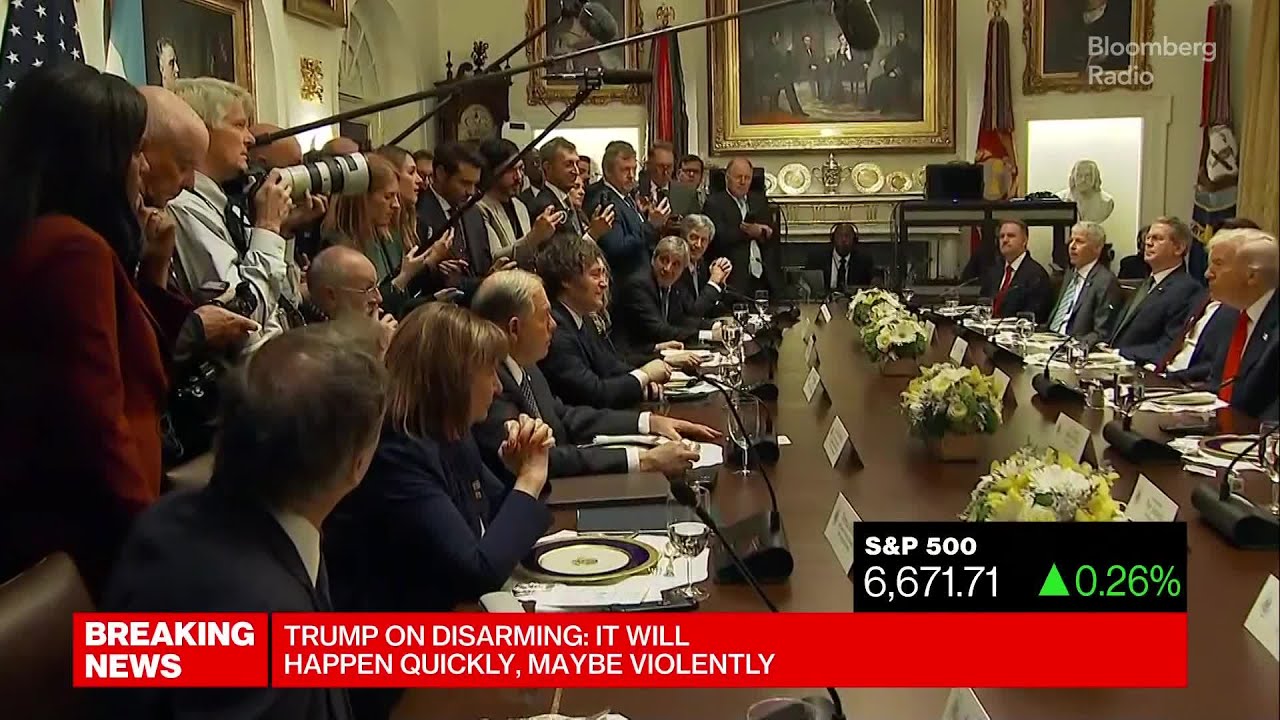
Greer had buoyed hopes that tariff negotiations with the Chinese government remained on the table, saying that unnamed senior-level officials from Washington and Beijing held discussions Monday and that Trump and Chinese President Xi Jinping still have a “scheduled time” to meet later this month.
Trump, too, sounded cautiously optimistic a positive outcome could be reached.
“We have a fair relationship with China, and I think it’ll be fine. And if it’s not, that’s OK too,” Trump told reporters earlier Tuesday at the White House. “We have a lot of punches being thrown, and we’ve been very successful.”
That had soothed worries that were inflamed when Beijing sanctioned the US units of a South Korean shipping giant and threatened further actions against the industry, the latest tit-for-tat retaliation between the two sides.
Both nations have sought to build leverage ahead of new trade negotiations by slapping new restrictions on shipments of rare-earth-minerals and semiconductors — materials that lie at the heart of their trade conflict. In response to recent Chinese measures, Trump threatened to impose an additional 100% tariff on goods from China by Nov. 1 and raised the prospect of canceling his meeting with Xi at the Asia-Pacific Economic Cooperation summit in South Korea.
--------
Watch Bloomberg Radio LIVE on YouTube
Weekdays 7am-6pm ET
Follow us on X
Subscribe to our Podcasts:
Bloomberg Daybreak
Bloomberg Surveillance
Bloomberg Intelligence
Balance of Power
Bloomberg Businessweek
Listen on Apple CarPlay and Android Auto with the Bloomberg Business app:
Apple CarPlay
Android Auto
Visit our YouTube channels:
Bloomberg Podcasts
Bloomberg Television
Bloomberg Originals
Sentinel Indexing in Progress
Metadata and chapters are available. Claim extraction for this episode is pending.
All video content is delivered via YouTube embedded players in accordance with the YouTube Terms of Service. Sentinel provides research tools that promote discovery and accountability across political media.