Bloomberg Podcasts
@bloombergpodcasts·503K subscribers·32.4K videos
Fed’s Daly: Need to Avoid Mistake of Holding Rates Too Long
Posted
November 10, 2025
Views
1,978
Likes
26
Comments
4
Engagement
November 10, 2025
1,978
26
4
1.52%
Every word spoken in this episode is indexed. Type any phrase to jump straight to the moment it was said.
Type any word or phrase that may have been spoken. Click a result to seek the player to that exact moment.
Try a name, a topic, or a quoted line
See what was published immediately before and after this episode.
 4:23
4:23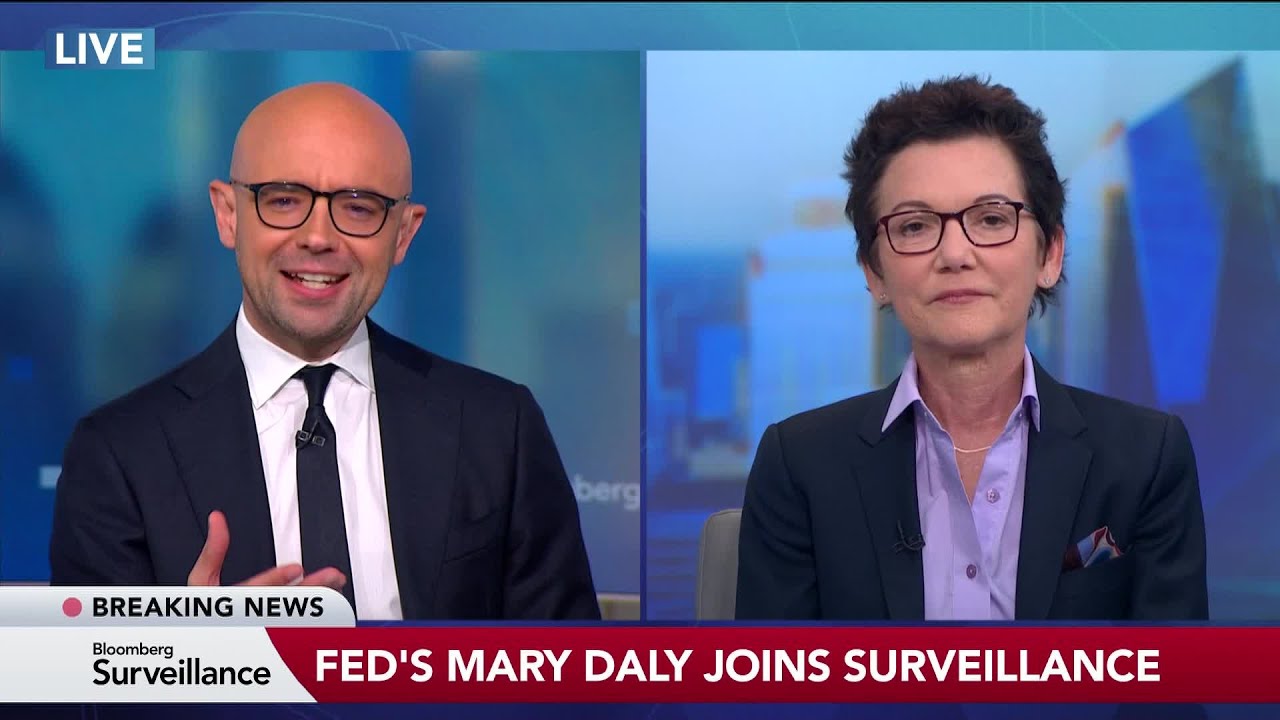 12:53Now Playing
- Federal Reserve Bank of San Francisco President Mary Daly said the US economy is probably suffering a downturn in demand while tariff-related inflation appears to be contained for now, and warned against keeping interest rates too high for too long.
“If you unpack the data, what you see is, you don’t see inflation running up in services or housing, and importantly, you don’t see it spreading into inflation expectations,” Daly said Monday on Bloomberg TV.
“We also see a labor market that’s softening and wage growth that is moderating, so you’re really not going to see a lot of pressure coming on the cost side of labor,” she said. “So, I put those things together, and we don’t want to make the mistake of holding on too long for rates only to find out we’ve injured the economy.”
Daly’s comments followed a blog post published earlier Monday in which she laid out her thinking on whether there’s a potential need for further rate cuts beyond the 50 basis points in reductions already delivered this year.
“Getting policy right will require an open mind and digging for evidence on both sides of the debate,” Daly said in the post, without specifying a course of action for the upcoming meeting in December.
While the US government shutdown may be approaching a resolution, the suspension of data releases it caused has clouded Fed officials’ view on developments in the economy. Even if statistics publications resume, their Dec. 10 decision will take place with less information than usual.
Against that backdrop, Daly’s analysis of the current juncture is one where cooling wage growth points to a “negative demand shock.” Inflation, while elevated, remains contained and hasn’t been widely stoked by import levies, she added.
The San Francisco Fed chief presented a choice in historical parallels between the 1970s and the 1990s, where the former marked an era of entrenched inflation, while the latter featured productivity gains, helped by a balanced approach by the Fed.
“We can’t ignore the 1970s or the post-pandemic inflation run-up, but we can’t ignore the rest of history either,” Daly said. “We don’t want to work so hard to not be the 1970s that we cut off the possibility of the 1990s, losing jobs and growth in the process. That would be trading one mistake for another.”
Under the Fed’s system of rotation on the FOMC for regional presidents, the San Francisco president is scheduled to become an alternate voter in January, and will then serve as a member of the committee in 2027.
--------
Watch Bloomberg Radio LIVE on YouTube
Weekdays 7am-6pm ET
Follow us on X
Subscribe to our Podcasts:
Bloomberg Daybreak
Bloomberg Surveillance
Bloomberg Intelligence
Balance of Power
Bloomberg Businessweek
Listen on Apple CarPlay and Android Auto with the Bloomberg Business app:
Apple CarPlay
Android Auto
Visit our YouTube channels:
Bloomberg Podcasts
Bloomberg Television
Bloomberg Originals
Sentinel Indexing in Progress
Metadata and chapters are available. Claim extraction for this episode is pending.
All video content is delivered via YouTube embedded players in accordance with the YouTube Terms of Service. Sentinel provides research tools that promote discovery and accountability across political media.