Bloomberg Podcasts
@bloombergpodcasts·503K subscribers·32.4K videos
Lack of Labor Supply is 'Slowing the Economy in Itself,' Says David Kelly
Posted
December 22, 2025
Views
12,096
Likes
61
Comments
25
Engagement
December 22, 2025
12,096
61
25
0.71%
Every word spoken in this episode is indexed. Type any phrase to jump straight to the moment it was said.
Type any word or phrase that may have been spoken. Click a result to seek the player to that exact moment.
Try a name, a topic, or a quoted line
 6:22Now Playing
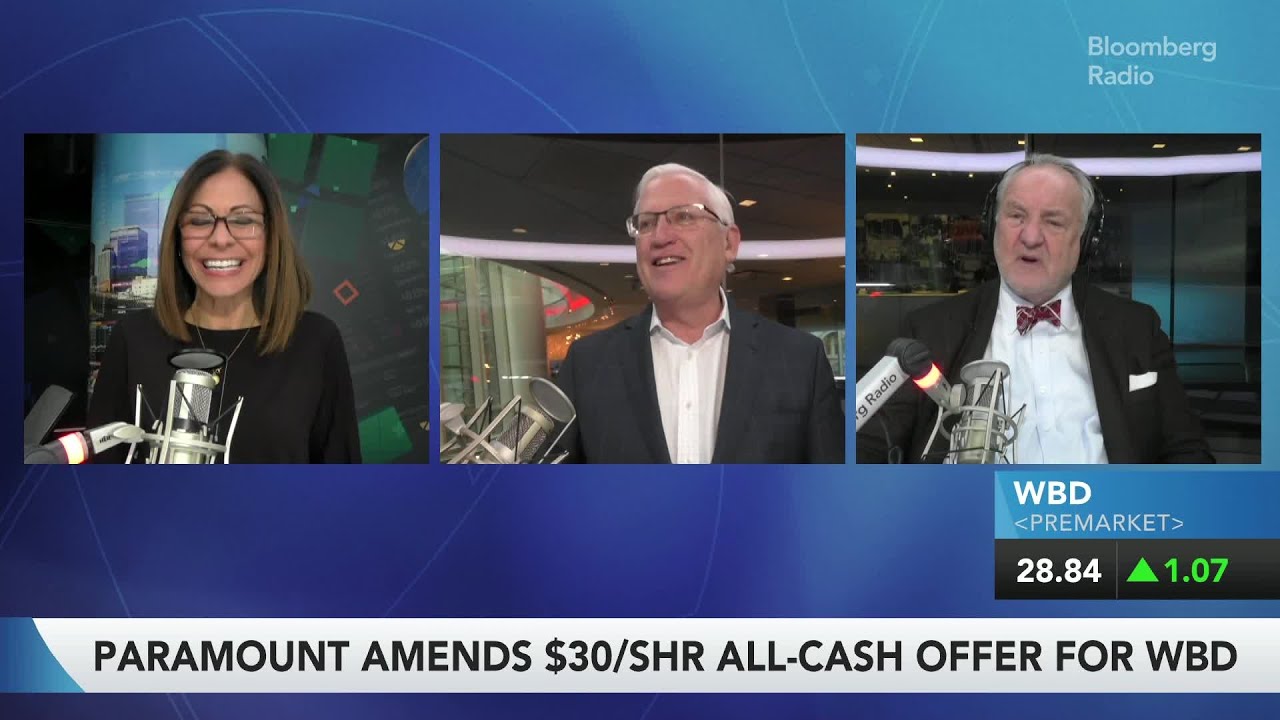
David Kelly, Chief Global Strategist at J.P. Morgan Asset Management, discusses the uneven 'k-shaped' expansion set to shape the US economy into 2026.
Federal Reserve Governor Stephen Miran said the US central bank risks sparking a recession unless it continues lowering interest rates next year.
“If we don’t adjust policy down, then I think that we do run risks,” Miran said during an interview with Bloomberg TV on Monday. Miran added he doesn’t foresee an economic downturn in the near term, though rising unemployment should push Fed officials to continue cutting rates.
“The unemployment rate has poked up potentially above where people thought it was going to go. And so we’ve had data that should push people into a dovish direction,” he said.
Miran, whose term at the Fed ends in January, has argued for larger cuts since he joined the Board of Governors in September.
After policymakers cut rates three times by a total of 75 basis points since September, there’s less need to cut by half a point at the next Fed meeting at the end of next month, Miran said, adding he hasn’t decided yet.
“You sort of get into territory where you can start micromanaging instead of big cuts,” the Fed governor said. “And I don’t know whether we’re here yet, or it would sort of still take a couple more cuts to get there.”
The Fed lowered interest rates by a quarter-point this month but officials remain deeply divided on the path ahead, with most foreseeing just one more cut next year. Recent public speeches have signaled the intention of a majority to hold steady in the coming months, waiting for clarity on the economic outlook.
A Trump order denouncing disparate impact bias claims. EEOC’s moves to shift the agency’s workplace discrimination enforcement. Similar Justice Department policy changes. And even the new Texas artificial intelligence law taking effect Jan. 1.
At each turn this year, employment lawyers have encountered another policy pronouncement offering businesses a false sense of security about assessing their AI-powered hiring tools for disparate impact, otherwise known as unintentional discrimination.
Their constant refrain for the past year and going into 2026: The law hasn’t changed, courts recognize disparate impact claims, and employers can be sued for them.
“There’s been so much change since January,” said Eric J. Felsberg, a management-side attorney at Jackson Lewis PC. “A lot of employers, and I’ve heard this from them, have said we don’t have to worry about this anymore. But not quite, it’s still the law.”
Some states have clarified they recognize disparate impact claims to push back on the Trump administration. As 2025 draws to a close, New Jersey adopted new civil rights regulations and New York amended its human rights law.
Disparate impact theory imposes liability on companies using neutral selection procedures that negatively affect workers based on protected traits such as race and sex. The US Supreme Court recognized such claims as valid, and Congress explicitly added disparate impact to Title VII of the 1964 Civil Rights Act in 1991. Many states also recognize the claims.
Conservative legal advocates have long criticized the theory as penalizing businesses for unintentional statistical disparities and pressuring them to implement affirmative action-type hiring policies.
“Disparities do not (and should not legally) imply discrimination per se,” attorney Jonathan Berry wrote in the sprawling Project 2025 document prepared in anticipation of Trump’s return to the White House. Berry, who now serves as the solicitor of labor, got his wish for an executive order barring pursuit of disparate impact claims by federal agencies, but not the congressional action he urged.
Workplace AI bias litigation is in its infancy, with employment lawyers watching a handful of bellwether cases. Disparate impact is the likely path for these cases—though intentional bias, or disparate treatment, claims can’t be ruled out.
--------
Watch Bloomberg Radio LIVE on YouTube
Weekdays 7am-6pm ET
Follow us on X
Subscribe to our Podcasts:
Bloomberg Daybreak
Bloomberg Surveillance
Bloomberg Intelligence
Balance of Power
Bloomberg Businessweek
Listen on Apple CarPlay and Android Auto with the Bloomberg Business app:
Apple CarPlay
Android Auto
Visit our YouTube channels:
Bloomberg Podcasts
Bloomberg Television
Bloomberg Originals
Sentinel Indexing in Progress
Metadata and chapters are available. Claim extraction for this episode is pending.
All video content is delivered via YouTube embedded players in accordance with the YouTube Terms of Service. Sentinel provides research tools that promote discovery and accountability across political media.