Bloomberg Podcasts
@bloombergpodcasts·503K subscribers·32.4K videos
Oil Falls as US Deepens Involvement in Venezuelan Oil Industry
Posted
January 7, 2026
Views
4,250
Likes
29
Comments
36
Engagement
January 7, 2026
4,250
29
36
1.53%
Every word spoken in this episode is indexed. Type any phrase to jump straight to the moment it was said.
Type any word or phrase that may have been spoken. Click a result to seek the player to that exact moment.
Try a name, a topic, or a quoted line
See what was published immediately before and after this episode.
 2:52Now Playing
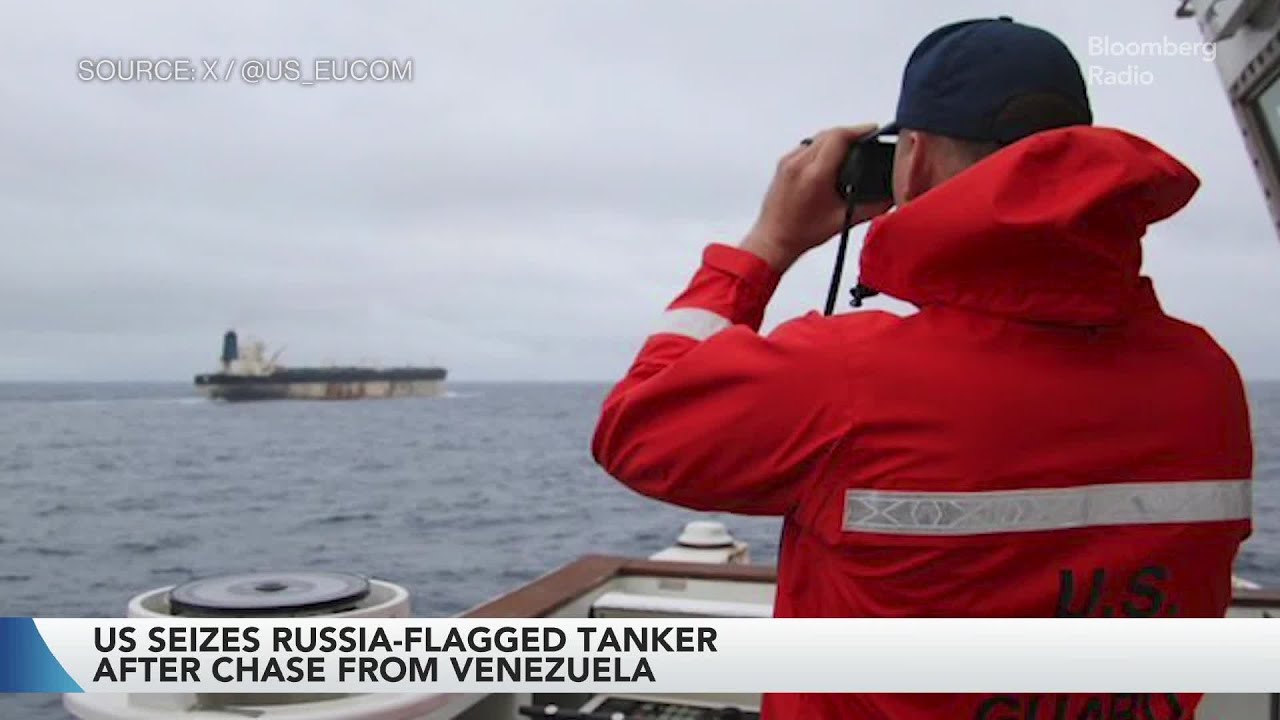
Oil declined on the prospect that Venezuelan crude will continue to flow, particularly to the US, while US forces seized two more sanctioned oil tankers as part of its energy quarantine of the country. Bloomberg's Mike McGlone joins to discuss with Paul Sweeney and Scarlet Fu.The Trump administration plans to control future sales of Venezuelan oil and hold the proceeds in US accounts, Energy Secretary Chris Wright said, making the clearest statement yet on Washington’s strategy to bring the impoverished nation’s crude to market and manage its most valuable resource.Wright, who spoke at a Goldman Sachs Group Inc. conference in Miami Wednesday, said initially the barrels would come from crude Venezuela is holding in storage, which has been filling up amid the US blockade and threatening to force some production off line. “We’re just going to get that crude moving again and sell it,” Wright said. “We’re going to market the crude coming out of Venezuela – first this backed-up stored oil and then indefinitely going forward we will sell the production that comes out of Venezuela.”The plan comes as the Trump administration is pushing for US energy companies to rebuild Venezuela’s decaying oil infrastructure and revive its flagging production. The US is also selectively rolling back sanctions on Venezuela’s oil sector as part of the effort, the Energy Department said.
President Donald Trump said Tuesday evening that Venezuela would relinquish as much as 50 million barrels of its oil for the US to sell, valued at about $2.8 billion at current market prices. The US has already begun marketing Venezuelan crude, White House Press Secretary Karoline Leavitt said during a briefing Wednesday.Revenue from the sales will be held in US Treasury accounts, a move that would protect the proceeds from Venezuela’s creditors, a person familiar with the matter said. The funds will benefit the American and Venezuelan people, Leavitt said.“All proceeds from the sale of Venezuelan crude oil and products will first settle in US-controlled accounts at globally recognized banks to guarantee the legitimacy and integrity of the ultimate distribution of proceeds,” Leavitt said. “Those funds will be dispersed for the benefit of the American people and the Venezuelan people at the discretion of the United States.”Venezuela’s state oil company, Petroleos de Venezuela SA, said in a statement that it’s in negotiations with Washington over crude sales through a framework that would be similar to its arrangement with Chevron Corp., the only US oil major still operating in the country.
Earlier, US forces seized two more sanctioned oil tankers, including one flying a Russian flag, as the Trump administration pushes to control all exports of Venezuelan crude. One was seized in the Atlantic Ocean south of Iceland, and the other was apprehended in the Caribbean region.
Trump is pushing for US oil companies such as Chevron, ConocoPhillips and Exxon Mobil Corp. to rebuild Venezuela’s infrastructure and revive production now that the US has removed former President Nicolás Maduro. The administration has already had conversations with multiple oil companies, according to an official. The president is set to meet with energy executives on Friday, Leavitt said.
“It’s just a meeting to discuss, obviously, the immense opportunity that is before these oil companies right now,” she said.
Secretary of State Marco Rubio also may attend the sit-down that’s being planned, according to people familiar with the matter.
Venezuela’s oil sector has suffered from years of corruption, underinvestment and neglect, and its production is less than 1 million barrels a day. Wright estimated that output could be increased by several hundred thousand barrels a day in the short to medium term.
Restoring the industry to its former glories would be a huge undertaking, costing an estimated $10 billion per year over the next decade, according to estimates from Francisco Monaldi, director of Latin American energy policy at Rice University’s Baker Institute for Public Policy.
--------
Watch Bloomberg Radio LIVE on YouTube
Weekdays 7am-6pm ET
Follow us on X
Subscribe to our Podcasts:
Bloomberg Daybreak
Bloomberg Surveillance
Bloomberg Intelligence
Balance of Power
Bloomberg Businessweek
Listen on Apple CarPlay and Android Auto with the Bloomberg Business app:
Apple CarPlay
Android Auto
Visit our YouTube channels:
Bloomberg Podcasts
Bloomberg Television
Bloomberg Originals
Sentinel Indexing in Progress
Metadata and chapters are available. Claim extraction for this episode is pending.
All video content is delivered via YouTube embedded players in accordance with the YouTube Terms of Service. Sentinel provides research tools that promote discovery and accountability across political media.