Bloomberg Podcasts
@bloombergpodcasts·503K subscribers·32.4K videos
US Productivity Accelerates to Fastest Pace in Two Years
Posted
January 9, 2026
Views
2,436
Likes
19
Comments
4
Engagement
January 9, 2026
2,436
19
4
0.94%
Every word spoken in this episode is indexed. Type any phrase to jump straight to the moment it was said.
Type any word or phrase that may have been spoken. Click a result to seek the player to that exact moment.
Try a name, a topic, or a quoted line
See what was published immediately before and after this episode.
 5:17Now Playing
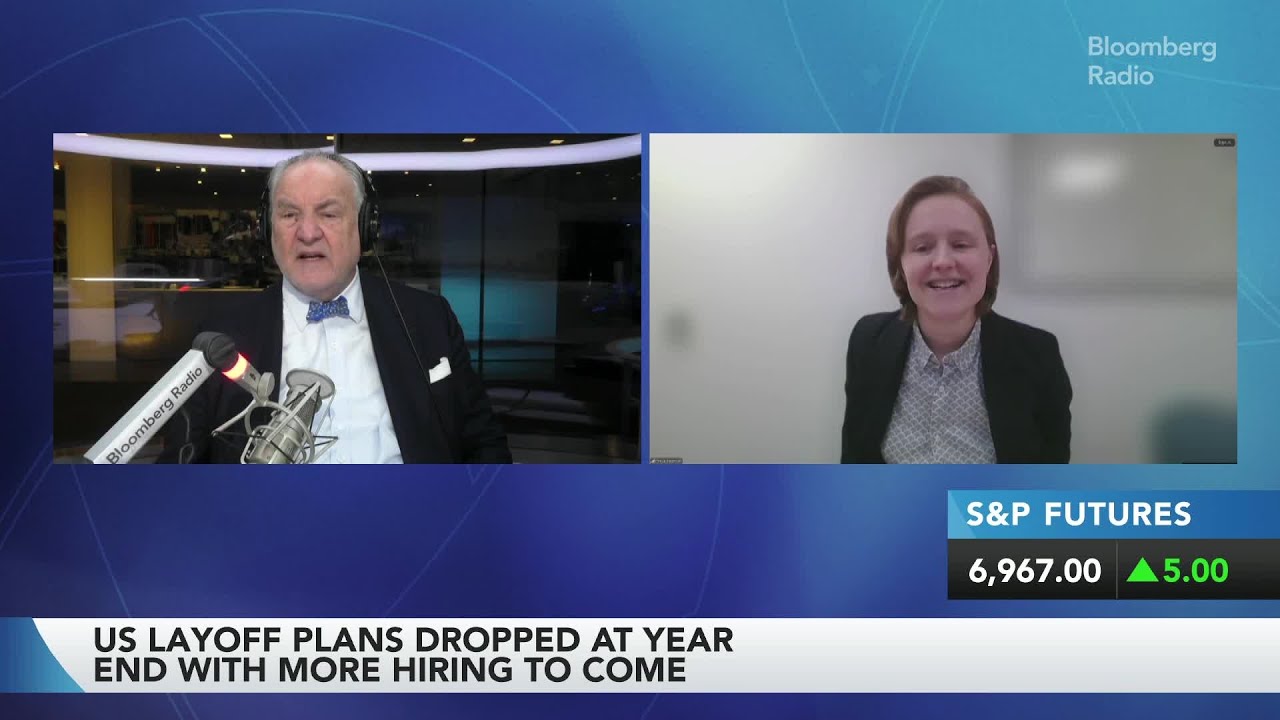
Freya Beamish, Chief Economist and Head of Macro Research at TS Lombard, examines the US labor productivity and how a reacceleration could revive inflation pressure.
US labor productivity accelerated in the third quarter to the strongest pace in two years, adding to evidence that efficiency gains are suppressing inflationary pressures from wages.
Productivity, or nonfarm employee output per hour, soared at a 4.9% annualized rate after an upwardly revised 4.1% advance in the second quarter, data from the Bureau of Labor Statistics showed Thursday.
US economic growth powered ahead in the third quarter at the fastest pace since 2023, despite a slowing labor market. Unit labor costs — what businesses pay employees to produce one unit of output — dropped 1.9%, following a decrease in the prior quarter. That marked the first back-to-back declines since 2019.
The drop in employment costs illustrates a bifurcation in the economy, whereby the labor market has softened despite solid economic growth.
Federal Reserve officials can take comfort in continued efficiency gains because they limit wage-driven inflationary pressures. Labor costs are the biggest expense for many businesses, so companies turn to new technology and equipment to improve worker efficiency.
“The yearly rise in unit labor costs is easily consistent with the 2% inflation target: It is very clear from these figures that labor costs are not what is driving price increases above target,” Carl Weinberg, chief economist at High Frequency Economics, said in a note.
Separate data out Thursday showed initial applications for unemployment insurance rose 8,000 to 208,000 in the week ended Jan. 3, which included New Year’s Day. That was slightly below economists’ expectations and is consistent with a low level of layoffs. Continuing claims, a proxy for the number of people receiving benefits, increased to 1.91 million in the previous week.
The figures have been volatile in recent weeks, as is typical this time of year.
In addition to helping contain labor costs, the resurgence in productivity in mid-2025 suggests companies are attempting to mitigate the impact of higher duties on imported goods. It also highlights how companies can use technology to get by with lean staffing.
--------
Watch Bloomberg Radio LIVE on YouTube
Weekdays 7am-6pm ET
Follow us on X
Subscribe to our Podcasts:
Bloomberg Daybreak
Bloomberg Surveillance
Bloomberg Intelligence
Balance of Power
Bloomberg Businessweek
Listen on Apple CarPlay and Android Auto with the Bloomberg Business app:
Apple CarPlay
Android Auto
Visit our YouTube channels:
Bloomberg Podcasts
Bloomberg Television
Bloomberg Originals
Sentinel Indexing in Progress
Metadata and chapters are available. Claim extraction for this episode is pending.
All video content is delivered via YouTube embedded players in accordance with the YouTube Terms of Service. Sentinel provides research tools that promote discovery and accountability across political media.