Bloomberg Podcasts
@bloombergpodcasts·503K subscribers·32.4K videos
Yields Whipsaw on Mixed PPI, Retail Sales Data
Posted
January 14, 2026
Views
333
Likes
3
Comments
1
Engagement
1.20%
January 14, 2026
333
3
1
1.20%
Every word spoken in this episode is indexed. Type any phrase to jump straight to the moment it was said.
Type any word or phrase that may have been spoken. Click a result to seek the player to that exact moment.
Try a name, a topic, or a quoted line
 2:27Now Playing
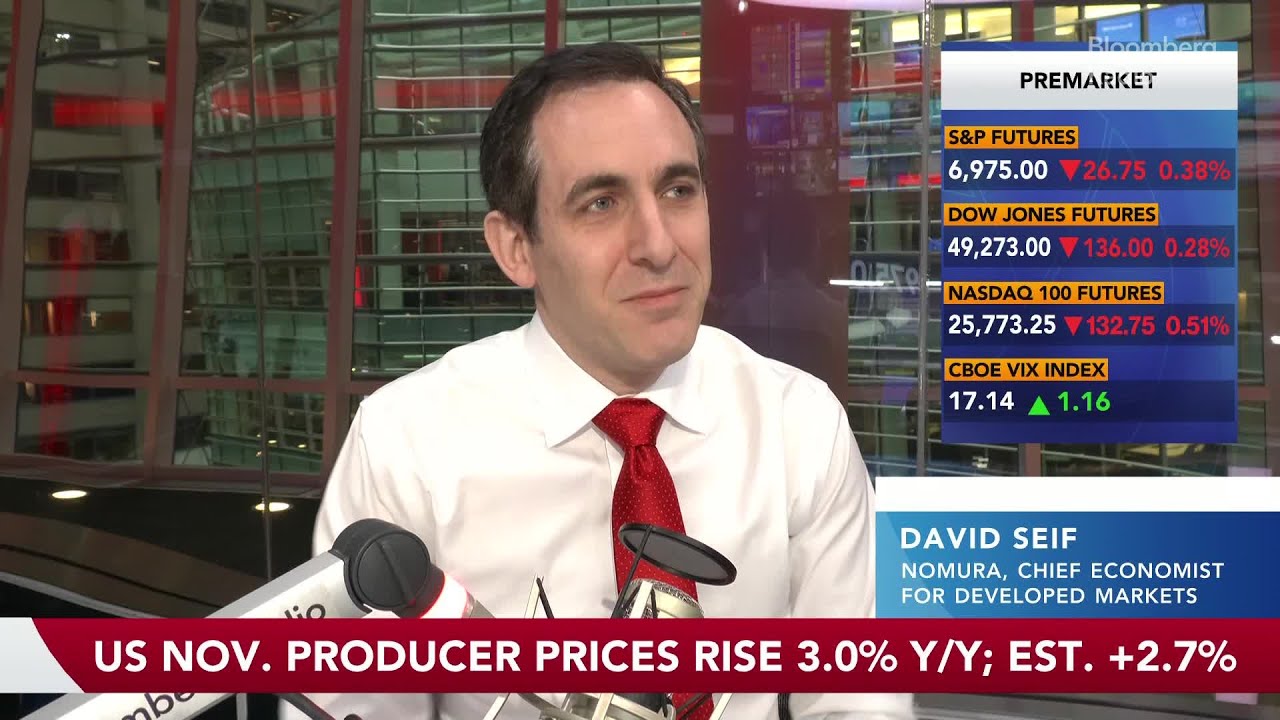
David Seif, Chief Economist for Developed Markets at Nomura, reacts to US November PPI and retail sales data.
US retail sales rose in November by the most since July, fueled by a rebound in auto purchases and resilient holiday shopping.
The value of retail purchases, not adjusted for inflation, increased 0.6% after a downwardly revised 0.1% drop in October, Commerce Department data showed Wednesday. Excluding cars, sales climbed 0.5%.
The data suggest consumers took advantage of holiday shopping deals despite lingering concerns about affordability and their job prospects. While those headwinds are expected to remain top of mind for many middle- and lower-income households in the months ahead, wealthier Americans continue to bolster overall consumption.
“The upshot is a still-resilient consumer coming into the homestretch with plenty of momentum,” Wells Fargo & Co. economists Tim Quinlan and Shannon Grein said in a note.
Ten out of 13 categories posted increases, including sporting goods and hobby stores as well as building materials retailers and clothing outlets. Motor vehicle sales bounced back after the expiration of federal tax incentives on electric cars restrained sales in the prior month. Higher receipts at gasoline stations also contributed to the overall gain.
Retailers typically offer promotions and discounts on a range of products in November — not only on Black Friday, but also in the days before. Consumers spent a record-breaking amount online during the holiday season of Nov. 1 to Dec. 31, cashing in on deals and using Buy Now Pay Later to make purchases, according to Adobe Inc.
Spending at restaurants and bars, the only service-sector category in the retail report, gained 0.6% after falling in the prior month.
A weeklong rotation that has seen investors bail from richly priced technology names in favor of more economically sensitive industries picked up speed, sending the Nasdaq 100 to its worst drop in a month while lifting the majority of companies in the S&P 500.
While the S&P 500 saw its first back-to-back losses in 2026 amid a slide in all “Magnificent Seven” shares, almost 300 of its firms rose. Small caps continued to outperform, with the Russell 2000 beating the US stock benchmark for a ninth straight session — matching the longest streak since 1990.
The first weeks of 2026 have been marked by a steady rotation out of giant tech companies, whose all-weather earnings made them safe bets at times of economic uncertainty, and into a broader category of firms tuned to improving growth prospects. The dominance of the tech cohort in benchmarks has occasionally allowed their declines to overwhelm indexes.
“Regardless of what happens with tech stocks in 2026, we expect the stock market’s broadening story to play an even bigger role this year as the bull market grinds along,” said Clark Bellin at Bellwether Wealth.
As the nascent earnings season rolled in, Wells Fargo & Co. sank after missing profit estimates while Citigroup Inc. posted a surge in financial advisory fees. Bank of America Corp. slid as concern about its expense outlook offset solid results.
“The expectations for this earnings season are very high,” said Matt Maley at Miller Tabak. “If those expectations are not met in today’s stock market — which is priced for perfection — it’s going to create some headwinds.”
Treasury yields remained lower after the recent economic data was seen as unable to justify any shift in expectations for monetary policy. Money markets continued to project the next Federal Reserve rate cut only in mid-2026.
The US Supreme Court didn’t rule on challenges to President Donald Trump’s tariffs Wednesday, leaving the world to wait until at least next week to learn the fate of his signature economic policy. It hasn’t said when it will issue its next opinions but could schedule more decisions on Tuesday or Wednesday, when the justices again are in session.
The S&P 500 fell about 1%. Its equal-weighted version - which gives Dollar Tree Inc. as much clout as Apple Inc. - added 0.1%. The Nasdaq 100 slid 1.6%. The Russell 2000 rose 0.2%.
--------
Watch Bloomberg Radio LIVE on YouTube
Weekdays 7am-6pm ET
Follow us on X
Subscribe to our Podcasts:
Bloomberg Daybreak
Bloomberg Surveillance
Bloomberg Intelligence
Balance of Power
Bloomberg Businessweek
Listen on Apple CarPlay and Android Auto with the Bloomberg Business app:
Apple CarPlay
Android Auto
Visit our YouTube channels:
Bloomberg Podcasts
Bloomberg Television
Bloomberg Originals
Sentinel Indexing in Progress
Metadata and chapters are available. Claim extraction for this episode is pending.
All video content is delivered via YouTube embedded players in accordance with the YouTube Terms of Service. Sentinel provides research tools that promote discovery and accountability across political media.