Bloomberg Podcasts
@bloombergpodcasts·503K subscribers·32.4K videos
Tax Hikes, Furloughs Haunt New Orleans During Mardi Gras Season
Posted
February 17, 2026
Views
2,728
Likes
8
Engagement
0.29%
February 17, 2026
2,728
8
0.29%
Every word spoken in this episode is indexed. Type any phrase to jump straight to the moment it was said.
Type any word or phrase that may have been spoken. Click a result to seek the player to that exact moment.
Try a name, a topic, or a quoted line
 4:52Now Playing
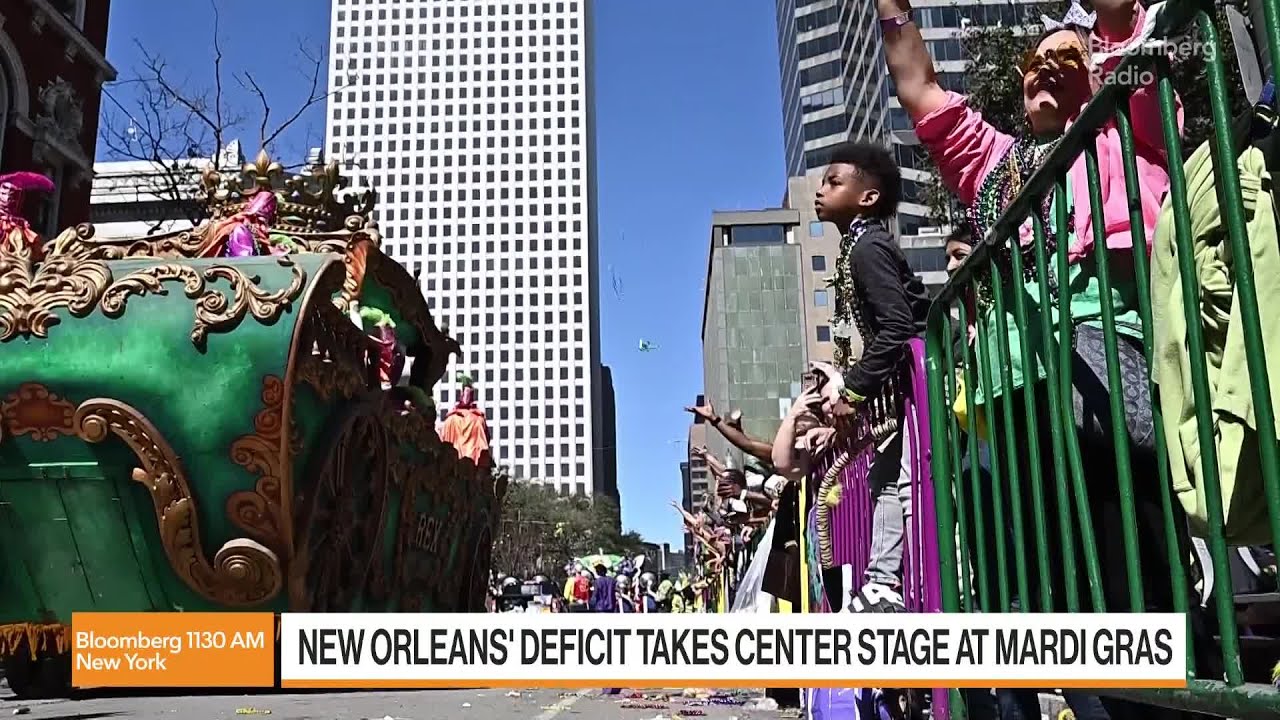
In the runup to its big Mardi Gras celebration on Fat Tuesday, New Orleans is preparing for parades and crowds — and painful budget cuts.
Behind the brass bands and bead throws, the city is confronting one of the worst financial crises in its modern history after years of spending propped up by temporary federal pandemic aid. With revenue lagging and costs locked in, officials say the resulting budget hole will take years to close.
Mayor Helena Moreno, who took office in January, inherited a deficit estimated at $222 million in a roughly $1.6 billion operating budget, according to city officials. Late last year, the city had to borrow $125 million from Wall Street simply to make payroll, covering routine expenses and retention bonuses for police promised by the prior administration — a move that triggered downgrades from all three major credit-rating companies.
And starting with the Feb. 15 payroll, many city workers will have to take the equivalent of 22 unpaid furlough days through the end of the year.
With stopgap options running out, city leaders say they are now shifting from short-term cuts to structural fixes, including proposed charter changes and potentially new tourism taxes — steps that could permanently alter how New Orleans governs itself.
“We are going to fix this problem, fix the way spending happens in the city of New Orleans so that we never have an administration in the future ever spend us into a hole like this,” said JP Morrell, president of the city council.
The crisis is unfolding against a sharp political divide. New Orleans is a Democratic stronghold in a Republican state, heightening fears at city hall that a state takeover of city finances could threaten priorities important to its voters. That concern has added urgency to efforts to stabilize the city’s books before the state steps in.
Officials trace the crisis to how New Orleans used federal pandemic aid under the American Rescue Plan Act. The city received nearly $388 million, about $187 million of which went to replacing lost revenue and supporting the operating budget. Decisions made under the prior administration played a major role, said Michael Waguespack, Louisiana’s legislative auditor, citing an expansion of city government supported by federal relief and a breakdown in trust between the mayor’s office and the city council as the aid wound down.
Those choices left the city with a larger workforce and fewer buffers once the aid ran out. Jobs initially funded through temporary federal programs became embedded in the workforce, and city officials say revenue projections were overstated by roughly 5% to 10%, widening the gap between recurring costs and income.
“Looking at the numbers I've seen, I think we're too bloated,” Waguespack said. “We need to right-size and down-size city hall.”
One of the biggest drivers of the gap was policing. New Orleans has long faced a shortage of officers. To address retention, the prior administration promised bonuses of about $10,000 to officers, using pandemic relief funds to pay for them.
But about two weeks before Moreno took office, officials realized there wasn’t enough money left to cover the final year of those bonuses. The city ultimately used proceeds from a $125 million revenue-anticipation note privately placed with JPMorgan Chase & Co. to pay bonuses that had already been promised — borrowing that Waguespack has said will likely have to be repeated once the loan is repaid in May.
Law enforcement officers patrol Bourbon Street in New Orleans.
Relying on a loan to make payroll is usually one of the “last-resort” measures when a city faces a severe budget problem, said Chris Brigati, chief investment officer at SWBC Investment Services, a firm that works with municipal bond issuers and investors.
Overspending on overtime further deepened the crisis, the auditor found. The city budgeted $57,500 last year for overtime but ultimately spent an estimated $50 million — more than half on police — without informing the city council.
Bloomberg's Aashna Shah joins to discuss.
--------
Watch Bloomberg Radio LIVE on YouTube
Weekdays 7am-6pm ET
Follow us on X
Subscribe to our Podcasts:
Bloomberg Daybreak
Bloomberg Surveillance
Bloomberg Intelligence
Balance of Power
Bloomberg Businessweek
Listen on Apple CarPlay and Android Auto with the Bloomberg Business app:
Apple CarPlay
Android Auto
Visit our YouTube channels:
Bloomberg Podcasts
Bloomberg Television
Bloomberg Originals
Sentinel Indexing in Progress
Metadata and chapters are available. Claim extraction for this episode is pending.
All video content is delivered via YouTube embedded players in accordance with the YouTube Terms of Service. Sentinel provides research tools that promote discovery and accountability across political media.