Bloomberg Podcasts
@bloombergpodcasts·503K subscribers·32.4K videos
S&P 500 Falls on Tariff Questions
Posted
February 23, 2026
Views
5,715
Likes
55
Comments
13
Engagement
1.19%
February 23, 2026
5,715
55
13
1.19%
Every word spoken in this episode is indexed. Type any phrase to jump straight to the moment it was said.
Type any word or phrase that may have been spoken. Click a result to seek the player to that exact moment.
Try a name, a topic, or a quoted line
 5:55Now Playing
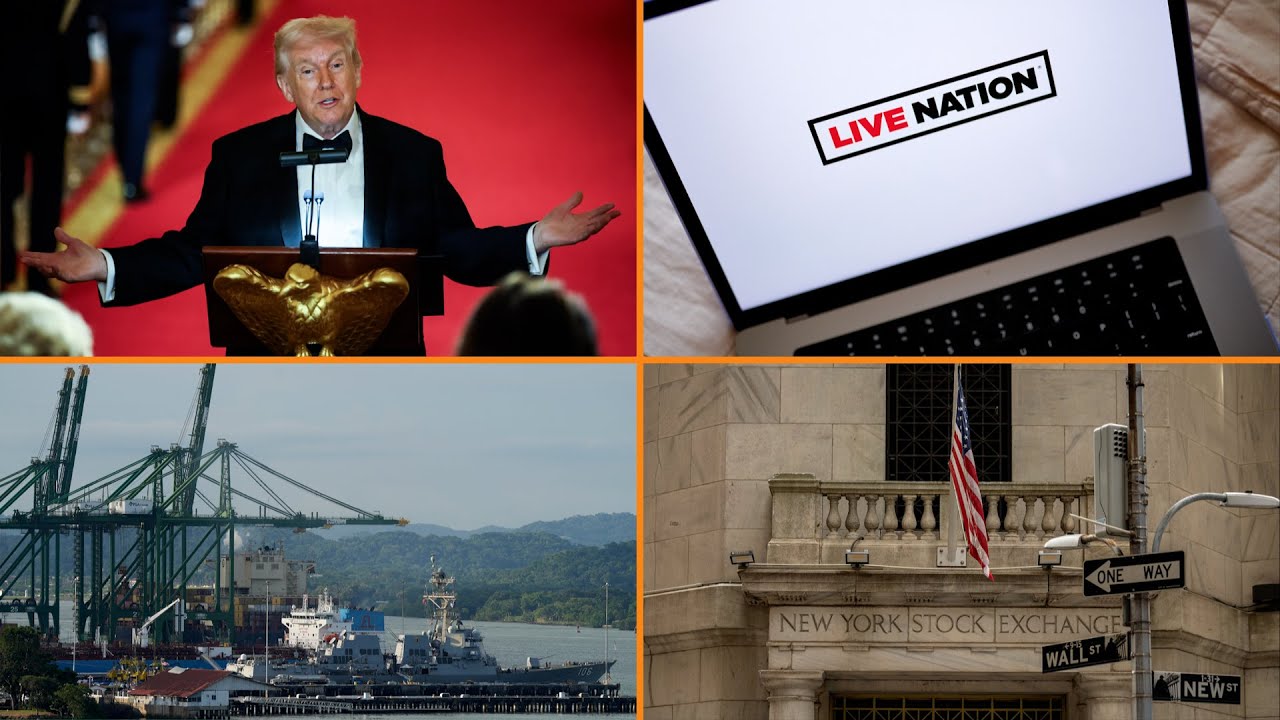
Alberto Gallo, Co-Founder & CIO at Andromeda Capital Management discusses how the markets have reacted to the Supreme Court's tariff decision, and Donald Trump's move to dig in on his plan to unilaterally impose broad tariffs on products entering the US market.
US stocks traded lower on Monday as President Donald Trump responded to the Supreme Court’s ruling against his sweeping tariffs by imposing a new, across-the-board 15% levy on US imports, sowing fresh confusion around global trade. Shares of Nvidia Corp. were a bright spot, advancing before Wednesday’s earnings report.
The S&P 500 Index was down 0.385% at 9:52 a.m. in New York, with losses in technology stocks offsetting gains in energy and health care. Consumer discretionary and industrials sectors were in the red. The Nasdaq 100 Index was down 0.609%.
The tariff situation has trigged “mass confusion,” Brian Reynolds, chief market strategist at Reynolds Strategy, wrote in a note Monday.
Nonetheless, he expects “tariff rates will be moving lower from the levels that investors feared” almost a year ago, boosting profits this year, particularly for hard-hit small firms. That “could be a modest positive for the economy and equity prices,” he said.
Nvidia rose 1.6% as Aletheia Capital raised the stock to a buy, saying it’s too cheap to ignore before earnings. Shares have been drifting sideways for months and are in the bottom half of performers this year for the S&P 500. They were also the most under-owned large-cap tech stock at the end of the fourth quarter.
Tech stocks in general were modestly weaker as OpenAI was said to have told investors it’s planning to spend about $600 billion on infrastructure by 2030 after previously saying it was committed to spending more than $1.4 trillion.
Energy stocks advanced. Oil prices rose as investors continued to assess the potential for US-led conflict with Iran. The Supreme Court’s nixing of US President Donald Trump’s “reciprocal” tariffs is throwing fresh confusion over the raft of trade deals negotiated by global partners as the inescapable reality of ongoing levies remains a threat.
The European Union on Monday froze the ratification process of its agreement with Washington. The move injected economic turbulence into an already strained transatlantic relationship.
Without mentioning the EU specifically, Trump warned nations against taking advantage of his legal setback.
“Any Country that wants to ‘play games’ with the ridiculous supreme court decision, especially those that have ‘Ripped Off’ the U.S.A. for years, and even decades, will be met with a much higher Tariff, and worse, than that which they just recently agreed to.,” he wrote in a post on Truth Social
Meanwhile, Indian trade officials postponed a trip to the US that would have aimed at concluding their interim accord.
The Trump administration swiftly announced plans to replace the prior tariffs with a new, across-the-board 15% levy on US imports. While that creates temporary winners such as China and losers including the UK, it leaves the overall weighted tariff rate only marginally lower for the American businesses and consumers actually footing the bill.
US stocks traded lower and the dollar erased a 0.3% drop as the renewed uncertainty weighed on sentiment. But moves were modest when compared with the dramatic swings seen last April when Trump’s unilateral tariffs were first announced, setting off months of deal making.
Now, whether a new status quo settles quickly will largely depend on what America’s trading partners do after administration officials called on them to honor prior trade pledges.
Any walk-back from prior agreements, especially given recent European pushback over Trump’s bid to gain control over Greenland, risks sparking a fresh round of brinkmanship and disruption for a world economy that has so far been muddling through Trump Trade War 2.0.
“Uncertainty is back, and given the latest muscle-flexing by European leaders, the risk of escalation is now higher than it was a year ago,” Carsten Brzeski and James Knightley at ING Groep NV wrote in a note.
--------
Watch Bloomberg Radio LIVE on YouTube
Weekdays 7am-6pm ET
Follow us on X
Subscribe to our Podcasts:
Bloomberg Daybreak
Bloomberg Surveillance
Bloomberg Intelligence
Balance of Power
Bloomberg Businessweek
Listen on Apple CarPlay and Android Auto with the Bloomberg Business app:
Apple CarPlay
Android Auto
Visit our YouTube channels:
Bloomberg Podcasts
Bloomberg Television
Bloomberg Originals
Sentinel Indexing in Progress
Metadata and chapters are available. Claim extraction for this episode is pending.
All video content is delivered via YouTube embedded players in accordance with the YouTube Terms of Service. Sentinel provides research tools that promote discovery and accountability across political media.