Bloomberg Podcasts
@bloombergpodcasts·503K subscribers·32.4K videos
Bloomberg Invest: BlackRock's Samara Cohen on Public Markets. Role of Tokenization
Posted
March 3, 2026
Views
632
Likes
6
Engagement
0.95%
March 3, 2026
632
6
0.95%
Every word spoken in this episode is indexed. Type any phrase to jump straight to the moment it was said.
Type any word or phrase that may have been spoken. Click a result to seek the player to that exact moment.
Try a name, a topic, or a quoted line
See what was published immediately before and after this episode.
 7:12Now Playing
Samara Cohen, BlackRock's Global Head of Market Development, discusses the state of public markets and the rise and role of tokenization. She speaks with Bloomberg’s Tim Stenovec and Carol Massar from the Bloomberg Invest conference in New York City. Global conflicts, including the strikes on Iran over the past week, are unlikely to put a complete stop to companies tapping the US public markets, according to NYSE Group Inc. President Lynn Martin said.
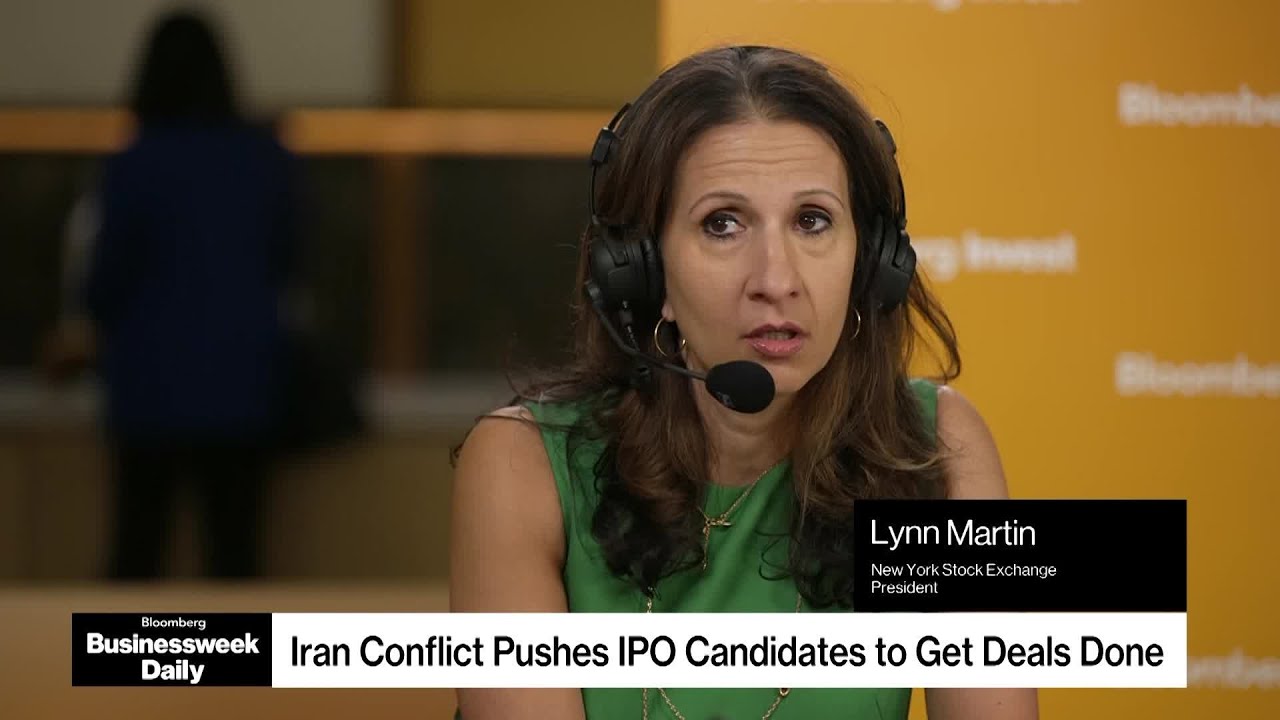
“There’s always going to be geopolitical events happening, and the political framework is always going to continue to evolve,” Martin said Tuesday in a Bloomberg Television interview at the Bloomberg Invest conference in New York. “And if you’re a good company, you can always go public.”
Initial public offerings pulled back in recent years as companies chose to remain private longer, the result of private-capital availability and the regulatory scrutiny that comes with being publicly traded. Bankers have been betting on an IPO boom in 2026, with mega-debuts such as Anthropic PBC and Elon Musk’s SpaceX expected to go public. The New York Stock Exchange is building a venue using blockchain technology to allow for trading tokenized stocks and exchange-traded funds around the clock.
NYSE, which is owned by Intercontinental Exchange Inc., plans to use its existing technology that matches buyers and sellers, combined with private blockchain networks, to facilitate the trading of tokenized securities in real-time, according to executives. The company is looking to launch the new digital trading platform later this year, pending regulatory approval.
“This reflects an evolution of NYSE’s trading capabilities which went from trading floor, to electronic order-book, to blockchain,” Michael Blaugrund, vice president of strategic initiatives at ICE, said in an interview. “It allows for new types of investor accessibility, and will create new opportunities for retail to participate in the stablecoin-funded markets that have attracted their attention.”
The firm is in active dialogue with the US Securities and Exchange Commission as it seeks permission to operate the new platform, he said. Part of the digital infrastructure would allow for trades to be funded, and settled in real time, as opposed to the one-day delay that now exists in today’s equity markets. “We think it aligns with the retail investor’s emerging desire to be able to trade something at 5:04 p.m. on a Saturday and then use that money to buy something else at 5:05 p.m. on a Saturday,” Blaugrund said. “This would facilitate that trade in a way that traditional equity infrastructure cannot.”
NYSE’s plans are addressing some of the foundational elements of how stocks are defined, issued and settled — questions that could decide whether tokenization becomes embedded in the plumbing of Wall Street. The New York Stock Exchange is the largest equities exchange operator in the US by volume.
“We are leading the industry toward fully on-chain solutions, grounded in the unmatched protections and high regulatory standards that position us to marry trust with state-of-the-art technology,” Lynn Martin, president of NYSE Group, said in a statement.
A tokenized security is a digital representation of a security that can be traded on a blockchain network, rather than in a brokerage account. They have been touted as a way to deepen liquidity, support fractional ownership and widen access of the US stock markets because they can be traded at all hours of the day.
Blaugrund said the new venue is just one of several digital strategies that ICE is exploring. The company is also looking at new clearing infrastructure that would support trading 24 hours a day, 7 days a week. ICE is working with banks to support tokenized deposits, eventually looking to move money and manage funding requirements for trading outside of traditional banking hours.
“This is just the first step in a broader re-platforming, in a longer journey for ICE and for the industry,” Blaugrund said.
--------
Watch Bloomberg Radio LIVE on YouTube
Weekdays 7am-6pm ET
Follow us on X
Subscribe to our Podcasts:
Bloomberg Daybreak
Bloomberg Surveillance
Bloomberg Intelligence
Balance of Power
Bloomberg Businessweek
Listen on Apple CarPlay and Android Auto with the Bloomberg Business app:
Apple CarPlay
Android Auto
Visit our YouTube channels:
Bloomberg Podcasts
Bloomberg Television
Bloomberg Originals
Sentinel Indexing in Progress
Metadata and chapters are available. Claim extraction for this episode is pending.
All video content is delivered via YouTube embedded players in accordance with the YouTube Terms of Service. Sentinel provides research tools that promote discovery and accountability across political media.