Bloomberg Podcasts
@bloombergpodcasts·503K subscribers·32.4K videos
Oil Slides as Trump Seeks to Ease War Length Concerns
Posted
March 10, 2026
Views
5,452
Likes
35
Comments
20
Engagement
1.01%
March 10, 2026
5,452
35
20
1.01%
Every word spoken in this episode is indexed. Type any phrase to jump straight to the moment it was said.
Type any word or phrase that may have been spoken. Click a result to seek the player to that exact moment.
Try a name, a topic, or a quoted line
See what was published immediately before and after this episode.
 6:35Now Playing
Francisco Blanch, Head: Global Commodities at Bank of America Securities, assesses the potential energy market impact of drawn-out conflict in the Middle East.
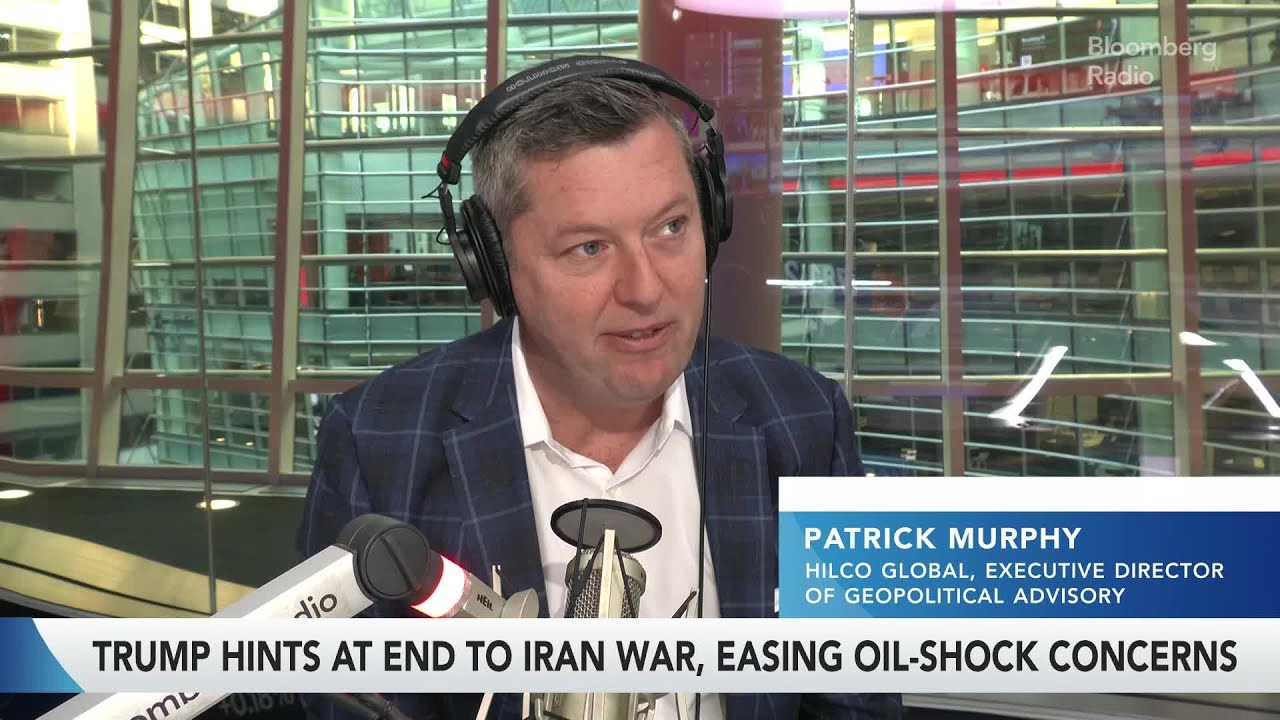
Oil tumbled after US President Donald Trump said the Iran war will end soon, while the conflict continues to disrupt crude production and refining in the Middle East.
Global benchmark Brent fell as much as 11% before clawing back some losses, following a dramatic session on Monday that saw the biggest intraday price swing on record. Trump said he would resolve the war, waive oil-related sanctions and get the US Navy to escort tankers through the vital Strait of Hormuz. He told Fox News on Tuesday that he was also open to speaking with Iran.
Still, prices remain up by more than 50% this year as fears a conflict would hinder supplies from the Middle East increasingly materialize. Four of the region’s giants — Saudi Arabia, Iraq, the United Arab Emirates and Kuwait — have lowered their collective output by as much as 6.7 million barrels a day, with the war effectively closing the region’s main export route and causing storage tanks to fill up. The UAE’s biggest oil refinery halted as a precaution after a nearby drone attack.
The latest price swings reflect one of the oil market’s most volatile periods on record, testing traders’ limits. Brent was fluctuating around $91 a barrel Tuesday — a day after trading as high as $119.50 and as low as $83.66. Financial flows, including from options markets, have likely exacerbated those swings, with a gauge of market volatility near the highest since 2020. The US raised its forecast for domestic oil production next year after the recent surge in prices due to supply disruptions from key Middle East countries.
US crude output is now expected to grow by 220,000 barrels a day in 2027 to 13.83 million barrels a day, according to the Energy Information Administration’s Short-Term Energy Outlook released Tuesday.
The new forecast represents an increase of about 500,000 barrels from the agency’s previous projection made in February. That report showed US production was on course to peak this year and then decline in 2027.
“Because changes in oil prices take time to affect production—moving from investment decisions to rig deployment to well completion and first oil—the effect of higher prices in our forecast is more pronounced in 2027 than in 2026,” the EIA said in its latest report.
The US and Israel began strikes on Iran late last month, triggering widespread retaliatory attacks from Tehran and the effective closure of the Strait of Hormuz, a critical waterway that normally handles a fifth of global oil flows. Production cuts are rippling across the region as storage capacity fills up.
Shut-in oil production will likely peak in early April, mostly in Iraq with smaller volumes in Kuwait, the United Arab Emirates, and Saudi Arabia, the EIA estimated. It added that output will gradually recover as flows through the Strait resume. US oil prices surged this week to nearly $120 a barrel before easing to trade near $84 a barrel. The rally has already pulled US retail gasoline prices to the highest levels since July 2024. The EIA raised its forecast for US retail gasoline prices to an average of $3.34 a gallon in 2026, up by 43 cents from its last projection.
The surge in oil prices triggered a wave of hedging by shale drillers seeking to lock in elevated prices for future sales. The move could allow producers to ramp up output even if prices decline in coming months.
The EIA increased its forecast for crude oil production in the Permian basin by 6% in 2027 as new pipeline capacity and price incentives support growth.
Diesel prices, which have surged worldwide since the war began, were projected to rise even further in the US, to $4.12 a gallon in 2026 from $3.43, the agency said.
--------
Watch Bloomberg Radio LIVE on YouTube
Weekdays 7am-6pm ET
Follow us on X
Subscribe to our Podcasts:
Bloomberg Daybreak
Bloomberg Surveillance
Bloomberg Intelligence
Balance of Power
Bloomberg Businessweek
Listen on Apple CarPlay and Android Auto with the Bloomberg Business app:
Apple CarPlay
Android Auto
Visit our YouTube channels:
Bloomberg Podcasts
Bloomberg Television
Bloomberg Originals
Sentinel Indexing in Progress
Metadata and chapters are available. Claim extraction for this episode is pending.
All video content is delivered via YouTube embedded players in accordance with the YouTube Terms of Service. Sentinel provides research tools that promote discovery and accountability across political media.