Bloomberg Podcasts
@bloombergpodcasts·503K subscribers·32.4K videos
Exiting Harvard, Yale to Chase NBA Glory Gets Easier With Portal
Posted
March 19, 2026
Views
438
Likes
6
Comments
1
Engagement
March 19, 2026
438
6
1
1.60%
Every word spoken in this episode is indexed. Type any phrase to jump straight to the moment it was said.
Type any word or phrase that may have been spoken. Click a result to seek the player to that exact moment.
Try a name, a topic, or a quoted line
See what was published immediately before and after this episode.
 1:01
1:01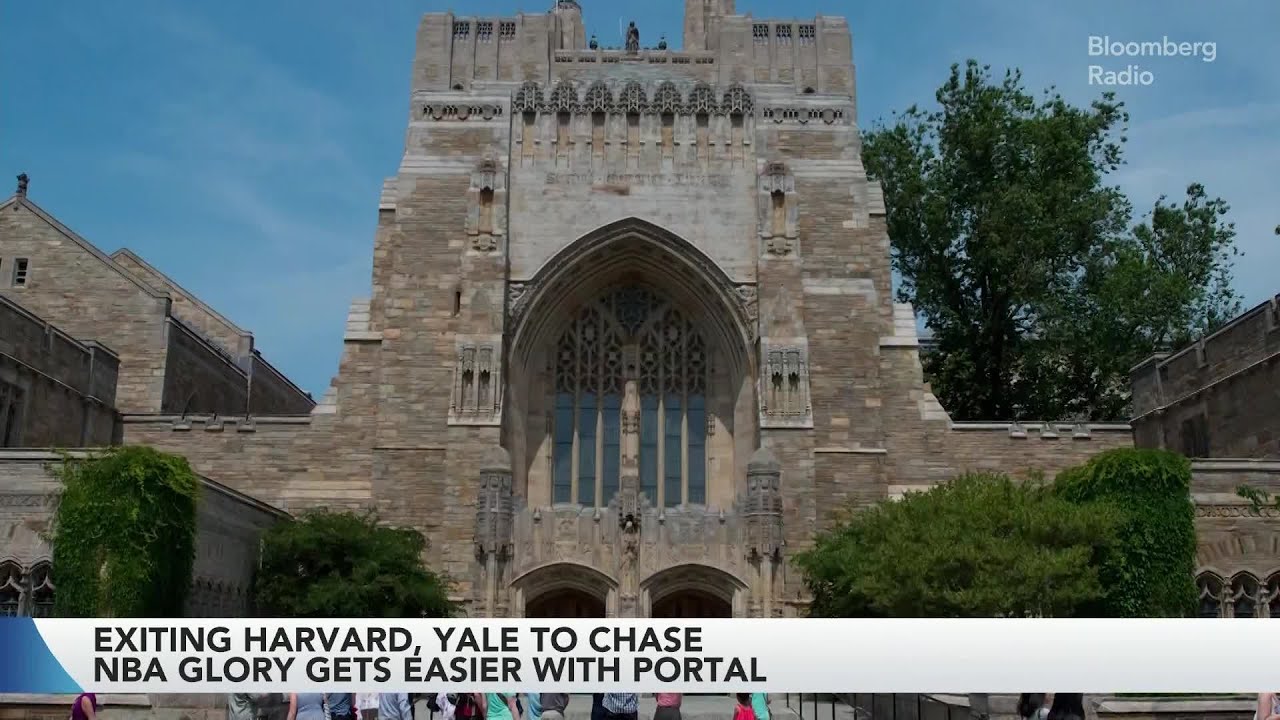 4:23Now Playing
Janet Lorin, Bloomberg News Higher Education reporter, discusses the new transfer portal allowing some college athletes an easier shot at transferring schools.
Harvard University freshman point guard Malik Mack was sitting in his American Capitalism class as a case study in the big business of college basketball was silently unfolding on his phone.
Mack set a Harvard freshman scoring record during the 2023-24 season and won Ivy League Rookie of the Year, and he entered the transfer portal that spring in hopes of landing at a school with a big-time basketball program. Soon, Mack was deluged with texts and calls from coaches eager to recruit him.
Though Harvard leads in numerous academic fields, the prestigious US university isn’t known for producing championship-caliber basketball teams or a slew of top NBA draft picks. Mack, seeking a path to the pros, landed at Georgetown University, a team that has been to multiple Final Fours and generated NBA legends like Patrick Ewing, Allen Iverson and Alonzo Mourning.
Moving to a more dominant basketball conference “was something I needed to do to further prove my game,’’ Mack said in an interview ahead of last week’s Big East Tournament, where Georgetown lost in the semifinals to the University of Connecticut. Key to his decision, he said, was “the level of basketball that was being played.’’
There was a time when transferring out of the Ivy League to pursue sporting fame would have been rare, even unthinkable. However, the transfer portal has made it easier and more common for athletes to move from one school to another; Indiana University constructed its first national championship football team this year with transfers. Beyond on-the-court laurels, there’s another incentive for Ivy League players to make the jump. At schools with high-profile athletic programs, top players can collect millions before jumping to the pros through Name, Image and Likeness, or NIL, deals. And starting this academic year, because of a federal court settlement, colleges can pass $20.5 million in revenue to players — a figure that rises 4% each year.
But not in the Ivy League, the Division I conference whose eight schools include Harvard, Yale and Princeton. Its schools don’t provide student athletes with revenue-sharing payments or athletic scholarships. The schools give scholarships only based on a family’s financial need.
Read more: Ivy League Tightens Rules by Policing Athlete Deals Over $2,000
“The Ivy League continues to be well-positioned in a changing landscape of college sports by providing a model that gives student-athletes the opportunity to thrive at world-class institutions and at the highest level of college sports,” a league spokesperson said in an emailed statement. “The comparative data on other Division I conferences indicates that the overwhelming majority of Ivy League student-athletes choose to stay.”
--------
Watch Bloomberg Radio LIVE on YouTube
Weekdays 7am-6pm ET
Follow us on X
Subscribe to our Podcasts:
Bloomberg Daybreak
Bloomberg Surveillance
Bloomberg Intelligence
Balance of Power
Bloomberg Businessweek
Listen on Apple CarPlay and Android Auto with the Bloomberg Business app:
Apple CarPlay
Android Auto
Visit our YouTube channels:
Bloomberg Podcasts
Bloomberg Television
Bloomberg Originals
Sentinel Indexing in Progress
Metadata and chapters are available. Claim extraction for this episode is pending.
All video content is delivered via YouTube embedded players in accordance with the YouTube Terms of Service. Sentinel provides research tools that promote discovery and accountability across political media.