Bloomberg Podcasts
@bloombergpodcasts·503K subscribers·32.4K videos
Trump Says He'll Speak Japan's Praises in China with Xi (Full Q&A)
Posted
March 19, 2026
Views
8,659
Likes
92
Comments
16
Engagement
March 19, 2026
8,659
92
16
1.25%
Every word spoken in this episode is indexed. Type any phrase to jump straight to the moment it was said.
Type any word or phrase that may have been spoken. Click a result to seek the player to that exact moment.
Try a name, a topic, or a quoted line
See what was published immediately before and after this episode.
 15:16Now Playing
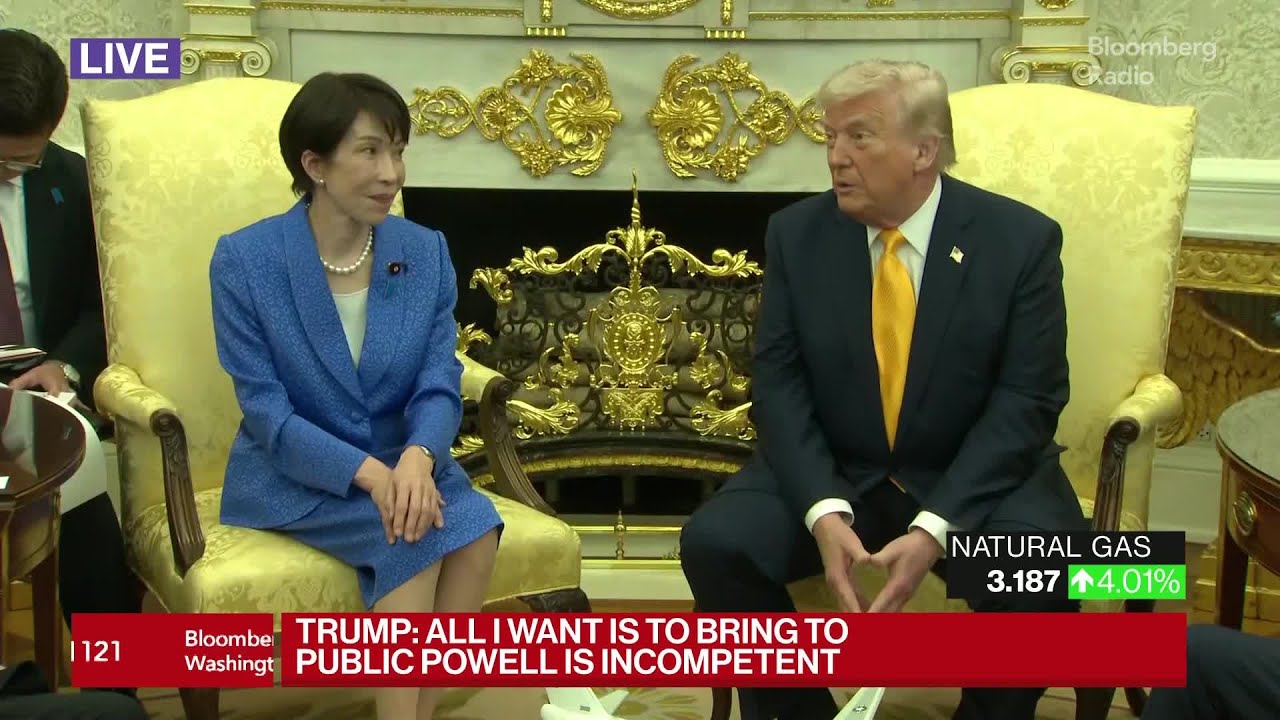
President Donald Trump participates in a bilateral meeting with the Prime Minister of Japan Sanae Takaichi at the White House. Tensions between the US and Japan over the Iran war remained evident as President Donald Trump hosted Prime Minister Sanae Takaichi, even as he praised Tokyo for answering his call for support in the effort.
The visit was bound to be fraught as it’s not clear what steps Japan is willing to take immediately to help alleviate the economic and security consequences of the war, which remains deeply unpopular in Japan. Joining an armed conflict is legally questionable under the country’s constitution.
“They are really stepping up to the plate,” unlike NATO allies, Trump said Thursday at the White House alongside Takaichi. “We’ve had tremendous support and relationship with Japan on everything.”
Still, the uncomfortable circumstances were on full display when a reporter asked Trump why the US hadn’t informed Japan and European allies in advance of his strike on Iran.
“Who knows better about surprise than Japan?” he said, turning to Takaichi with a chuckle. “Why didn’t you tell me about Pearl Harbor?” Takaichi didn’t treat that as a laugh line, instead pursing her lips and casting glances to her advisers seated to the side in the Oval Office. The line was remarkable both because it raised the World War II-era Japanese attack on the US and because it underscored Trump’s cavalier attitude toward informing allies of major military operations.
The incident also was the latest instance of a foreign leader being put on the back foot in a White House meeting with Trump, who has looked to leverage those opportunities to extract concessions or criticize their policies as counter to US interests.
“We don’t need anything from Japan or anyone else, but I think it’s appropriate that they step up,” Trump said.
“I expect Japan to step up because we have that kind of relationship,” he added, noting that some 45,000 US soldiers are based there. “We spend a lot of money on Japan.”
Japan has tried to use its diplomatic ties to Iran to influence events. On Tuesday, Japan’s foreign minister called his Iranian counterpart and condemned the Islamic Republic’s attacks around the Gulf region, according to the ministry.
Takaichi otherwise appeared stoic during the availability ahead of her bilateral meeting, and during her own brief remarks repeatedly offered support to Trump and thanked him for an unwavering commitment to the US-Japan alliance.
Takaichi said she’d brought to the US concrete proposals to help calm energy markets, forecasting more pain for the global economy. She condemned Iranian strikes in neighboring countries and Iran’s effective closure of the Strait of Hormuz.
She also added that Iran can never be allowed to have nuclear weapons — acknowledging the key rationale Trump has used for starting the war on Feb. 28.
The war in Iran and the resulting surge in energy prices threatened to overshadow Thursday’s visit after Trump called on Japan and other allies to deploy warships to help secure the Strait of Hormuz. No country has agreed to deploy vessels to police the critical waterway for oil shipments, raising Trump’s ire. Takaichi, who has enjoyed a warm relationship with Trump, is a vocal supporter of the alliance between the two countries. But she also has to balance public opposition to the war at home and stringent domestic legal restrictions on deploying the nation’s military.
Trump lashed out at allies on Tuesday, singling out NATO in particular and naming Japan, Australia, and South Korea, saying the US no longer needed their assistance in the Iran conflict that’s shown “such Military Success.”
“WE DO NOT NEED THE HELP OF ANYONE!” Trump said in a social media post.
Following that missive, Takaichi said she faced an “extremely difficult” meeting with Trump. She has said Japan might be able to help after a ceasefire is reached by dispatching minesweepers or other actions.
Japan is particularly vulnerable to the spike in energy prices, which threatens to push up daily living costs for its residents.
--------
Watch Bloomberg Radio LIVE on YouTube
Weekdays 7am-6pm ET
Follow us on X
Subscribe to our Podcasts:
Bloomberg Daybreak
Bloomberg Surveillance
Bloomberg Intelligence
Balance of Power
Bloomberg Businessweek
Listen on Apple CarPlay and Android Auto with the Bloomberg Business app:
Apple CarPlay
Android Auto
Visit our YouTube channels:
Bloomberg Podcasts
Bloomberg Television
Bloomberg Originals
Sentinel Indexing in Progress
Metadata and chapters are available. Claim extraction for this episode is pending.
All video content is delivered via YouTube embedded players in accordance with the YouTube Terms of Service. Sentinel provides research tools that promote discovery and accountability across political media.