Bloomberg Podcasts
@bloombergpodcasts·503K subscribers·32.4K videos
A Break Above 4.5% on US 10-Year is 'Tipping Point' for Equities, Says Mina Krishnan
Posted
March 24, 2026
Views
27,617
Likes
295
Comments
55
Engagement
March 24, 2026
27,617
295
55
1.27%
Every word spoken in this episode is indexed. Type any phrase to jump straight to the moment it was said.
Type any word or phrase that may have been spoken. Click a result to seek the player to that exact moment.
Try a name, a topic, or a quoted line
 5:11Now Playing
Mina Krishnan, Multi-Asset Portfolio Manager at Schroders, discusses how Iran tensions are weighing on the markets.
Borrowing US Treasury two- and five-year notes and 20-year bonds is getting more costly, a condition that may benefit this week’s auctions, beginning with Tuesday’s $69 billion two-year note sale.
The rising cost of borrowing two- and five-year notes in particular stems from increased interest in setting short positions in anticipation of higher yields. Two- and five-year Treasury yields on Monday reached the highest levels since June in the three-week bond market selloff driven chiefly by rising oil prices since the US struck Iran Feb. 28.
The borrowing costs are an indication of short supply in the market for repurchase agreements, or repos, in which owners of the securities lend them in exchange for an overnight loan of cash. This week’s auctions including $70 billion of new five-year notes on Wednesday may draw demand associated with those positions.
“The two-year and five-year notes and the 20-year bond all continue to trade especially tight in activity surrounding this month’s auctions of the issues,” Oxford Economics analyst John Canavan wrote in a note. “The short-base in the issues suggested by the repo market activity could be a potential positive for the two-year auction today and the five-year auction tomorrow.”
Traders needing to borrow the current two-year note via repos were accepting average rates on their overnight cash loans of 1.93% Tuesday morning in New York. For five-year notes, the average was 2.40% and for 20-year bonds it was 1.88%, despite an auction last week that increased the supply of the issue by $13 billion.
By contrast, non-specific Treasury securities could be borrowed in repo in exchange for cash loans earning just under 3.70%, the so-called general collateral rate. The two-, five- and 20-year securities commanded “special” rates associated with high demand to borrow them. Wall Street traders grappling with a range of possible outcomes for the war in the Middle East drove stocks away from session lows amid hopes for talks to end a conflict that keeps dragging on. Oil climbed.
The S&P 500 was little changed after falling about 1%. An Iranian source told CNN there had been “outreach” between Washington and Tehran, with Iran willing to listen to “sustainable” proposals. Brent topped $104. Software firms dropped as a report that Amazon Web Services is developing new AI tools added to concern over reduced demand for legacy products.
Stocks waver as oil rises.
Gold halted nine straight days of losses. Treasury yields and the dollar rose.
“Markets remain firmly at the mercy of geopolitical headlines,” said Fawad Razaqzada at Forex.com. “Traders are hanging on any signals around whether ceasefire talks are even remotely on the table. Until there’s something concrete, it’s hard to see risk appetite improving in any meaningful way.”
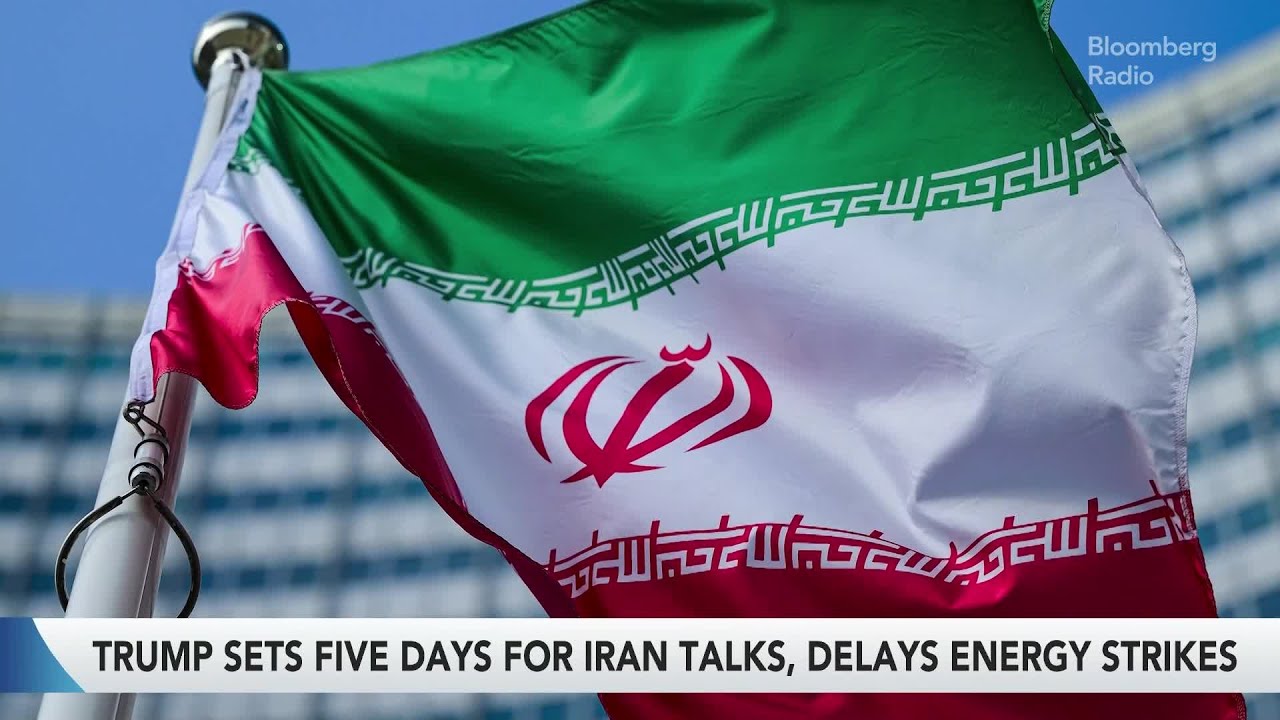
Israeli officials said the country will persist with strikes against Iran even as President Donald Trump claimed talks are underway. Iran’s biggest Gulf Arab neighbors are considering joining the war, and could be pushed to if Tehran attacks their critical infrastructure, according to several people with knowledge of the situation.
Iran has started charging transit fees on some commercial vessels passing through the Strait of Hormuz, another sign of Tehran’s control over the world’s most important maritime energy channel.
“It all comes down to the re-opening the Strait of Hormuz,” said Matt Maley at Miller Tabak. “So, if we hear that ‘good progress is being made’ in the negotiations at the end of this week, it won’t be enough, if the Strait remains very restricted.”
Aside from the geopolitical risks, Maley also noted that the issues facing the private-credit market are not receding, so brushing these problems aside “is not a good idea.”
Alternative asset managers fell as Apollo Global Management Inc. and Ares Management Corp. became the latest to curb withdrawals from private-credit funds.
--------
Watch Bloomberg Radio LIVE on YouTube
Weekdays 7am-6pm ET
Follow us on X
Subscribe to our Podcasts:
Bloomberg Daybreak
Bloomberg Surveillance
Bloomberg Intelligence
Balance of Power
Bloomberg Businessweek
Listen on Apple CarPlay and Android Auto with the Bloomberg Business app:
Apple CarPlay
Android Auto
Visit our YouTube channels:
Bloomberg Podcasts
Bloomberg Television
Bloomberg Originals
Sentinel Indexing in Progress
Metadata and chapters are available. Claim extraction for this episode is pending.
All video content is delivered via YouTube embedded players in accordance with the YouTube Terms of Service. Sentinel provides research tools that promote discovery and accountability across political media.