Bloomberg Podcasts
@bloombergpodcasts·503K subscribers·32.4K videos
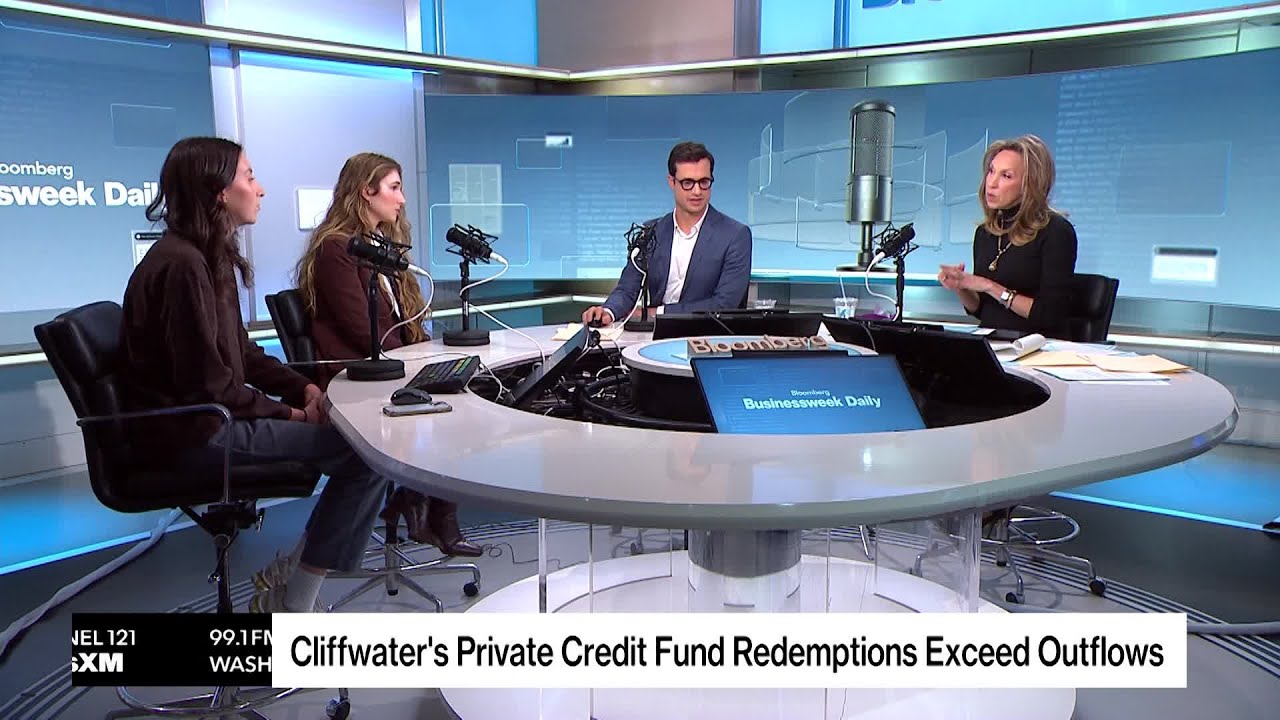
Private Credit Storm Lashes Father-Son Duo at Helm of Cliffwater | Bloomberg Businessweek
Posted
March 25, 2026
Views
853
Likes
5
Engagement
0.59%
March 25, 2026
853
5
0.59%
Every word spoken in this episode is indexed. Type any phrase to jump straight to the moment it was said.
Type any word or phrase that may have been spoken. Click a result to seek the player to that exact moment.
Try a name, a topic, or a quoted line
 35:00Now Playing
The people, companies and trends shaping the global economy.
Watch Carol and Tim LIVE every day on YouTube().
Stephen Nesbitt was on no one’s list of Wall Street heavyweights when he bumped into a thirty-something salesman pitching the next big thing for wealthy investors: private credit.
Nesbitt — who, as it happened, had written a book on private debt — took the idea and ran with it.Within a few years, he and his son Blake transformed their modest consulting business, Cliffwater LLC, into an unlikely giant. Their strategy: rather than sweat the details of every direct loan themselves, they’d piggyback on the firms that did. They’d also invest in industry heavyweights, creating something akin to a fund-of-private-credit-funds.
Now the father-and-son team, who rode private credit on the way up, risk falling hard on the way down. As investors in private credit funds rush for the exits, Cliffwater has become one of the biggest question marks in the $1.8 trillion industry.
The worry isn’t so much that private loans will go bad all at once and crush the funds where Cliffwater has invested. It’s that antsy investors will keep asking for money back, prompting Cliffwater to dash for cash itself — instigating a vicious circle of redemptions and markdowns.
Concerns center around the $33 billion Cliffwater Corporate Lending Fund, the largest of its kind in private credit. It’s what’s known as an interval fund, a type of closed-end vehicle that isn’t traded on an exchange but rather promises to buy back shares from investors at set intervals, usually quarterly, at net asset value. Cliffwater is legally obliged to buy back at least 5% every quarter if investors ask.That promise was a key selling point in good times. “Liquidity is the first-, second- and third-most important thing,” Blake Nesbitt emphasized at an industry roundtable this month.
Today's show features:
Bloomberg Leveraged Finance reporters Ellen DiMauro and Olivia Fishlow on their Big Take story about Private Credit
Ray Takeyh, Senior Fellow for Middle East Studies at Council on Foreign Relations
Former Commerce Secretary Wilbur Ross
Drive to the Close with Emily Green Ellevest Head of Wealth Management
See omnystudio.com/listener () for privacy information.
Carol Massar and Tim Stenovec bring together the latest news from the world of business and finance and the interesting stories of global technology, politics, economics and more by harnessing the power of Bloomberg Businessweek reporters and editors.
Subscribe to Bloomberg Podcasts
Listen to more of Bloomberg Businessweek
#Bloomberg #Podcast #News #Businessweek
Follow Bloomberg Podcasts on Twitter
Visit our other YouTube channels:
Bloomberg Television
Bloomberg Originals
For coverage on news, markets and more
Sentinel Indexing in Progress
Metadata and chapters are available. Claim extraction for this episode is pending.
All video content is delivered via YouTube embedded players in accordance with the YouTube Terms of Service. Sentinel provides research tools that promote discovery and accountability across political media.