Bloomberg Podcasts
@bloombergpodcasts·503K subscribers·32.4K videos
IMF Warns of Global Economic Downturn If Iran War Lasts
Posted
April 14, 2026
Views
3,247
Likes
37
Comments
5
Engagement
April 14, 2026
3,247
37
5
1.29%
Every word spoken in this episode is indexed. Type any phrase to jump straight to the moment it was said.
Type any word or phrase that may have been spoken. Click a result to seek the player to that exact moment.
Try a name, a topic, or a quoted line
See what was published immediately before and after this episode.
 8:00Now Playing
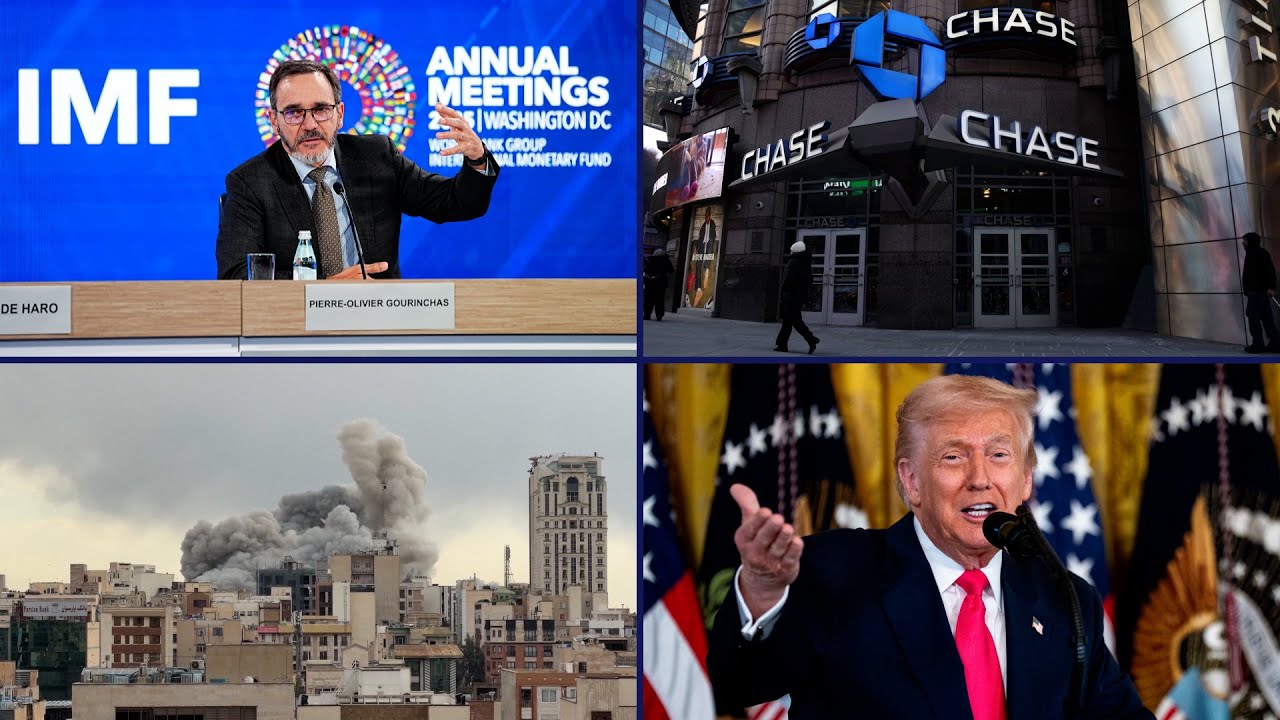
The International Monetary Fund downgraded its growth projection for the year after the war in the Middle East triggered a major oil shock and included the possibility of a downturn if the conflict drags on and energy infrastructure is severely damaged.
Global gross domestic product is now expected to rise 3.1% this year, compared with 3.3% predicted in January, the Washington-based fund said Tuesday in its World Economic Outlook. That’s assuming a relatively short-lived conflict and moderate gain in energy prices this year.
Given the uncertainty around the impact from the US-Israeli attack on Iran that started Feb. 28, the IMF offered two more scenarios. In the most severe, the world would come close to experiencing a recession, which is defined by the IMF as growth below 2%.
“The global outlook has abruptly darkened following the outbreak of war in the Middle East,” the fund said in the report. “Prior to the war, we were poised to upgrade our global growth forecast, reflecting continued momentum in the global economy supported by a tech investment boom, some moderation in trade policy tensions, fiscal support in some countries, and accommodating financial conditions.” Valdis Dombrovskis, European Commissioner for Economy and Productivity joined to discuss the IMF news as well the Ukraine war impact on the EU economy. Developing economies are expected to take the biggest hit. Growth in emerging markets was cut to 3.9% this year, from a 4.2% forecast just a few months ago. The impact will be smaller in developed countries including the US, an oil exporter.
The economic fallout of the conflict — which practically closed the Strait of Hormuz and sent oil prices surging — is expected to be a top priority for finance ministers and central bankers who are in DC this week to attend the IMF-World Bank spring meetings.
Inflation Forecasts
As the conflict enters its seventh week, the outcome remains highly uncertain, with hopes for a resolution ebbing and flowing daily. President Donald Trump began a US naval blockade of the Strait of Hormuz on Monday after talks with Iran collapsed over the weekend — while at the time the two countries were weighing another round of talks.
In the IMF’s most optimistic forecast, the rate of global inflation is expected to rise to 4.4% this year from 4.1% in 2025 — reflecting an increase in energy and food prices and halting the disinflation trend of recent years. Price growth would then decelerate to 3.7% in 2027.
--------
Watch Bloomberg Radio LIVE on YouTube
Weekdays 7am-6pm ET
Follow us on X
Subscribe to our Podcasts:
Bloomberg Daybreak
Bloomberg Surveillance
Bloomberg Intelligence
Balance of Power
Bloomberg Businessweek
Listen on Apple CarPlay and Android Auto with the Bloomberg Business app:
Apple CarPlay
Android Auto
Visit our YouTube channels:
Bloomberg Podcasts
Bloomberg Television
Bloomberg Originals
Sentinel Indexing in Progress
Metadata and chapters are available. Claim extraction for this episode is pending.
All video content is delivered via YouTube embedded players in accordance with the YouTube Terms of Service. Sentinel provides research tools that promote discovery and accountability across political media.