Bloomberg Podcasts
@bloombergpodcasts·503K subscribers·32.4K videos
Billion-Barrel Hormuz Oil Shock Is About to Crash Demand
Posted
April 25, 2026
Views
45,402
Likes
632
Comments
176
Engagement
April 25, 2026
45,402
632
176
1.78%
Every word spoken in this episode is indexed. Type any phrase to jump straight to the moment it was said.
Type any word or phrase that may have been spoken. Click a result to seek the player to that exact moment.
Try a name, a topic, or a quoted line
 11:18Now Playing
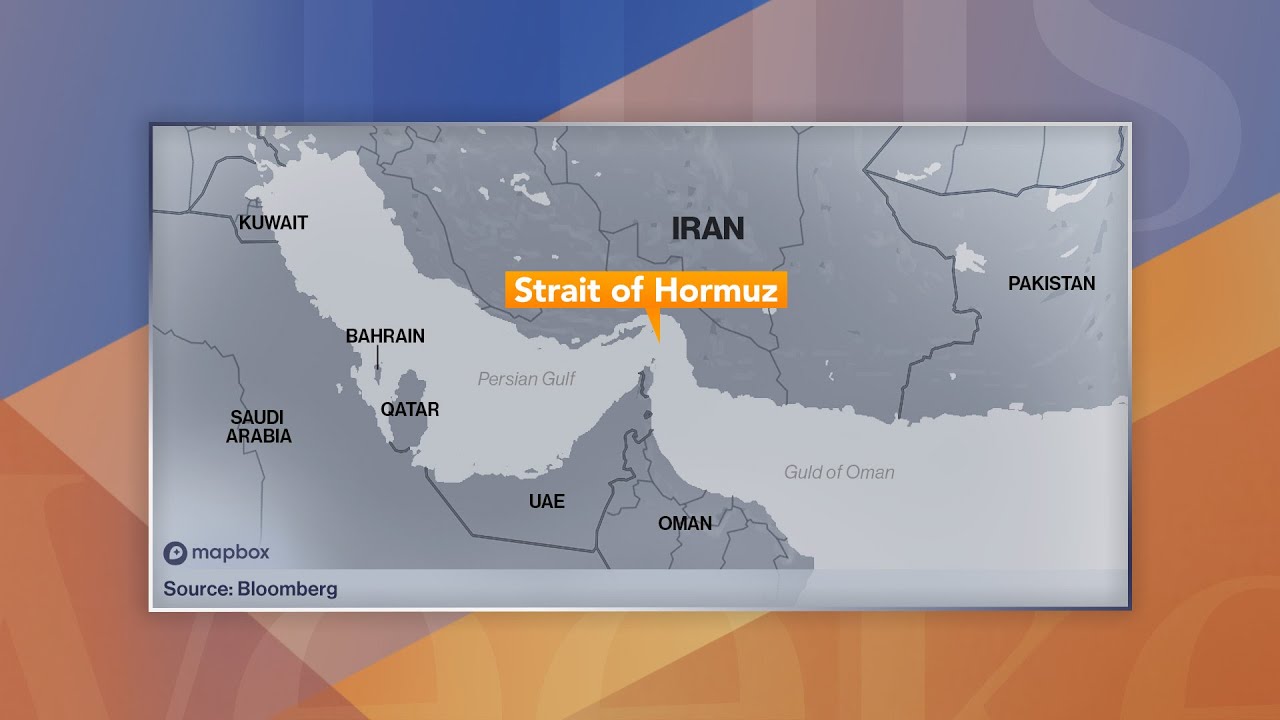
The Strait of Hormuz oil shock has yet to crash demand as the rich world borrows from its stocks and pays up to secure supply. Traders are now sounding the alarm that a harsh adjustment is coming.
The longer the vital oil channel doesn’t reopen, traders say, the more consumption is going to have to recalibrate lower to align with supply that’s dropped at least 10%. And for that to happen, people will have buy less, either through prices they can’t afford, or government intervention to force consumption down.
A billion barrels of supply loss is already all-but guaranteed — more than double the emergency inventories that governments released not long after the conflict began at the end of February. Buffers are being used up fast, helping to keep a lid on oil prices for now. But with the closure now in its ninth week, demand destruction that started in less obvious sectors like petrochemicals in Asia, is quietly spreading to everyday markets the world over.
“Demand destruction is happening in places that are not visible pricing centers,” Saad Rahim, chief economist of trader Trafigura Group, told the FT Commodities Global Summit in Lausanne this week. “That adjustment is already happening, but if this continues, it has to get larger and larger. We’re at a critical inflection point.”
The most dependent industries and markets — including petrochemicals plants in Asia and the Middle East, and shipments of liquefied petroleum gas, a vital cooking fuel in India — saw an immediate hit when the US and Israel first attacked Iran on Feb. 28.
Now, with a stalemate between US President Donald Trump and his Iranian adversaries dragging on, the impact is increasingly shifting west — and to products that are central to consumers’ everyday lives.
Airlines in Europe and the US are cutting thousands of flights. Analysts are warning of weakness in consumption of gasoline after prices hit $4 a gallon in the US, and diesel — used to power everything from trucks to construction equipment.
Global oil demand is on track to slump the most in five years this month, according to the International Energy Agency, which co-ordinated the emergency measures by major economies to counteract the supply shock.
Trading giant Gunvor Group estimates the loss could double next month to 5 million barrels a day, or 5% of world supplies, and along with other major traders sees a growing risk of economic recession. Other analysts and traders say that the impact has already reached around the 4 million a day mark.
That toll is beginning to take shape. Germany has slashed economic growth forecasts in half, while the International Monetary Fund has trimmed global estimates, citing the war. In the most “severe” of three scenarios modeled by the European Central Bank, Brent prices peak at $145 a barrel and cut the region’s growth in half. Brent crude closed at about $105 a barrel on Friday.
The need for oil demand and economic activity to adjust lower, most likely through prices that discourage consumption, will only increase with every day the strait stays shut.
In Waves
Worldwide demand already faces a hit of 5.3 million barrels a day this quarter, and a 12-week disruption of Hormuz would propel Dated Brent, the world’s key physical crude price, above this month’s record to $154 a barrel, according to consultant FGE NexantECA.
“Because there is still no visible disaster” in the west, “people think everything is okay, and a bit higher pump prices are the only impact,” said Cuneyt Kazokoglu, FGE’s director of energy transition. But demand destruction “will come and is coming in waves. Asia was first in line, Africa is the next one. Europe has already started talking about the lack of some fuels and feeling the price impact.”
In extreme scenarios, where price alone forces the market to balance, FGE estimates that crude oil would need to surge to $250 a barrel.
Bloomberg News Washington Bureau Chief Peggy Collins and White House Correspondent Jeff Mason join David Gura and Christina Ruffini on Bloomberg This Weekend for a wide-ranging conversation on the latest in politics.
--------
Watch Bloomberg Radio LIVE on YouTube
Weekdays 7am-6pm ET
Saturday & Sunday 7am-10am ET
Follow us on X
Subscribe to our Podcasts:
Bloomberg Daybreak
Bloomberg Surveillance
Bloomberg Intelligence
Balance of Power
Bloomberg Businessweek
Listen on Apple CarPlay and Android Auto with the Bloomberg Business app:
Apple CarPlay
Android Auto
Visit our YouTube channels:
Bloomberg Podcasts
Bloomberg Television
Bloomberg Originals
Sentinel Indexing in Progress
Metadata and chapters are available. Claim extraction for this episode is pending.
All video content is delivered via YouTube embedded players in accordance with the YouTube Terms of Service. Sentinel provides research tools that promote discovery and accountability across political media.