Bloomberg Podcasts
@bloombergpodcasts·503K subscribers·32.4K videos
GM Warns ‘Across the Board’ Inflation to Put a Damper on Profit
Posted
April 28, 2026
Views
1,336
Likes
13
Comments
8
Engagement
April 28, 2026
1,336
13
8
1.57%
Every word spoken in this episode is indexed. Type any phrase to jump straight to the moment it was said.
Type any word or phrase that may have been spoken. Click a result to seek the player to that exact moment.
Try a name, a topic, or a quoted line
 5:01Now Playing
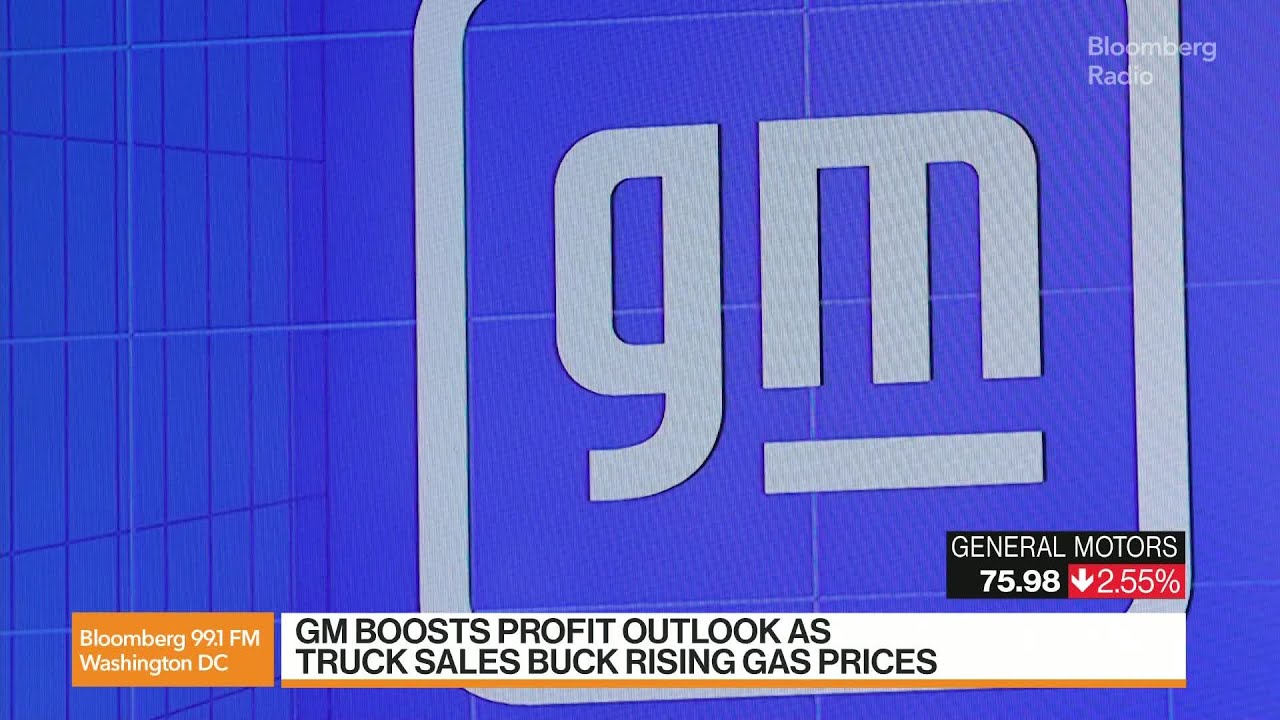
General Motors Co. flagged the war in Iran is fueling higher-than-expected costs, injecting some caution into the automaker’s outlook even as it raised its full-year profit forecast.
GM now expects commodity inflation to set back adjusted earnings by as much as $2 billion this year, up from no more than $1.5 billion previously, the automaker said Tuesday as it reported a first-quarter profit that topped estimates. Higher costs are hitting GM “across the board,” Chief Financial Officer Paul Jacobson said, pointing to aluminum, steel, transportation and logistics.
“Despite our beat, we’re not taking up our guidance by nearly as much,” Jacobson told Bloomberg TV. “We are cautious about how long this might last.”
The warning highlights how the Iran war is beginning to reverberate through corporate America after several weeks of fighting has choked supply lines and sent energy prices soaring. Although GM raised its full-year profit outlook, it refrained from making further guidance updates due to the uncertain duration of the conflict, Chief Executive Officer Mary Barra said during an earnings call.
GM’s stock erased premarket gains and fell as much as 4.1% as of 10:34 a.m. in New York. Shares of automakers including Ford Motor Co. have tumbled since the war began in late February, with GM’s stock falling about 4% this year through Monday’s close, trailing gains by the broader S&P 500 Index. We get reaction from Steve Man, Global Autos & Industrials Analyst for Bloomberg Intelligence. The higher costs took some of the shine off what was an otherwise strong quarter for GM, which beat analysts’ expectations and raised full-year profit forecast. The Detroit-based automaker now expects as much as $15.5 billion in adjusted earnings before interest and taxes this year.
The raised outlook reflects about $500 million of tariff-cost relief tied to the US Supreme Court’s decision in February to strike down certain levies President Donald Trump imposed last year.
“GM continues its execution hot streak,” Evercore ISI analyst Chris McNally said in a note. The automaker has beat estimates for adjusted earnings per share each of the last 15 quarters.
Sales of Chevrolet Silverado and GMC Sierra pickups, GM’s largest profit generators, remained strong despite the average price for regular unleaded surging above $4 a gallon by the end of March. The company’s adjusted earnings were helped by lower share count thanks to buybacks and rose to $3.70 a share in the first quarter, far exceeding the $2.60 a share figure expected among analysts surveyed by Bloomberg.
“We really haven’t seen any changes,” Jacobson said, when asked whether higher gas prices are dampening demand for bigger vehicles. “Traffic has remained steady.”
Read More: GM to Add Overtime at Michigan Plant to Boost Gas Pickup Output
The quarterly results measure up against a tough comparison a year ago, when US consumers rushed to buy cars ahead of Trump raising tariff rates on trade partners. While the Supreme Court ruled on Feb. 20 that the majority of levies imposed by Trump were illegal, automakers continue to face higher tariffs on imported vehicles and parts that the administration put in place based on different legal foundations.
GM now expects $2.5 billion to $3.5 billion in gross tariff costs this year, down from a range of $3 billion to $4 billion. Revenue fell less than 1% in the first quarter to $43.6 billion, exceeding the average estimate by more than $200 million.
The Trump Administration’s lax emissions rules will help GM’s earnings by $500 million to $750 million this year, Jacobson said.
Read More: Detroit’s Carmakers to Save Billions in Trump Emissions Rollback
Lower EV sales also helped the company’s bottom line, since those models lose money. The question going forward is whether gas prices eventually will repel US consumers away from trucks and large SUVs and toward more fuel-efficient and electric models.
--------
Watch Bloomberg Radio LIVE on YouTube
Weekdays 7am-6pm ET
Saturday & Sunday 7am-10am ET
Follow us on X
Subscribe to our Podcasts:
Bloomberg Daybreak
Bloomberg Surveillance
Bloomberg Intelligence
Balance of Power
Bloomberg Businessweek
Listen on Apple CarPlay and Android Auto with the Bloomberg Business app:
Apple CarPlay
Android Auto
Visit our YouTube channels:
Bloomberg Podcasts
Bloomberg Television
Bloomberg Originals
Sentinel Indexing in Progress
Metadata and chapters are available. Claim extraction for this episode is pending.
All video content is delivered via YouTube embedded players in accordance with the YouTube Terms of Service. Sentinel provides research tools that promote discovery and accountability across political media.