Chuck Todd
@TheChuckToddCast·63.2K subscribers·1.1K videos
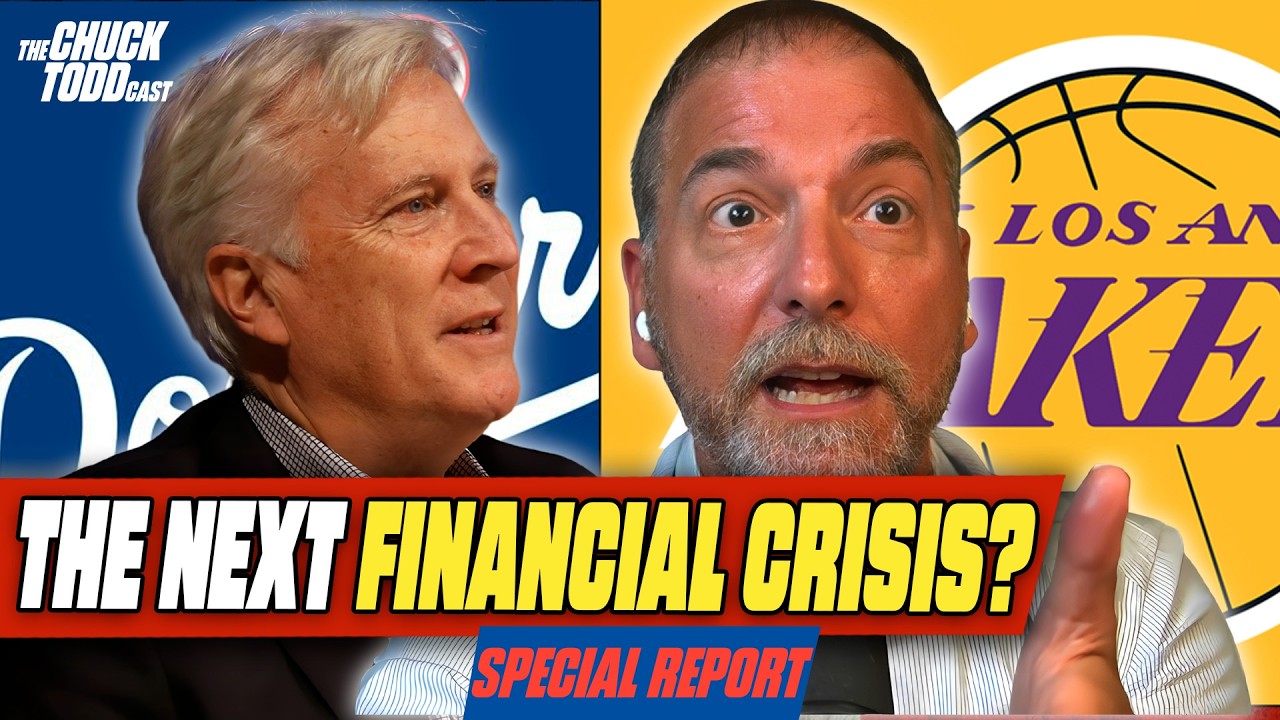
ToddCast Special Report Pt.2 - Did The LAKERS Sale Reveal A FINANCIAL CRISIS Waiting To Happen?
Posted
August 19, 2026
Views
405
Likes
39
Comments
1
Engagement
August 19, 2026
405
39
1
9.88%
Every word spoken in this episode is indexed. Type any phrase to jump straight to the moment it was said.
Type any word or phrase that may have been spoken. Click a result to seek the player to that exact moment.
Try a name, a topic, or a quoted line
 50:06Now Playing
In Part 2 of this ToddCast Special Report, Chuck Todd picks up the thread where Part 1 left it: if an insurance company's capital cushion is determined by how risky its investments are judged to be, then who is doing the judging? The answer leads to private letter ratings — a corner of finance almost no one outside it has heard of, and one that has exploded in size. Much of that grading runs through firms most people have never heard of, and Chuck focuses on Egan-Jones, which privately graded roughly $40 billion of debt held by U.S. insurers, faces a 2024 lawsuit from two former executives alleging they were fired after raising conflict-of-interest concerns and that the firm pressured staff to inflate ratings, has drawn SEC questions about its reliability, and in January was removed by Bermuda regulators from their list of recognized ratings providers — all of which Egan-Jones forcefully denies. Chuck is careful throughout about what this does and does not establish: agencies can legitimately disagree, private raters often see borrower information outsiders never will, and none of it means any particular rating is wrong. It means the ratings deserve scrutiny, because if the grade helps set the size of the rainy day fund, being wrong about the grade means being wrong about the cushion.
Then, Chuck walks through what a clean audit opinion actually certifies versus what people assume it certifies, revisits Executive Life as a more instructive warning than Enron or 2008, and is direct that this is not a story about an insurer on the brink. The question Chuck is actually chasing is structural — whether a system split across fifty state insurance departments, the SEC, the Fed, offshore reinsurance regulators, and private ratings firms can assemble the whole machine fast enough when one piece breaks, and whether the real lesson of the post-2008 era is that we made the banks safer without ever asking where the behavior would go. He lays out three ways this ends, six specific questions he'd chase with subpoena power he doesn't have, and — unusually — the exact evidence that would bring him back in six months to say the warning lights looked worse than the engine. Because capitalism doesn't run on money alone. It runs on people believing that a price means what it says, that a rating means something, and that somebody understands the risk underneath a promise made to a retiree thirty years out.
Sentinel Indexing in Progress
Metadata and chapters are available. Claim extraction for this episode is pending.
All video content is delivered via YouTube embedded players in accordance with the YouTube Terms of Service. Sentinel provides research tools that promote discovery and accountability across political media.
Timeline:
Visit our website:
Follow us on social media:
#politics #news #finance #lakers #dodgers #capital #credit #markets