Climate High Level Champions
@hlcchampions·1.2K subscribers·349 videos
Race To Zero Breakthroughs Launch at World Economic Forum’s Davos Agenda 2021 | #RaceToZero
Posted
January 28, 2021
Views
75
Likes
2
Engagement
2.67%
January 28, 2021
75
2
2.67%
Every word spoken in this episode is indexed. Type any phrase to jump straight to the moment it was said.
Type any word or phrase that may have been spoken. Click a result to seek the player to that exact moment.
Try a name, a topic, or a quoted line
 5:39Now Playing
Race to Zero Breakthroughs are the COP26 President’s challenge to every sector of the global economy to reach critical net zero tipping points
The UN High-Level Climate Champions, COP26 President Alok Sharma, COP25 President Carolina Schmidt, together with the UNFCCC Executive Secretary Patricia Espinosa, today launch the Race to Zero Breakthroughs at the World Economic Forum’s Davos Agenda.
The Race to Zero Breakthroughs have been published in a special paper, which sets out the specific, near-term tipping points for more than 20 sectors that make up the global economy, forming a master plan around which business, governments, and civil society can unite ahead of COP26. Collectively, they articulate what key actors must do, and by when, to deliver the sectoral changes needed to achieve a resilient, zero carbon future by 2050 at the latest.
COP26 President Designate Alok Sharma said: “It is vital that businesses go net zero, as part of our fight against climate change. Which is why we look to all sectors to reach a point at which a clean way of operating becomes the norm. Because if every sector plays its part, we will see the global economy on the right path to achieving net zero by 2050.”
To meet this challenge, actors covering 20% of their sector are being asked to commit to each breakthrough. By the time governments convene in Glasgow in November for the UN climate negotiations, the UN High-Level Champions — Nigel Topping and Gonzalo Muñoz — are now calling on local governments, businesses and investors to achieve breakthroughs in at least 10 sectors of the economy.
The Race to Zero Breakthroughs have been drawn from the Climate Action Pathways, a set of comprehensive roadmaps to achieve the Paris Agreement in line with 1.5°C across all sectors, which were developed by the Marrakech Partnership — a vast coalition from across the climate action ecosystem — all of whom will need to play their part to transform their sector to deliver the Breakthroughs.
Patricia Espinosa, Executive Secretary of the UNFCCC, said: “The Race to Zero Breakthroughs set out the specific tipping points that every sector in the global economy must reach in order to create a resilient, zero carbon world. We now know what key actors must do, and by when, to deliver the sectoral changes needed. I call on leaders across all sectors of the global economy to work together to deliver the Race to Zero Breakthroughs.”
One key member of this coalition is the Mission Possible Partnership, which only yesterday unveiled a new major multi-stakeholder platform – leveraging the power of World Economic Forum, the Energy Transitions Commission, the Rocky Mountain Institute and We Mean Business – to help deliver the Race to Zero Breakthroughs in seven of the most energy-intensive industries, including steel and shipping.
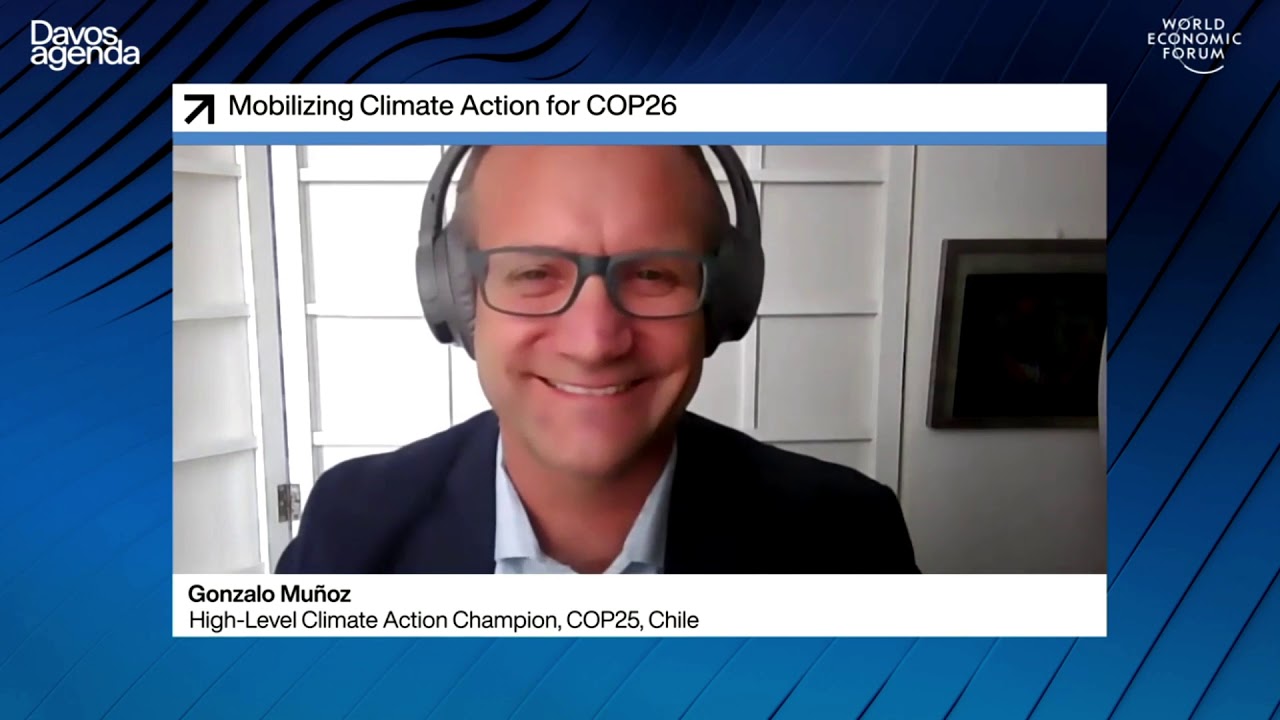
To achieve whole-economy transformation cities, regions and private sector leaders will need to work in partnership and commit their skills, ingenuity and resources to achieving these breakthroughs. As Gonzalo Muñoz, COP25 Climate Champion, said: “We cannot win the Race to Zero by racing alone. Only by collaborating in wholesale systems transformation can we upgrade the sectors of our global economy to deliver a healthy, resilient, zero-carbon future. These sectoral breakthroughs will allow us to go further and faster in our race to zero emissions.”
Sentinel Indexing in Progress
Metadata and chapters are available. Claim extraction for this episode is pending.
All video content is delivered via YouTube embedded players in accordance with the YouTube Terms of Service. Sentinel provides research tools that promote discovery and accountability across political media.