CNBC Television
@CNBCtelevision·3.4M subscribers·157.5K videos
What Is A Supercomputer?
Posted
June 21, 2018
Views
853,475
Likes
11,735
Comments
1,029
Engagement
1.50%
June 21, 2018
853,475
11,735
1,029
1.50%
Every word spoken in this episode is indexed. Type any phrase to jump straight to the moment it was said.
Type any word or phrase that may have been spoken. Click a result to seek the player to that exact moment.
Try a name, a topic, or a quoted line
See what was published immediately before and after this episode.
 3:02Now Playing
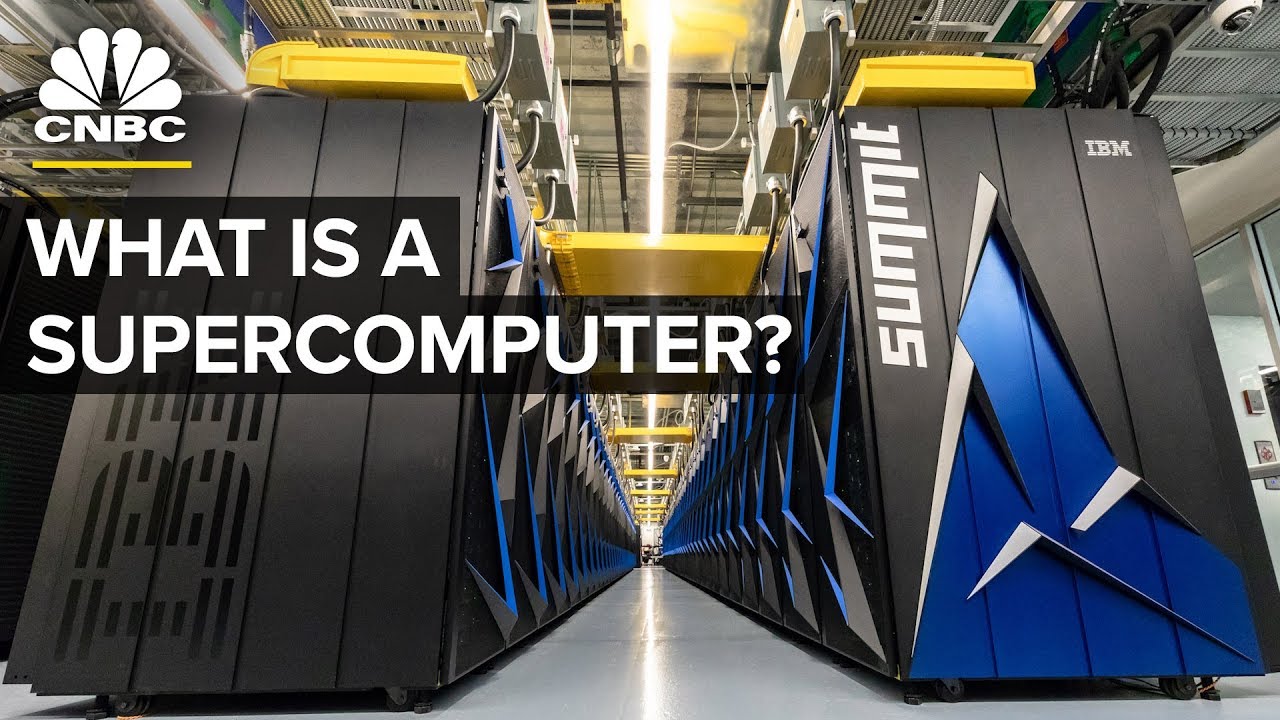
China held the lead for the last 5 years, but the United States now has the world's fastest supercomputer. The machine, called Summit, was built for Oak Ridge National Laboratory in partnership with IBM and NVidia, and is designed for AI applications.
Today's supercomputers are made up of thousands of connected processors, and their speed has grown exponentially over the past few decades. The first supercomputer, released in 1964, was called the CDC 6600. It used a single processor to achieve 3 million calculations per second. While that may sound impressive, it is tens of thousands of times slower than an iPhone.
The Lab Director of Oak Ridge, Thomas Zacharia, says, "I've always thought of supercomputing as a time machine, in the sense that it allows you to do things that most other people will be able to do in the future." As he explains, smartphones today are more powerful than the supercomputers used in the 1990s to work on the Human Genome Project.
» Subscribe to CNBC
About CNBC: From 'Wall Street' to 'Main Street' to award winning original documentaries and Reality TV series, CNBC has you covered. Experience special sneak peeks of your favorite shows, exclusive video and more.
Connect with CNBC News Online
Get the latest news
Find CNBC News on Facebook
Follow CNBC News on Twitter
Follow CNBC News on Google+
Follow CNBC News on Instagram
What Is A Supercomputer? | CNBC
Sentinel Indexing in Progress
Metadata and chapters are available. Claim extraction for this episode is pending.
All video content is delivered via YouTube embedded players in accordance with the YouTube Terms of Service. Sentinel provides research tools that promote discovery and accountability across political media.