
CNBC Television
@CNBCtelevision·3.4M subscribers·157.5K videos
How Much Is Apple Stock From 1980 Worth Today?
Posted
November 6, 2018
Views
7,313
Likes
75
Comments
6
Engagement
1.11%
November 6, 2018
7,313
75
6
1.11%
Every word spoken in this episode is indexed. Type any phrase to jump straight to the moment it was said.
Type any word or phrase that may have been spoken. Click a result to seek the player to that exact moment.
Try a name, a topic, or a quoted line
See what was published immediately before and after this episode.
 1:23
1:23 10:03
10:03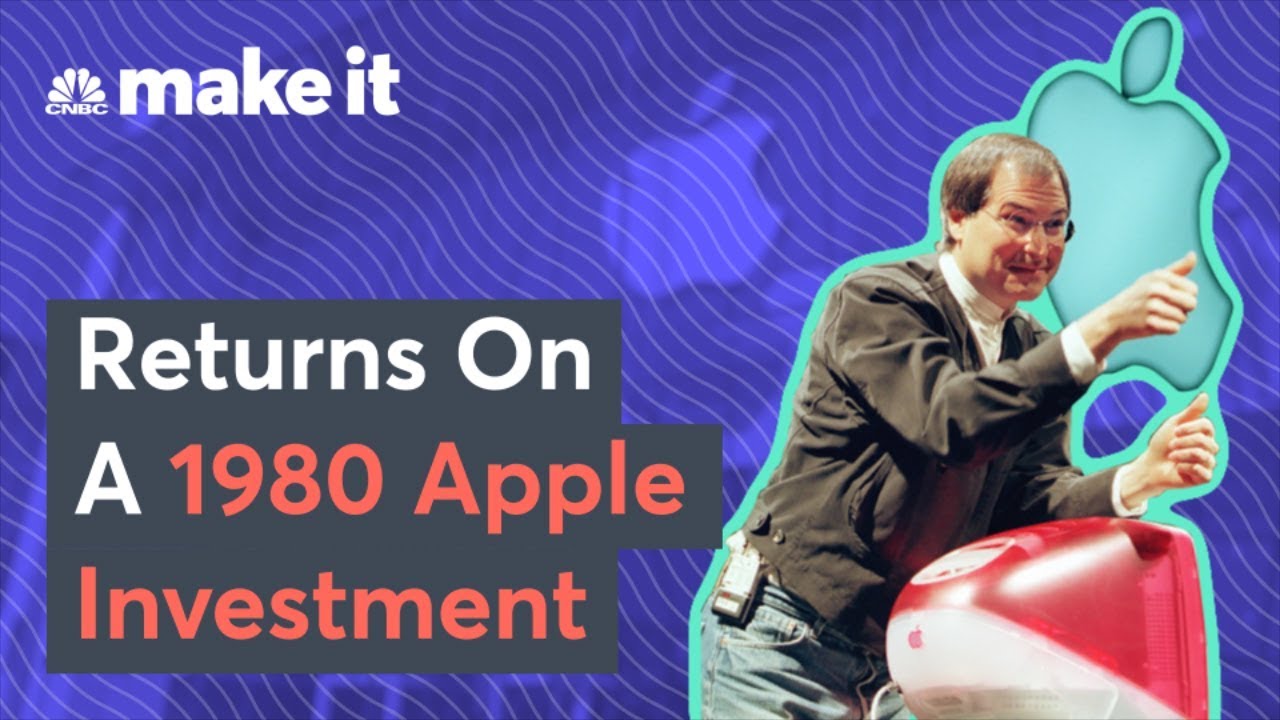 1:05Now Playing
A $1,000 investment in Apple when it went public in December 1980 would be worth nearly $600,000 today. Apple became the first U.S. company to reach a $1 trillion market cap.
» Subscribe to CNBC Make It.
At a press event on Tuesday, Apple debuted a slew of updated products, including a new MacBook Air and and two iPad Pros. However, it's still too early to tell if the improved products are worth their elevated prices, says CNBC's Todd Haselton.
One thing is clear, though: If you had bet on Apple in its early days, your gamble would have paid off, big time.
A $1,000 investment in Apple on the day of its initial public offering, or IPO, in December 1980, would be worth more than $500,000 today, according to CNBC calculations. That includes price appreciation and dividends.
While Apple's stock has performed well, any individual stock can over- or under-perform and past returns do not predict future results.
Apple's early days
Apple was founded in 1976 by Steve Jobs, Steve Wozniak and Ronald Wayne, who exited the company less than two weeks later. The new venture's first customer was a Bay Area computer store called The Byte Shop, which ordered 50 Apple I computers. To fulfill the contract, Jobs took out a $15,000 loan.
The company grew from there and released the Apple II in June 1977. The new model featured color video graphics and increased memory. "To me, a personal computer should be small, reliable, convenient to use and inexpensive," Wozniak wrote in an article for Byte Magazine, describing the new system.
In December 1980, Apple went public. The Wall Street Journal described the event as "one of the most eagerly awaited in recent years."
Apple's 4.6 million shares went for $22 each and sold out "almost immediately," EDN reports. The stock rose more than 30 percent that day and closed at $29 per share.
The IPO minted more than 300 millionaires in a single day, including several Apple employees. At the time, it created "more millionaires than any company in history had produced," according to EDN, and Jobs himself made more than $200 million.
The Apple legacy
In August, the technology giant became the first public U.S. company to reach a $1 trillion market cap after the stock briefly hit $207.05 per share. The surge allowed the software company to reach that milestone ahead of e-commerce giant Amazon.
But the journey hasn't always been smooth. In 1985, Apple ousted the famously volatile Jobs and began to falter in the market. The company fell behind its competitors, including software heavyweight Microsoft, thanks to a string of failed products and turnover at the top.
By 1997, Apple was on the brink of bankruptcy and forced to lay off a third of its workers. As a last-ditch effort, it rehired Jobs and named him interim CEO. Jobs vetoed the majority of Apple's production plans at the time and implemented a new focus on simplicity.
Under his leadership, the company released the iMac G3 in 1998, which brought Apple back to prominence. Jobs followed that with the release of the iPod in 2001 and the iPhone in 2007. The iPhone quickly became a top-seller and revolutionized how customers use technology.
About CNBC Make It.: CNBC Make It. is a new section of CNBC dedicated to making you smarter about managing your business, career, and money.
Connect with CNBC Make It. Online
Get the latest updates
Find CNBC Make It. on Facebook
Find CNBC Make It. on Twitter
Find CNBC Make It. on Instagram
Find CNBC Make It. on LinkedIn
#CNBC
#CNBCMakeIt
#Apple
If you invested $1,000 in Apple at its IPO, here's how much money you'd have now | CNBC Make It.
Sentinel Indexing in Progress
Metadata and chapters are available. Claim extraction for this episode is pending.
All video content is delivered via YouTube embedded players in accordance with the YouTube Terms of Service. Sentinel provides research tools that promote discovery and accountability across political media.


