
Cnbc
@cnbc·4.2M subscribers·16.1K videos
Inside Intel’s Bold $26 Billion U.S. Plan To Regain Chip Dominance
Posted
November 6, 2021
Views
2,637,705
Likes
34,943
Comments
4,195
Engagement
1.48%
November 6, 2021
2,637,705
34,943
4,195
1.48%
Every word spoken in this episode is indexed. Type any phrase to jump straight to the moment it was said.
Type any word or phrase that may have been spoken. Click a result to seek the player to that exact moment.
Try a name, a topic, or a quoted line
 19:45Now Playing
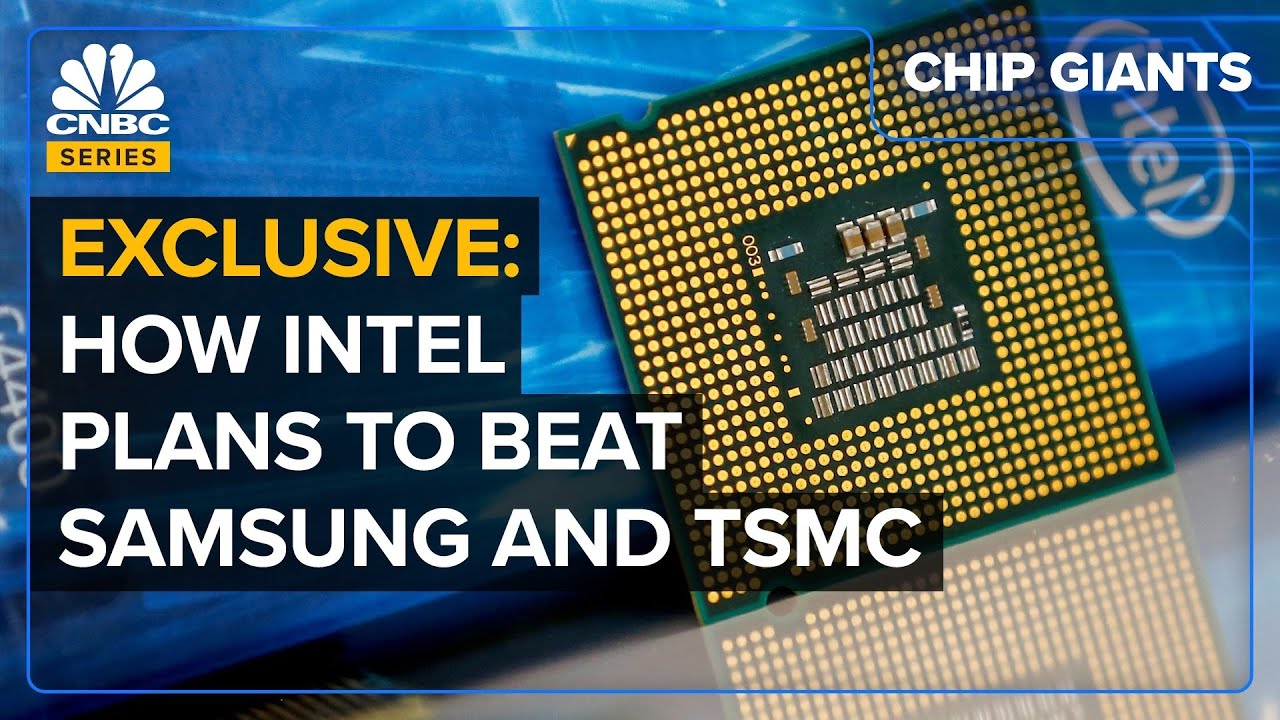
For decades, Intel was the leading maker of the world’s most advanced chips. Intel’s history is interwoven with that of Silicon Valley, credited with the invention of RAM and microprocessors, the building blocks of modern computing. Now Intel has fallen behind. But its new CEO, Pat Gelsinger, has a bold plan to catch up to Samsung and TSMC by 2025, by building new chip fabrication plants in the U.S., Europe and Israel totaling more than $44 billion. CNBC got an exclusive tour at the fab expansion outside Portland, Oregon, that’s set to open early next year.
The world’s smallest and most-efficient chips are usually referred to as 5 nanometer, a nomenclature that once referred to the width of transistors on the chip. They power cutting-edge data processing and the latest generation of Apple iPhones. TSMC and Samsung make all of these 5-nanometer chips at fabs in Asia.
“They took their eye off the ball,” said Stacy Rasgon, an analyst at Bernstein. “Once you fall off the treadmill, it’s really really difficult to get back on. It’s a very dynamic and fast-moving industry.”
In 1990, 37% of the world’s semiconductors were made in the U.S., according to industry association Semi. Last year, U.S. market share was down to 12%, according to the association. The government is hoping to change that with the CHIPS Act, which includes a proposed $52 billion in subsidies for chip companies like Intel that commit to manufacturing in the U.S.
“It also starts building up that base within the United States, so that the United States can become more self-sufficient,” said Ann Kelleher, Intel’s senior vice president of technology development .
TSMC is responsible for 92% of the world’s 5-nanometer chips, according to research group Capital Economics. This leaves the global chip supply vulnerable to natural disasters like earthquakes and the region’s current drought. There’s also the escalating geopolitical tension between China and Taiwan, as well as the U.S.-China trade war.
“Every aspect of defense, intelligence, government operations is becoming more digital,” Gelsinger said. “And we want to rely on foreign technology for those critical aspects of our defense and national security? I don’t think so.”
The next steps in Intel’s playbook include a chip so efficient that the company didn’t measure it in nanometers but with an even smaller unit of measurement called the angstrom. Intel said the 18a, which is in development for 2025, will accelerate the company past its competitors.
“We will be the world’s largest integrated design and manufacturer of silicon for the long term,” Gelsinger said.
“It’s a tall order and it is not my expectation that he will hit that,” Susquehanna’s Rolland said. “But if he could hit that timetable, it would put them back, in my opinion, on par with TSM head to head.”
» Subscribe to CNBC
» Subscribe to CNBC TV
» Subscribe to CNBC Classic
About CNBC: From 'Wall Street' to 'Main Street' to award winning original documentaries and Reality TV series, CNBC has you covered. Experience special sneak peeks of your favorite shows, exclusive video and more.
Connect with CNBC News Online
Get the latest news
Follow CNBC on LinkedIn
Follow CNBC News on Facebook
Follow CNBC News on Twitter
Follow CNBC News on Instagram
#CNBC
Inside Intel’s Bold $26 Billion U.S. Plan To Regain Chip Dominance
Sentinel Indexing in Progress
Metadata and chapters are available. Claim extraction for this episode is pending.
All video content is delivered via YouTube embedded players in accordance with the YouTube Terms of Service. Sentinel provides research tools that promote discovery and accountability across political media.