
What Was The Indus Valley/Harappan Civilisation?
May 30, 2020
1,613,611
35,560
5,122
2.52%
Search the Record
IndexedEvery word spoken in this episode is indexed. Type any phrase to jump straight to the moment it was said.
Type any word or phrase that may have been spoken. Click a result to seek the player to that exact moment.
Try a name, a topic, or a quoted line
Cogito Episodes Around May 30, 2020
See what was published immediately before and after this episode.


 17:55Now Playing
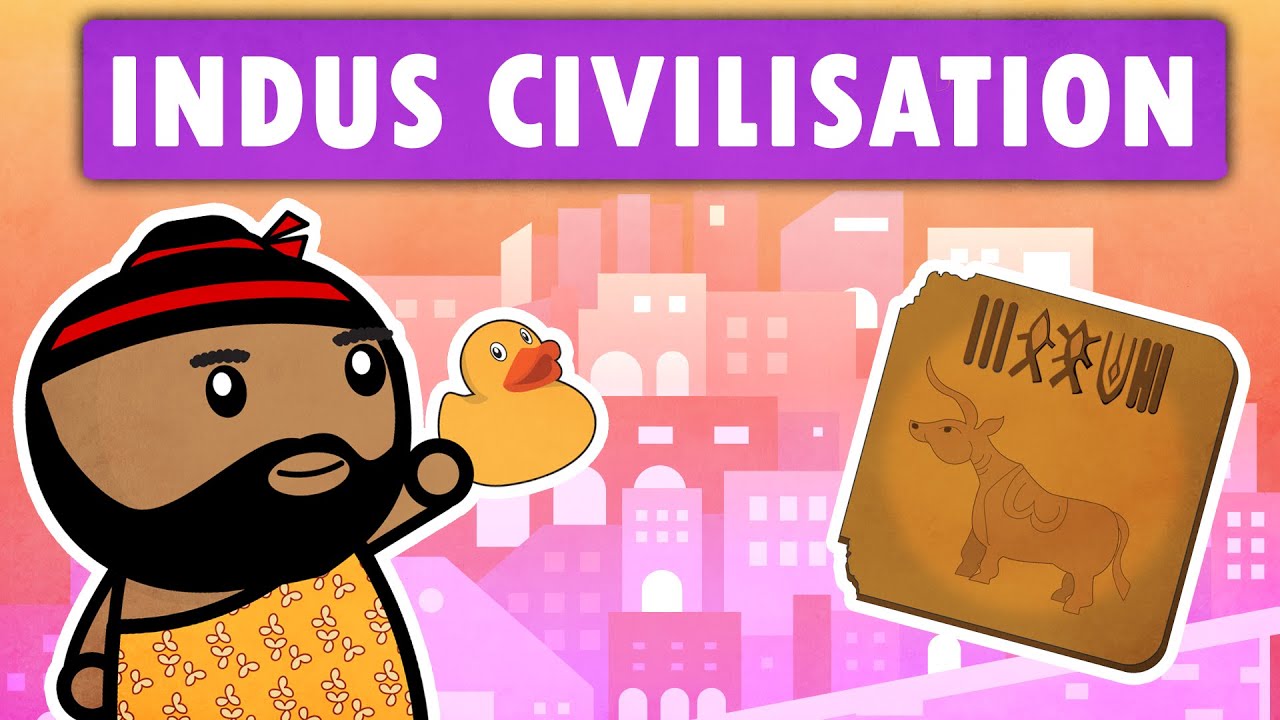
What Was The Indus Valley/Harappan Civilisation?




Segments
YouTube Description
as posted by the channelSign up for an annual CuriosityStream subscription and you'll also get free access to Nebula (a new streaming platform I'm helping to build along with other creators). Use my promo code when signing up to get a 30day free trial
Watch adfree over on Nebula
In British India in the 1920's odd stone seals kept popping up at ruins near Harappa and Mohenjo-Daro along the Indus river valley. They baffled everyone, with their inscriptions in a never before seen written language. Archaeologists, intrigued by this, started excavating these previously ignored sites.
They soon uncovered a 4,500-year-old civilisation. A civilisation completely absent in the historical record. One of the earliest urban civilizations in human history. It flourished alongside Ancient Egypt, Mesopotamia, and China around 3300-1900BCE but was bigger than all of them. A civilisation that built wonders not to gods or kings but to sanitation. A civilisation without war. Made up of massive planned cities built in brick. Masters of bronze and sculpture. They created their own writing system, traded across the vast sea, and possibly invented the world’s first indoor toilets and then vanished for reasons still not understood.
So what was this civilisation in the Indus Valley, what did they achieve, and what does it have to do with rubber duckies? Well let’s find out.
Head to to learn more!
Check Out Nebula, a streaming service made by and for educational creators.
Follow me on twitter
Or Reddit r/cogitoedu
Or Facebook @CogitoYT
MERCHANDISE
Check Out My Other Videos
What Is Judaism |
History Of Ancient China | Dynasties, Confucius, And The First Emperor
Who Are The San Bushmen? |
What Is Jainism?
Who Are The Berbers Of North Africa
What Is Hinduism?
What Is Sikhism?
Sources:
Understanding Ancient Civilizations Jane R. McIntosh The ancient Indus Valley new perspectives
A population history of India From the First Modern People to the Present Day by Tim Dyson
A History of Ancient and Early Medieval India From the Stone Age to the 12th Century by Upinder Singh
India’s Ancient Past by R.S. Sharma
An Environmental History of India From Earliest Times to the TwentyFirst Century by Fisher, Michael H
The Lost River On the trail of Saraswati by Michel Danino
The Indus Civilization by Irfan Habib
The Cambridge history of India Suppl. vol. The Indus Civilization by Mortimer Wheeler
Climate change and the course of global history a rough journey by John L Brooke
The Indus CivilizationA Contemporary Perspective by Gregory L. Possehl
Allchin, Bridget, and Raymond Allchin The Rise of Civilization in India and Pakistan
Bellwood, Peter First FarmersThe Origins of Agricultural Societies
Belcher, William R. 1997. “Ancient Harappa in 3-D.” www.harappa.com/3D/index.html.
Kenoyer, Jonathan Mark. 1996. “Around the Indus in 90 Slides.” www.harappa.com/indus/indus0.html.
All images are taken from Creative Commons or used in accordance with fair use. If one of your images has been used and I have forgotten to attribute please contact me by email or on twitter I will instantly resolve that.
#Indus #AncientHistory #IndianHistory
Music by Epidemic Sound
Social
Links & Promotions
Guests & Subjects Covered
Sentinel Indexing in Progress
Metadata and chapters are available. Claim extraction for this episode is pending.
All video content is delivered via YouTube embedded players in accordance with the YouTube Terms of Service. Sentinel provides research tools that promote discovery and accountability across political media.