Cool Worlds
@coolworldslab·1.1M subscribers·269 videos
Artificial Gravity
Posted
January 9, 2019
Views
2,675,918
Likes
47,436
Comments
4,793
Engagement
1.95%
January 9, 2019
2,675,918
47,436
4,793
1.95%
Every word spoken in this episode is indexed. Type any phrase to jump straight to the moment it was said.
Type any word or phrase that may have been spoken. Click a result to seek the player to that exact moment.
Try a name, a topic, or a quoted line
 31:48Now Playing
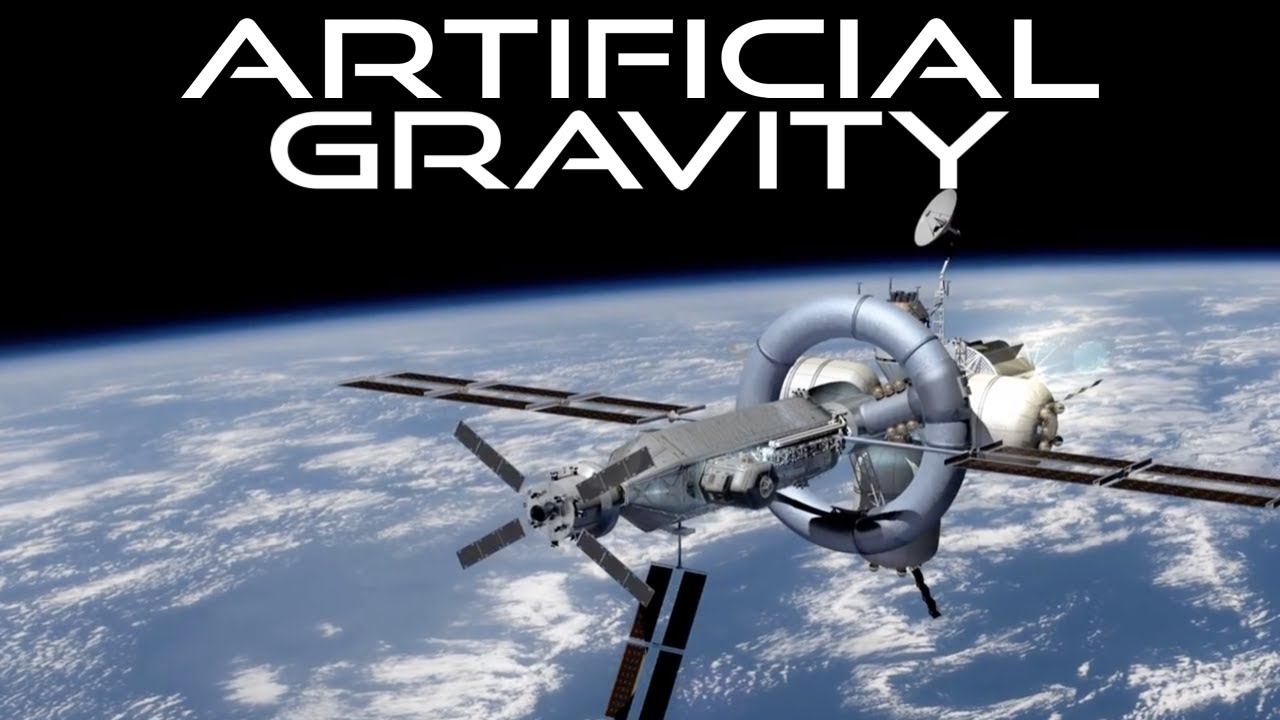
Artificial gravity is a concept that is ubiquitous in our science fiction yet elusive in our space program. Why is this? And how could we develop artificial gravity soon? In a Cool Worlds special, this video essay goes in depth on the topic discussing why centrifuges are the most plausible solution and early ideas on the topic. Join us a journey from Einstein's equivalence principle, to O'Neill Cylinders and Stanford Tori; from Coriolis forces to near-term experiments. Grab a cup of a tea and enjoy.
You can now support our research program and the Cool Worlds Lab at Columbia University
Chapters:
Academic articles used:
► Nesti et al. (2014), "Human sensitivity to vertical motion", Exp Brain Res., 232, 303
► Harris et al. (2014), "How Much Gravity Is Needed to Establish the Perceptual Upright?", PLoS One, 9, e106207(0.15g)
► Cohen et al. (2000), "Effects of Prolonged Centrifugation on Orthostasis", Aerospace Medical Association 72nd Annual Scientific Meeting 2001
► Graybiel et al. (1960), "Observations on Human Subjects Living in a 'Slow Rotation Room' for Periods of Two Days", Arch Neurol., 3, 55
► Theodore Hall (1993), "The Architecture of Artificial GravityArchetypes and Transformations of Terrestrial Design", PhD Thesis, University of Michigan
► Theodore Hall (2002), "Architectural Considerations for a Minimum Mass, Minimum Energy, Artificial Gravity Environment", SAE Technical paper Series,
► Online lecture by Theodore Hall in 2015 at SEEDS
► Holderman & Henderson (2011)
► Kirk Sorensen (2005), "A TetherBased VariableGravity Research Facility Concept"
Video materials used:
► Numerous NASA videos, in particular of ISS, the Dawn Mission, as well Stanford Torus video
► Nautilus X videos from f r a g o m a t i kand
► High G blackout videos from VIDSTORM
► Inner ear video from Fauquier ENT
► World Record 83 G Deceleration Peak on Rocket Sled 19580516 (1967) USAF
► SpaceX Falcon Heavy test flight
► "ORBIT A Journey Around Earth in Real Time" by Seán Doran
► MIT Coriolis demonstration
Sentinel Indexing in Progress
Metadata and chapters are available. Claim extraction for this episode is pending.
All video content is delivered via YouTube embedded players in accordance with the YouTube Terms of Service. Sentinel provides research tools that promote discovery and accountability across political media.
► MPI CyberMotion Simulator
► Not a video but thanks to Don Davis for his amazing images used
► Rotating simulators by Tom Lechner and William Hozaand
Filmclips, in order of appearance;
► Star Trek: The Original Series (1966-1967, Paramount)
► Star Trek: Enterprise (2001-2005, Paramount)
► Interstellar (2014, Warner Bros)
► 2001: A Space Odyssey (1968, Warner Bros)
► The Martian (2015, 20th Century Fox)
► Avatar (2009, 20th Century Fox)
► Elysium (2013, Sony Pictures)
Music is by Chris Zabriskie () and is licensed under a Creative Commons Attribution license (), in order of appearance;
► Cylinder Five ()
► Cylinder Nine ()
► Cylinder Three ()
► We Were Never Meant to Live Here ()
► That Hopeful Future Is All I've Ever Known ()
► The Sun is Scheduled to Come Out Tomorrow ()
► Cylinder Seven ()
► Cylinder Four ()
► Cylinder Eight ()
And also...
► Columbia University Department of Astronomy
► Cool Worlds Lab website
::Playlists For Channel::
Latest Cool Worlds Videos ►
Cool Worlds Research ►
Tabby's Star ►
::Follow us::
SUBSCRIBE to the channel
Cool Worlds Lab
THANKS FOR WATCHING!!