Daniel Davis Deep Dive
@danieldavisdeepdive·442K subscribers·4.9K videos
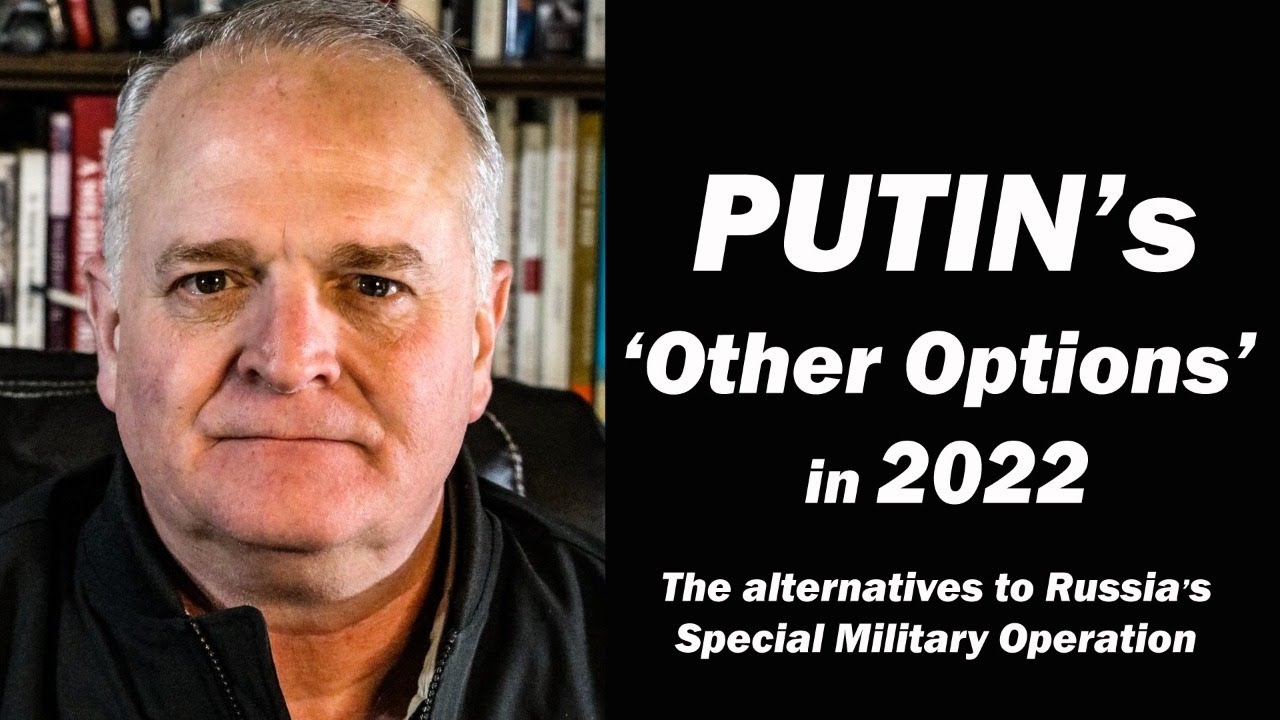
Putin's Other Options in 2022
Posted
January 13, 2025
Views
9,945
Likes
689
Comments
416
Engagement
11.11%
January 13, 2025
9,945
689
416
11.11%
Every word spoken in this episode is indexed. Type any phrase to jump straight to the moment it was said.
Type any word or phrase that may have been spoken. Click a result to seek the player to that exact moment.
Try a name, a topic, or a quoted line
 37:53Now Playing
Russia's Potential Responses to NATO Expansion:
Russia could have taken a range of preemptive actions to deter NATO expansion and avoid the escalation of conflict:
Privately warning NATO against issuing a Membership Action Plan for Ukraine.
Demonstrating seriousness by establishing permanent military bases near the Ukrainian border.
Building defensive fortifications as a signal of preparedness.
Modernizing Military Capabilities:
Russia's failure to modernize its forces before 2022, despite lessons from recent conflicts (e.g., Armenia-Azerbaijan War of 2020), limited its initial effectiveness in the Ukraine war. Key modernization opportunities included:
Investing in drone and electronic warfare capabilities.
Developing advanced logistical and reconnaissance systems.
Economic Diversification and Sanctions Preparedness:
Russia could have reduced its vulnerability to Western sanctions by:
Diversifying trade partners (e.g., expanding ties with China, India, and other BRICS countries).
Reducing reliance on European gas exports.
Strengthening Alliances and Influence:
Russia could have:
Deepened military and economic cooperation with allies like Iran and North Korea.
Explored partnerships with European nations to weaken Western unity and create economic dependencies.
Support for Donbas Militias:
Russia could have openly supported Donetsk and Luhansk militias before 2022 by providing training, weapons, and ammunition, mirroring Western support for Ukraine.
Leveraging Energy as a Political Tool:
Russia might have preemptively used its gas supplies as leverage by threatening or implementing supply cuts to Europe.
Strategic and Tactical Lessons:
Drawing from Sun Tzu's principles, the speaker argues that avoiding direct military confrontation (e.g., through economic measures and military signaling) is less costly and more effective than full-scale war.
Western Actions and Perceptions:
The West, particularly NATO, is described as consistently "poking" Russia and expanding influence, framing Russia as an adversary. This narrative fueled tensions and shaped Russia's reactions.
Hindsight and Missed Opportunities:
The speaker critiques Russia's delayed implementation of military and economic strategies, suggesting these could have prevented the war or strengthened Russia's position if conflict became unavoidable.
Core Argument:
The speaker advocates that Russia could have pursued multiple non-military strategies and modernization efforts to counter perceived Western aggression and NATO expansion while avoiding the severe costs and risks of a full-scale war.
Sentinel Indexing in Progress
Metadata and chapters are available. Claim extraction for this episode is pending.
All video content is delivered via YouTube embedded players in accordance with the YouTube Terms of Service. Sentinel provides research tools that promote discovery and accountability across political media.