Daniel Davis Deep Dive
@danieldavisdeepdive·442K subscribers·4.9K videos
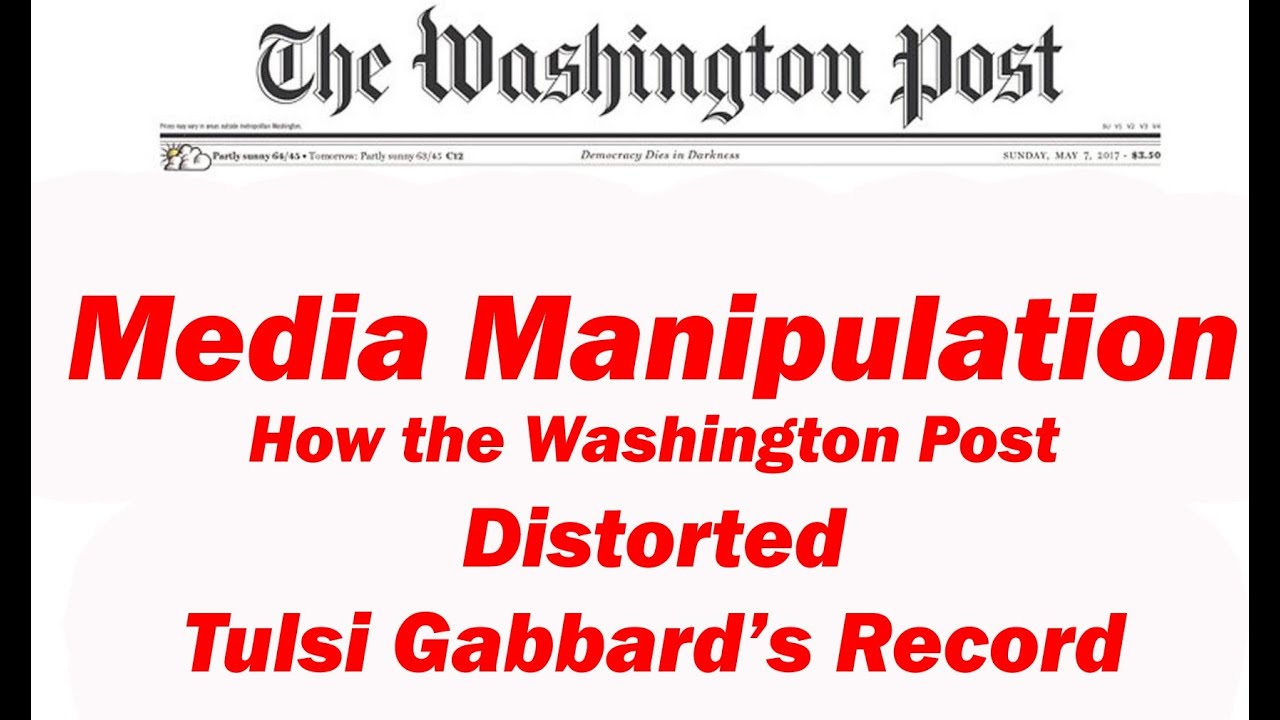
Media Manipulation: How the Washington Post Distorted Tulsi Gabbard's Record
Posted
February 3, 2025
Views
4,923
Likes
532
Comments
38
Engagement
February 3, 2025
4,923
532
38
11.58%
Every word spoken in this episode is indexed. Type any phrase to jump straight to the moment it was said.
Type any word or phrase that may have been spoken. Click a result to seek the player to that exact moment.
Try a name, a topic, or a quoted line
 45:19Now Playing
The presentation discusses how mainstream media manipulates information through omission, distortion, and sometimes outright fabrication. It argues that the media, which is supposed to act as a check on government power, has failed in this role. The discussion focuses on a specific instance of media manipulation involving MIT Professor Ted Postol, who has been critical of intelligence assessments regarding chemical attacks in Syria.
Postol explains how he was misrepresented in a Washington Post article, which he claims was a deliberate hit piece. He describes how top-level management at the newspaper was involved in framing the narrative against him, particularly in relation to Tulsi Gabbard's past reliance on his analysis. The media attack culminated in a Senate hearing, where Senator Mark Kelly questioned Gabbard's credibility for citing Postol’s work instead of trusting U.S. intelligence agencies.
Postol defends his credentials, highlighting his past work with the U.S. military, where he exposed vulnerabilities in missile defense systems—work that even the Defense Intelligence Agency later validated. He argues that the intelligence community made incorrect claims about Syria's use of chemical weapons, and the media ignored evidence contradicting the official narrative.
The discussion also touches on the broader implications of such media manipulation, comparing it to historical incidents like the Gulf of Tonkin, which led to deeper U.S. involvement in Vietnam. The speakers argue that had the false narrative on Syria been acted upon, it could have led to a larger regional war.
In essence, the presentation critiques the media’s role in shaping public perception and policy through selective reporting and suppression of dissenting expert opinions.
Sentinel Indexing in Progress
Metadata and chapters are available. Claim extraction for this episode is pending.
All video content is delivered via YouTube embedded players in accordance with the YouTube Terms of Service. Sentinel provides research tools that promote discovery and accountability across political media.