Daniel Davis Deep Dive
@danieldavisdeepdive·442K subscribers·4.9K videos
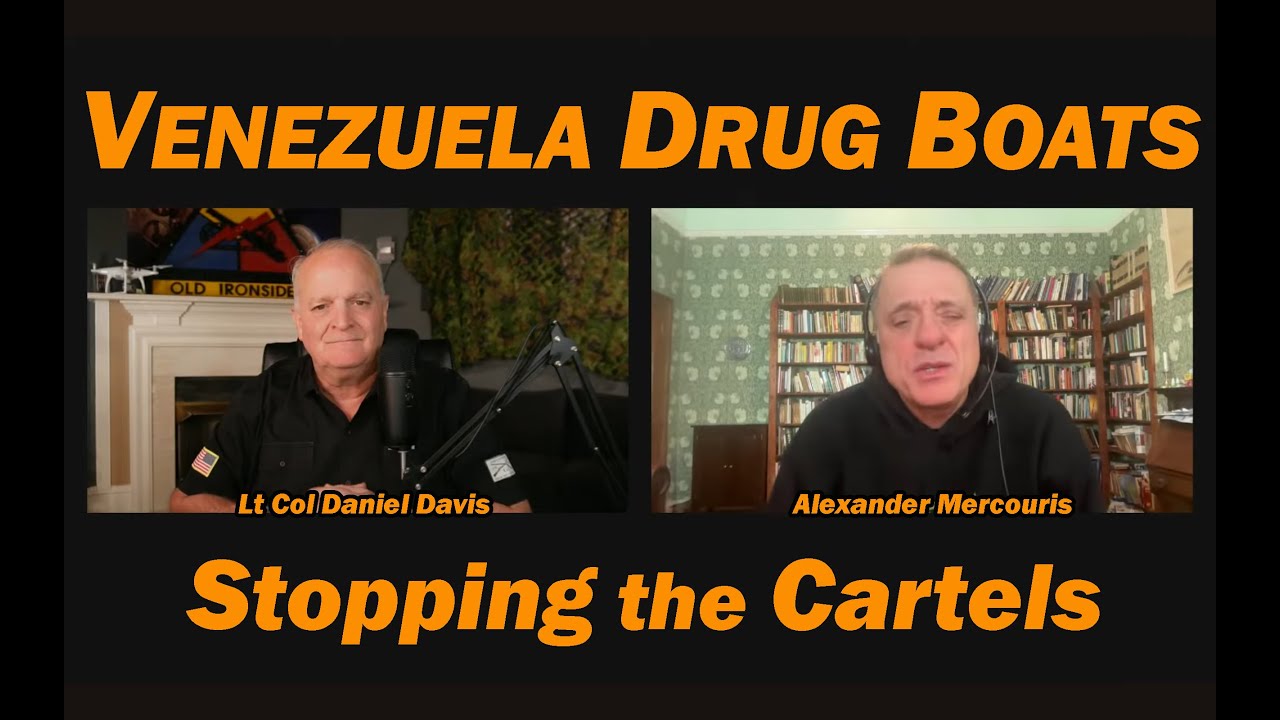
Venezuela Drug Boats - Stopping the Cartels /Alexander Mercouris & Lt Col Daniel Davis
Posted
November 12, 2025
Views
8,644
Likes
558
Comments
127
November 12, 2025
8,644
558
127
7.92%
Every word spoken in this episode is indexed. Type any phrase to jump straight to the moment it was said.
Type any word or phrase that may have been spoken. Click a result to seek the player to that exact moment.
Try a name, a topic, or a quoted line
 22:42Now Playing
** NEW MERCH ** Jackets & Sweatshirts, Thermo Mugs!!
Daniel Davis Deep Dive Merch: Etsy store
U.S. and U.K. Roles in a Potential Attack on Venezuela
The host opens by questioning whether the U.S. could take lethal military action against Venezuela — possibly even to kill President Nicolás Maduro or force regime change — despite having no legal pretext for doing so.
They note that the U.K. has already taken private actions suggesting it supports the U.S., but did so quietly to avoid public backlash.
The guest argues that Britain, while disliking Maduro, would not openly break with Washington over such an attack.
He contrasts this with Margaret Thatcher’s reaction in 1983, when she condemned Reagan’s invasion of Grenada as illegal.
Today’s British government, he says, would not object as strongly because it shares U.S. hostility toward Maduro and lacks the independence to challenge Washington.
The speaker predicts that the real backlash would come not from Europe, but from Latin America, where even pro-U.S. governments (like Brazil’s under Lula) would view a U.S.-led intervention as a return to 20th-century imperial behavior.
2. The Moral and Cultural Consequences of Normalizing Extrajudicial Killings
The host raises a moral question: what happens to Western civilization’s moral fabric if it keeps killing people abroad — including alleged drug smugglers — with no accountability or due process?
The guest calls this profoundly damaging and long-lasting, arguing:
The U.S. president himself has used the word “kill” — symbolizing a deliberate abandonment of moral restraint.
Repeatedly violating international law and due process corrodes the West’s democratic institutions from within.
The notion that brutality abroad doesn’t affect domestic law is false; over time, lawlessness overseas seeps back home, creating cynicism and eroding respect for law at every level.
He warns that Western democracies are devaluing human life and destroying the moral authority they once claimed when condemning others for similar actions.
3. Parallels to Domestic Erosion of Rule of Law
The host then connects this lawlessness abroad to domestic decay in the U.S.:
He accuses both the Trump and Biden administrations of routinely ignoring or bending the law when politically convenient.
Courts issue rulings, but the executive branch increasingly disregards them outright, undermining judicial authority.
The law is allegedly being used as a political weapon against opponents.
Even in “small” administrative matters, such as the recent government shutdown, laws governing the federal budget are being violated.
Sentinel Indexing in Progress
Metadata and chapters are available. Claim extraction for this episode is pending.
All video content is delivered via YouTube embedded players in accordance with the YouTube Terms of Service. Sentinel provides research tools that promote discovery and accountability across political media.